

The Perils of Certainty: Premier League’s Crown Nears, Yet Doubts Linger
POLICY WIRE — London, UK — The digital specter of VAR looms large over England’s Premier League, a relentless arbiter reshaping destinies and stoking passions across continents. This week, as Arsenal...

POLICY WIRE — London, UK — The digital specter of VAR looms large over England’s Premier League, a relentless arbiter reshaping destinies and stoking passions across continents. This week, as Arsenal edged agonizingly closer to their first top-flight title in over two decades, the drama wasn’t just on the pitch; it was in the agonizing pause, the frames frozen on a screen, dictating glory or despair. It felt like a grim forecast, a microcosm of an age where definitive outcomes seem perpetually deferred, even when the finish line is in sight.
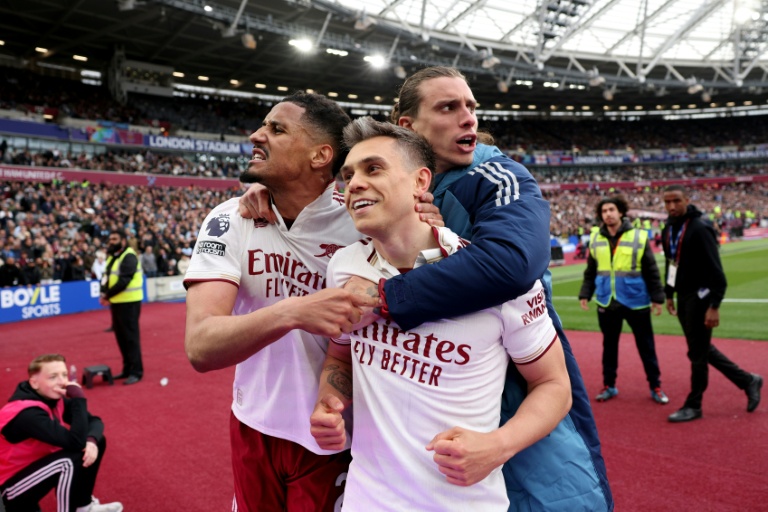
Leandro Trossard’s late strike for Arsenal against West Ham didn’t just reclaim the summit—it wrenched it back from Manchester City. But West Ham’s disallowed equalizer, post-VAR review, for a marginal foul on goalkeeper David Raya? That single, contested call rippled outwards, injecting a raw, almost violent uncertainty into what should’ve been a straightforward path. It’s football, sure, but it’s also a grand, global theater of contested narratives, isn’t it?
Arsenal’s chase has been a protracted affair, punctuated by nerves that, quite frankly, you can feel through the television screen. They’ve flirted with this pinnacle before, only to falter. Manager Mikel Arteta, often a portrait of intense calm, admitted the strain. “We’ve built this team on grit, on the belief that nothing is given freely,” Arteta reportedly stated to his close circle. “But every single point now feels like a battle waged on a different frontier, doesn’t it?” And he’s right; it’s a grind that grates at the very soul of expectation.
But while Arsenal clung on by the proverbial fingernails, Aston Villa seemed to stumble over their own success. Fresh from booking a European final berth, they managed a clumsy 2-2 draw at Burnley. That slip felt less like a strategic pause and more like a collective sigh of exhaustion, leaving their Champions League aspirations—once seemingly iron-clad—vulnerable again. Their boss, Unai Emery, has overseen an impressive campaign, but it’s been taxing. “To juggle European ambition with the relentless grind of the league — it extracts a toll,” Emery might have reflected after the match. “We’re learning it’s a tightrope walk, one slip and you feel the ground rush up to meet you.” You could see the weariness etched across the faces of his players.
Because that’s the thing about this league: it doesn’t forgive fatigue. Or hesitation. Or those split-second decisions that can haunt you for seasons. It’s a relentless machine, generating immense wealth — and drama. According to Deloitte’s Annual Review of Football Finance, the Premier League generated a record £6.4 billion in revenue in the 2022/23 season, a staggering figure that underscores the global stakes involved.
📄 POLICY WIRE WHITEPAPER PUBLISHED: PAKISTAN'S NATIONAL SECURITY POLICY PRIORITIES
👉 READ BY CLICKING HEREAnd those stakes are felt everywhere. From the bustling streets of Lahore, Pakistan, where fans huddle around screens late into the night, debating every VAR decision and cheering every Arsenal pass, to the quiet homes across the Muslim world, this isn’t just a British sport. It’s a shared obsession, a weekly ritual connecting diverse populations. They don’t just watch; they invest emotionally, tying their week’s mood to the performance of 22 men thousands of miles away. It’s a cultural phenomenon, bridging divides, forging ephemeral, fervent communities through a common narrative thread of triumph and adversity. Or, often, simply outright exasperation.
But back in England, other stories are playing out. Everton’s European hopes took another hit, unable to hold a lead. Nottingham Forest, however, secured survival thanks to a late Elliott Anderson goal. It’s a league where salvation and despair often hinge on such fine margins, all simultaneously unfolding, all demanding attention.
What This Means
The current state of the Premier League title race—fraught, contentious, and decided by razor-thin margins—serves as a curious analogue for global political and economic environments. We’re seeing powerful entities—be they nations, corporations, or football clubs—battling for dominance, often through intricate, sometimes disputed, regulations (like VAR). The immense financial rewards attached to success in this league—those billions from broadcast rights and sponsorships—mirror the high-stakes geopolitical scramble for economic leadership and influence. Failure to secure a top-tier position doesn’t just mean a dip in pride; it directly translates to significant economic losses, impacting future recruitment, infrastructural development, and brand visibility on an international stage. This isn’t merely sport; it’s an economic enterprise disguised as entertainment, reflecting a cutthroat global landscape where stability is a luxury, and every perceived advantage is fought over with relentless ferocity. Contractions are rampant; uncertainties reign. It’s a game, sure, but its echoes resonate far beyond the stadium walls, across market trends and societal moods, making its seemingly trivial outcomes unexpectedly meaningful.