

The Absurdist Theatre of Aid, Blockade, and Deportation: Gaza’s Endless Cycle
POLICY WIRE — Tel Aviv, Israel — Another flight departs Ben Gurion, another couple of foreign faces escorted by security, another round of indignant statements hurled into the void. It’s a familiar...

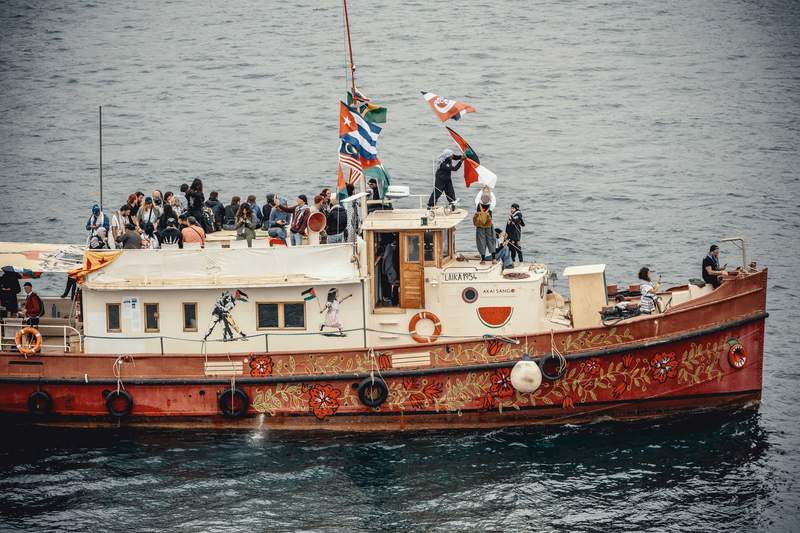
POLICY WIRE — Tel Aviv, Israel — Another flight departs Ben Gurion, another couple of foreign faces escorted by security, another round of indignant statements hurled into the void. It’s a familiar tableau, isn’t it? The diplomatic machinery whirs, humanitarian concerns are voiced, and the intractable reality on the ground—well, it largely just hunkers down for another cycle. This week, it was two international activists, attempting to break the suffocating siege of Gaza, who found themselves swiftly shown the exit. They arrived, they sailed, they were intercepted, they left. It’s less news — and more a weary confirmation of the status quo.
But let’s not pretend this is simply about two individuals — and their thwarted maritime venture. No, this incident—the latest in a long, predictable line of flotilla attempts and subsequent expulsions—tells a far older story. It speaks to the stubborn impasse over Gaza, where gestures of defiance meet the rigid will of a state determined to control access, citing security concerns. It’s a never-ending battle of optics and realpolitik, each side armed with its own irrefutable logic, and frankly, both often missing the point about the people caught in the middle.
Israeli authorities, for their part, aren’t apologetic. They frame these actions as a necessary, if tiresome, enforcement of their maritime blockade. Brigadier General (Res.) Eyal Ben-Yishai, a frequent commentator on regional security, wasn’t pulling punches. “We cannot and won’t allow unregulated access to Gaza; that’s just a simple fact of our security posture,” he remarked in an off-the-record briefing. “These individuals knew the rules, — and they chose to disregard them. Their theatrical protests don’t change the operational realities we face every single day. We’ve got our borders to manage, plain — and simple.” And that’s the government line, crisp and unyielding. They’re convinced any weakening of the blockade risks Hamas rearmament, a non-starter for Tel Aviv.
Yet, for advocates — and large swathes of the global community, the blockade itself is the problem. It’s seen not as a security measure, but as collective punishment, an open-air prison choking the life out of 2.3 million people. Zahira Abbas, a spokesperson for an international advocacy group focusing on Palestinian rights, wasn’t mincing words either. “They can deport individuals, they can turn back boats, but they cannot deport the truth, nor can they silence the world’s conscience,” Abbas asserted passionately. “What happens in Gaza isn’t an abstract security issue; it’s a humanitarian catastrophe demanding urgent attention. These activists are simply shining a light where others would prefer darkness.” Because, for many, the very act of attempting to deliver aid, however symbolically, is a moral imperative in the face of widespread suffering.
The numbers don’t lie, either. According to a recent report by the UN Office for the Coordination of Humanitarian Affairs (OCHA), a staggering 81% of Gaza’s population—that’s over 1.8 million people—requires humanitarian assistance to meet basic needs. That’s not a policy debate statistic; that’s raw human desperation, and it fuels the international pressure cooker that bubbles relentlessly around this strip of land.
In Pakistan and across the broader Muslim world, incidents like these aren’t just international headlines; they’re personal affronts. They feed into a deeply ingrained narrative of Western apathy or complicity, and they stir up potent sentiments of solidarity—and sometimes, resentment—against perceived injustices. Governments in Islamabad or Cairo might offer diplomatic condemnation, but on the streets, it’s a different, much louder story. It contributes to a sense of perpetual grievance, deepening ideological rifts and hardening positions that echo far beyond the Levant, affecting regional diplomacy and even influencing domestic political discourse on everything from foreign policy alignment to economic partnerships—sometimes diverting attention from domestic geopolitical chess games closer to home.
This endless loop of action, reaction, and expulsion keeps the spotlight—albeit a weary one—on Gaza’s predicament. And the global community, or at least a vocal part of it, can’t seem to look away, however much certain powers might wish they would. It’s a low-intensity, high-stakes public relations war, fought with patrol boats and goodwill ships, all under the shadow of persistent deprivation.
What This Means
The immediate political implication of these deportations is a further solidification of narratives. For Israel, it reaffirms state sovereignty — and its non-negotiable security concerns. For international solidarity movements, it strengthens their resolve, providing new martyrs for a cause that often feels marginalized. There’s little room for compromise when both sides view the other’s actions through such rigid, unyielding lenses. It’s a self-perpetuating cycle: blockades invite defiance, defiance invites enforcement, enforcement invites condemnation, and round and round we go.
Economically, the impact on Gaza remains dire. The blockade, while purportedly aimed at Hamas, cripples legitimate commerce, development, and essential services, fostering an environment of chronic poverty and dependence on external aid. These symbolic aid runs, while powerful in messaging, do little to alter the macroscopic economic stagnation that has plagued Gaza for years. For Israel, the economic cost of maintaining the blockade, including military operations, naval patrols, and the diplomatic expenditure of defending its policies, is substantial, if rarely fully quantified. But that’s a cost Tel Aviv seems perfectly willing to absorb. Ultimately, these small acts of resistance and subsequent governmental reactions are less about changing facts on the ground, and more about controlling the story—and the access—around one of the world’s most intractable geopolitical sores. The show, it seems, must go on.