

The Art of the Taunt: Jadeja’s Pocket Play and Cricket’s New Commercial Battleground
POLICY WIRE — New Delhi, India — Sometimes, the biggest statement isn’t a six clearing the stadium roof or a blinding catch at slip. Sometimes, it’s just a hand, casually slipping into a pocket,...

POLICY WIRE — New Delhi, India — Sometimes, the biggest statement isn’t a six clearing the stadium roof or a blinding catch at slip. Sometimes, it’s just a hand, casually slipping into a pocket, signaling a triumph that resonates far beyond the 22 yards of a cricket pitch. It’s a carefully staged piece of theatre, really—a silent, visceral jab that’s become as much a part of the Indian Premier League’s (IPL) appeal as the sport itself. But beyond the immediate drama, this gesture, performed by Ravindra Jadeja after dismissing Jos Buttler, tells a much richer story about contemporary sport: its hyper-commercialization, the weaponization of personality, and the relentless quest for viral currency.
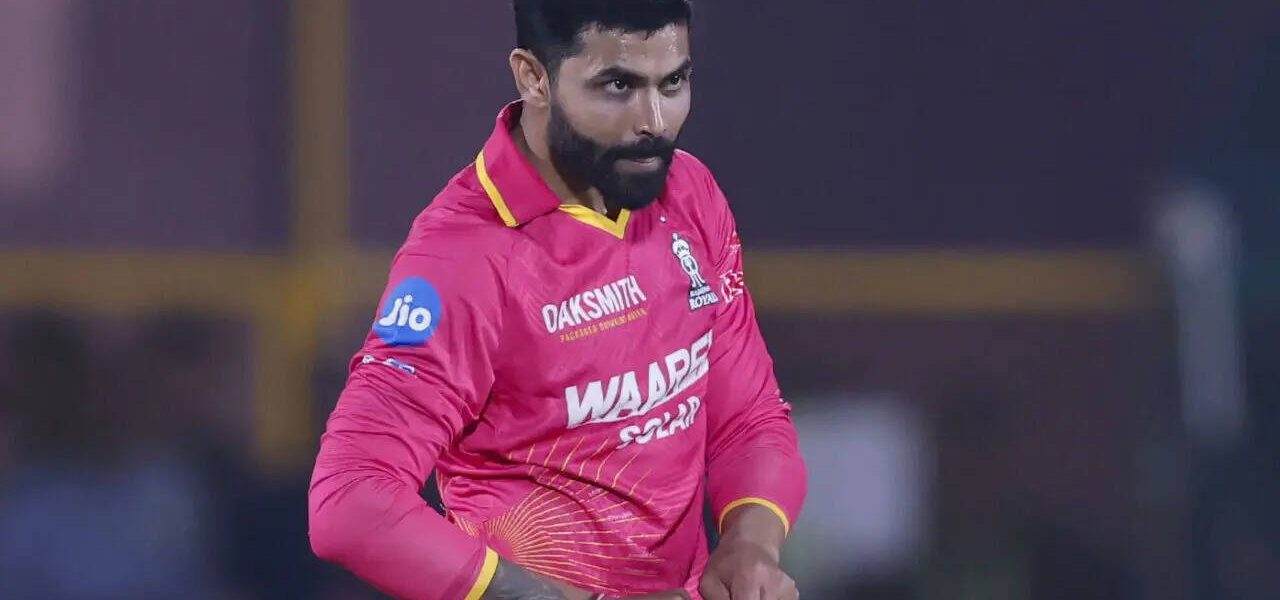
See, this wasn’t just a cheeky send-off during the recent clash between Gujarat Titans — and Rajasthan Royals. This was an expertly deployed piece of on-field brand building, a digital-age flourish designed for maximum social media impact. Jadeja, already famed for his celebratory sword-swings, unveiled his ‘player in the pocket’ mime the moment Buttler walked off. And just like that, a new meme was born, immediately dissected and shared globally, because that’s how modern sporting narratives unfold now—not just in real-time, but in hyper-speed online.
The incident itself was straightforward enough. Jadeja, donning Rajasthan Royals colors this season—a sartorial switch that itself sparked whispers—spun a full delivery outside off stump. Buttler, ever the aggressor, chased it, slicing it high. Donovan Ferreira at long-off snagged it. End of story, right? Not quite. Because Jadeja wasn’t finished. As Buttler trudged past, Jadeja’s hand disappeared, a subtle, almost dismissive gesture that spoke volumes. It felt like an ancient gladiatorial nod, yet utterly modern in its theatrical precision.
Rahul Khanna, a veteran cricket pundit who’s seen it all, put it rather bluntly when we spoke. “These little acts, they’re not just about one-upmanship on the field anymore; they’re marketing gold. Every pocketed hand gesture? It’s a prime-time advert for attitude, really,” he said, a dry chuckle in his voice. And he isn’t wrong. Player personas, their quirks — and feuds, they fuel the engagement. They drive the clicks, the shares, the viewership—all currency in the dizzying global sports economy.
The statistical battle between these two titans tells its own tale of competitive friction. Official IPL statistics indicate Jadeja has now sent Buttler back to the pavilion three times in their 12 encounters, an ostensibly minor figure that nonetheless feeds into a broader narrative of dominance when paired with theatrical flair. Buttler’s strike rate against Jadeja sits at a respectable 124.24, suggesting he isn’t entirely stifled, but those three dismissals are the moments that stick—especially when punctuated by a gesture.
But how does such a fleeting moment grab so much global airtime, particularly in the subcontinent? Because these aren’t just cricket matches; they’re cultural touchstones that unite — and divide millions. From Lahore to Dhaka, every boundary, every dismissal, every little gesture is devoured. For a Pakistani fan, who often watches the IPL through a unique, bittersweet lens (given their own players’ long-standing exclusion), a moment like this isn’t just about Indian players. It’s about the pinnacle of Twenty20 cricket, a spectacle that transcends borders even as political boundaries keep it geographically contained. They’ve got their own regional rivalries, their own pantheon of sporting heroes, but the IPL, for better or worse, remains the undisputed king of short-format cricket on this side of the world. It’s hard to ignore.
Dr. Anya Sharma, a sports psychology consultant, articulated the underlying current beautifully. “In elite sports, every interaction is a form of psychological warfare. Buttler facing Jadeja—it’s a high-stakes chess match where even a seemingly casual flick of the wrist can subtly chip away at an opponent’s resolve,” she explained. And she’s right. The physical game is one thing; the mental battle, however, can be just as brutal, often more so.
What This Means
This ‘player in pocket’ escapade isn’t just a highlight reel clip; it’s a micro-event loaded with macro implications. Economically, these high-drama individual moments significantly amplify a player’s — and by extension, the league’s — brand value. Fans connect not just with performance but with personality. These viral theatrics translate directly into sponsorship deals, increased merchandising, and sustained viewer engagement across multiple platforms. It’s proof that in the hyper-connected, entertainment-driven global sports market, theatrics are no longer ancillary; they’re integral to the revenue model. Players become characters in an unfolding, real-life drama, their every action, calculated or spontaneous, feeding the ravenous media machine. Because for the IPL, every moment is a potential billboard.
Politically, or perhaps more accurately, from a soft-power perspective, the IPL continues to be India’s cultural juggernaut across South Asia. Even without Pakistani players participating due to longstanding diplomatic tensions, the league remains essential viewing in the country, fostering a shared regional conversation around India-centric entertainment. This incident, while trivial on the surface, feeds into that broader narrative of influence, demonstrating how Indian sports media shapes regional dialogues—even those within nations that can’t officially participate. It’s a peculiar dance, isn’t it? One where an Indian cricketing gesture, in a league bereft of Pakistani talent, still gets discussed intensely on the streets of Karachi. It just shows you how deeply interconnected the regional cultural psyche truly is, reshaping global cultural economies, one viral moment at a time. The stakes here, you see, are never just about cricket; they’re always about something bigger. The money, the influence, the bragging rights—they’re all pocketed too, eventually.