


The Silent Hum of Hunger: How Mail Carriers Still Carry the Nation’s Conscience
POLICY WIRE — Albuquerque, N.M. — In an era obsessed with instantaneous digital solutions, where you can order gourmet meals to your doorstep with a few taps, it’s a striking, almost anachronistic...

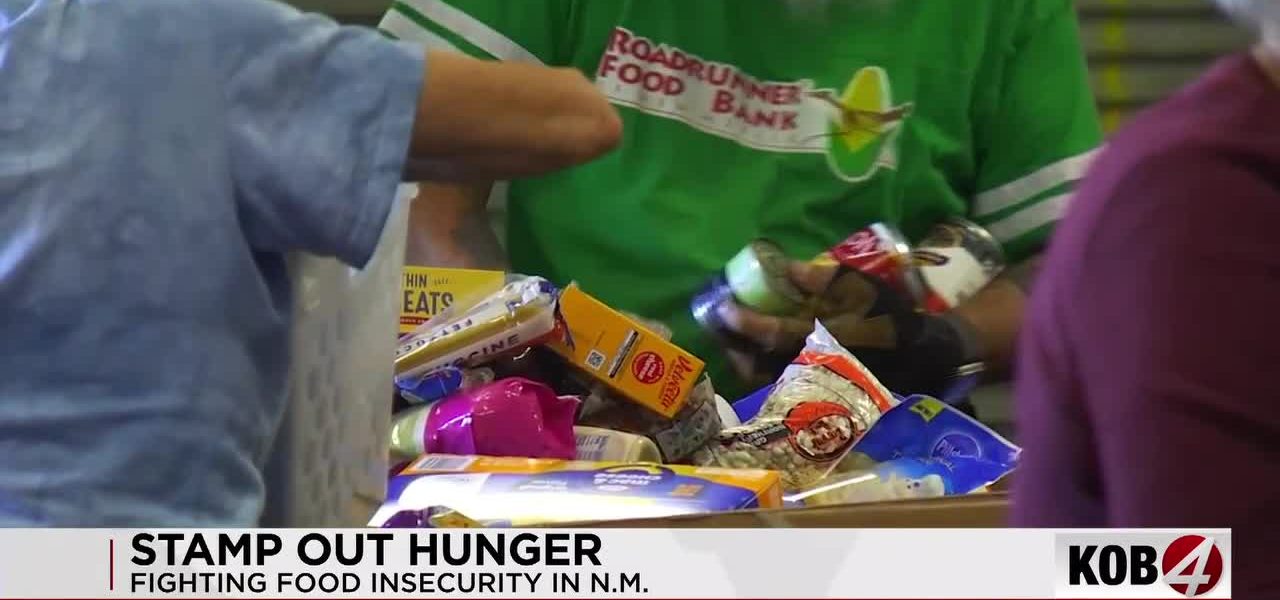
POLICY WIRE — Albuquerque, N.M. — In an era obsessed with instantaneous digital solutions, where you can order gourmet meals to your doorstep with a few taps, it’s a striking, almost anachronistic image: federal employees, mail carriers no less, still serving as conduits for basic sustenance. They’re not just delivering bills — and junk mail. They’re collecting cans, boxes, and bags of food from residential doorsteps, a physical network against the invisible enemy of hunger. This May, in Albuquerque, as in thousands of communities nationwide, the time-honored “Stamp Out Hunger” food drive once again cast a harsh light on America’s enduring social fabric — specifically, its frayed edges.
It’s a peculiar thing, isn’t it? That in a nation which just two years ago boasted a trillion-dollar-plus economy, we still lean so heavily on what amounts to a charitable bucket brigade. For over three decades, the second Saturday of May has seen postal workers transform into unofficial relief agents, collecting groceries left by generous — or perhaps merely guilt-ridden — citizens. They then deliver these offerings to local food banks, like Roadrunner Food Bank in New Mexico’s largest city. But it begs the question: Why are we still doing this? Why haven’t we, as a society, moved beyond such episodic interventions for something so fundamental?
And you see the impact. Roadrunner Food Bank, relying heavily on community goodwill, confirmed volunteers were “busier than ever” sorting the recent haul. Steve Lowry, a local drive organizer, summed it up with a certain resigned honesty: “Everybody’s been in need at some point in their lives, and we’re just here to help that and to make sure hungry people get fed.” His sentiment is noble, yes, but it barely scratches the surface of the larger policy chasm it exposes. It’s a pragmatic acceptance of an imperfect system.
Because while individual acts of kindness are commendable, they don’t erase the underlying systemic failures. The simple truth is that while the U.S. leads in global innovation, it lags behind many developed nations in ensuring universal food security through robust governmental programs. According to the U.S. Department of Agriculture, over 34 million Americans lived in food-insecure households in 2021 alone. It’s not a fringe problem; it’s a persistent, national challenge that private charity — even with the mighty logistical backing of the USPS — can only partially ameliorate.
Consider the contrast, for instance, with many Muslim-majority nations. While their governments often grapple with their own economic and political instabilities, the concept of Zakat, a mandatory charitable contribution ingrained in Islamic faith, provides a more structured, year-round framework for wealth redistribution to the poor. It’s not just a feel-good, once-a-year effort; it’s a continuous, religiously mandated mechanism. It’s not perfect, of course. Poverty and hunger persist there, often compounded by conflict or governmental inefficiency, but the societal expectation of providing for the less fortunate is codified in a way that informal, volunteer-led efforts here can’t quite match. Our ad-hoc approach often feels more like a balm than a cure.
Representative Eleanor Vance (D-N.M.) didn’t mince words, observing from Washington: “These food drives are a testament to the American spirit, absolutely. But they’re also a damning indictment of policy priorities that force our most vulnerable to rely on the generosity of neighbors rather than a functioning safety net. We simply can and must do better by our citizens.” Her Republican colleague, Senator Maxwell Thorne (R-OH), offered a different perspective: “Government programs, while sometimes necessary, can breed dependency. What we’re seeing in Albuquerque, — and across the nation, is the profound power of community. Americans helping Americans — that’s the true spirit of this country, a spirit that no bureaucracy could ever replicate.” It’s the perennial debate, distilled to its starkest form.
This initiative, however charmingly old-school, also carries a profound cost. Postal workers aren’t idle. Diverting their resources, however temporarily, toward a social welfare function speaks volumes about where the true needs — and gaps — lie in the grand scheme of American public services. It’s a remarkable civic endeavor, make no mistake. But it shouldn’t be the baseline.
What This Means
The “Stamp Out Hunger” drive, seemingly a straightforward story of charity, reveals layers of socio-economic complexity. Politically, its continued necessity underscores a national reliance on localized, private solutions for issues that arguably demand federal or state-level intervention. It highlights a political paralysis, or perhaps philosophical divide, on the appropriate scope of government responsibility versus community self-reliance in addressing basic needs. The public goodwill generated by such drives can mask the absence of more systemic, sustainable solutions, allowing policymakers to avoid difficult conversations about expanding social safety nets.
Economically, the persistence of these drives points to enduring pockets of economic hardship, even during periods of relative prosperity. They act as an indicator of inflationary pressures eroding purchasing power for low-income families, or job precarity pushing more households to the brink. The logistical efficiency of using the postal service for this humanitarian mission also showcases the underutilized potential of existing public infrastructure for social good, while simultaneously questioning the economic model that necessitates such stopgap measures rather than fostering broad economic stability for all. It’s an economy that consistently asks individuals and charities to patch the holes in its fabric, rather than weave a stronger one.