


IPL’s Crucible: Rajasthan Royals’ Collapse Ignites Leadership Debates and Economic Whispers
POLICY WIRE — Jaipur, India — The spotlight, unforgiving and blinding, often falls hardest not on triumph but on the precipice of failure. Saturday evening, at the venerable Sawai Mansingh Stadium,...

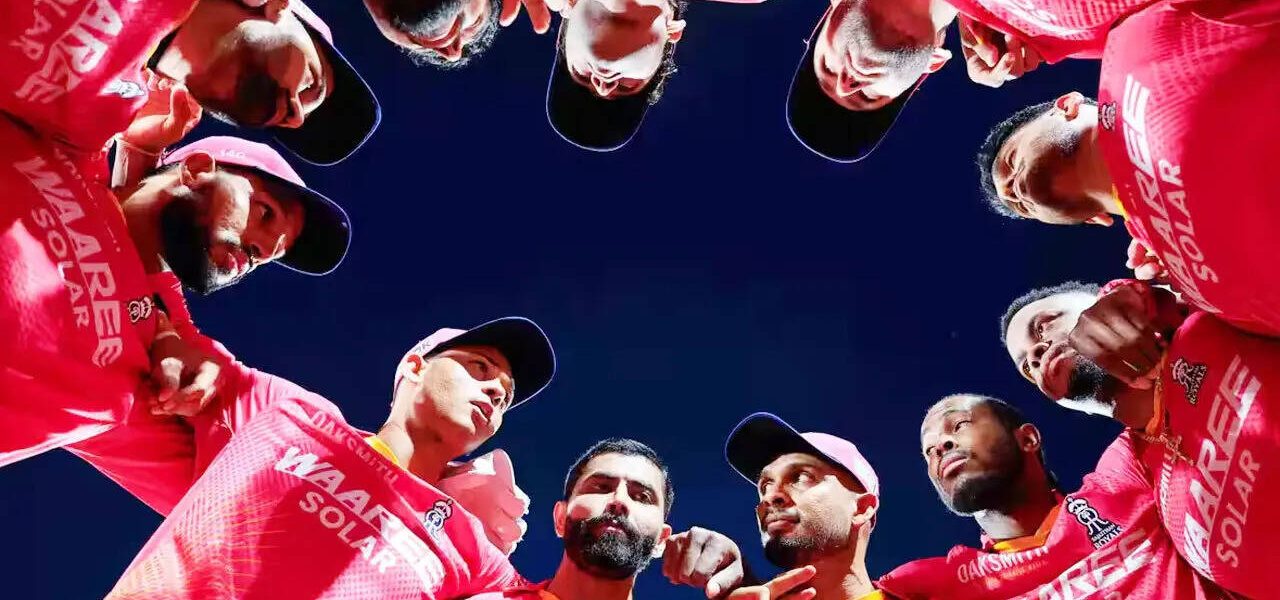
POLICY WIRE — Jaipur, India — The spotlight, unforgiving and blinding, often falls hardest not on triumph but on the precipice of failure. Saturday evening, at the venerable Sawai Mansingh Stadium, it bathed a young man — Yashasvi Jaiswal — in its harsh glare as Rajasthan Royals, for all their early season promise, crumbled under the weight of expectation. His ‘short reaction’ wasn’t just a post-match platitude; it was a terse dismissal of a debacle that sent shockwaves through the league and, for some, signaled a worrying fragility beneath the glitzy facade of the Indian Premier League.
It wasn’t merely a defeat; it was an immolation, a 77-run thrashing by the formidable Gujarat Titans that left Jaiswal, deputizing as captain, visibly shell-shocked. “We were just thinking to bowl in good areas,” Jaiswal mumbled afterward, attempting to distill the sophisticated strategy of T20 cricket into a manageable soundbite for the hungry media pack. “They were batting pretty well. We were just thinking how we can cut down the boundaries or big shots.” A perfectly anodyne assessment, perhaps. But the clinical brutality of Shubman Gill’s 84, buttressed by Sai Sudharsan’s brisk 55, painted a different picture altogether, one where RR’s strategic acumen evaporated like morning dew.
The 229-for-4 posted by the Titans wasn’t just a score; it was a statement. And the Royals’ subsequent surrender for 152 was its agonizing counterpoint. Gujarat’s spinners, led by Afghanistan’s Rashid Khan (4/33)—a testament to the IPL’s global magnet for talent, drawing top-tier players even from nations battling their own severe internal strifes—tore through Rajasthan’s batting lineup with a surgical precision that borders on cruelty. Khan, in particular, demonstrates the league’s economic pull; his success isn’t just his own, but a win for cricket, a narrative of triumph emerging from tumultuous lands, celebrated across a vast demographic that extends far beyond India’s borders, deep into South Asia and the broader Muslim world, where cricket is less a sport and more an existential force.
Jaiswal, barely past his twentieth birthday and carrying the unenviable mantle of captain for the evening, tried valiantly to articulate the post-mortem. “Nothing much,” he reiterated, deflecting when pressed on the specific breakdown. “I think we’re going to look what we can do better and just look for the next game, what we can do and learn from this game.” A perfectly reasonable response from a young player under duress, though one senses a distinct lack of genuine insight—or at least, one he was willing to share. He even staunchly defended Jofra Archer, the pace bowler whose 11-ball, 18-run opening spell effectively derailed Rajasthan’s bowling attack from the jump. “It’s cricket,” Jaiswal reasoned. “We all know that there are some days where you are in, there are some days where you cannot bowl how you want to. But he’s been doing so well for us.” That’s a captain sticking by his man, certainly. But it doesn’t change the cold, hard numbers that leave RR clutching to a tenuous fifth spot on the league table.
Because the IPL isn’t just about bat and ball; it’s a high-octane economic juggernaut, a carefully calibrated ecosystem of billions. Losing streaks, especially a second consecutive drubbing, translate quickly into frayed nerves in executive suites, potential dips in merchandise sales, and questions over brand value. A recent analysis by Duff & Phelps valued the IPL ecosystem at an astounding $10.9 billion, a staggering sum for a domestic T20 league. This isn’t just a game; it’s a financial enterprise of monumental proportions, and every collapse, every sudden defeat, sends tremors through that delicately balanced economy.
📄 POLICY WIRE WHITEPAPER PUBLISHED: PAKISTAN'S NATIONAL SECURITY POLICY PRIORITIES
👉 READ BY CLICKING HEREAnd it’s a stark reminder that even the biggest stars are vulnerable, mere cogs in an unforgiving machine, much like the IPL’s unforgiving grind claims another star. The brutal demands placed upon athletes in these global sports spectaculars can often overshadow the human element, leaving little room for missteps. “These moments, while tough on the field, are defining for these young leaders,” offered Rajiv Mehra, a long-time Royals board member, in a rare off-the-record moment. “It builds character, true. But it also demonstrates the sheer ruthlessness of professional sports economics. You don’t get many second chances when billions are on the line. But we’ve seen young talents rally before; the strength of the brand—of the whole league, really—is its resilience.”
What This Means
The Rajasthan Royals’ ignominious defeat isn’t an isolated incident; it’s a symptom of the intense pressure cooker that’s the IPL. For a competition frequently dubbed the ‘gold standard’ of T20 cricket, each downturn for a major franchise carries ripple effects. Leadership is tested, and the ability of young players like Jaiswal to withstand the relentless scrutiny determines not just match outcomes, but potentially their entire career trajectories and their team’s commercial appeal. This match exposes the often-thin veneer of control in high-stakes sporting events, where millions of dollars in sponsorships, broadcasting rights, and team valuations hang in the balance with every run and wicket. From a wider perspective, it also touches upon the broader power plays in the sports economy, where athlete performance directly correlates to immense financial flows and brand perception. For the subcontinental fan base, intensely passionate and opinionated, a team’s performance can shift national mood, making even a ‘mere’ cricket match into something far more significant, an emotional barometer for millions, uniting or dividing along complex lines of team loyalty and regional pride. But it’s this very volatility that keeps the economic engine of the IPL roaring, fueled by the hope of sudden triumphs and the drama of swift declines.