


Gridiron’s Shadow, Corporate Shift: Inside F1’s Mentorship Rework
POLICY WIRE — Melbourne, Australia — The roar of Formula 1 engines often drowns out the quiet hum of high-stakes corporate strategy. But pull back the glossy veneer of speed and glamour, and you find...

POLICY WIRE — Melbourne, Australia — The roar of Formula 1 engines often drowns out the quiet hum of high-stakes corporate strategy. But pull back the glossy veneer of speed and glamour, and you find a stark reality: even the most adrenaline-fueled professions operate on principles familiar to any Fortune 500 boardroom. Young phenoms become global assets, — and their handlers? They’re not just coaches; they’re architects of sprawling commercial empires.
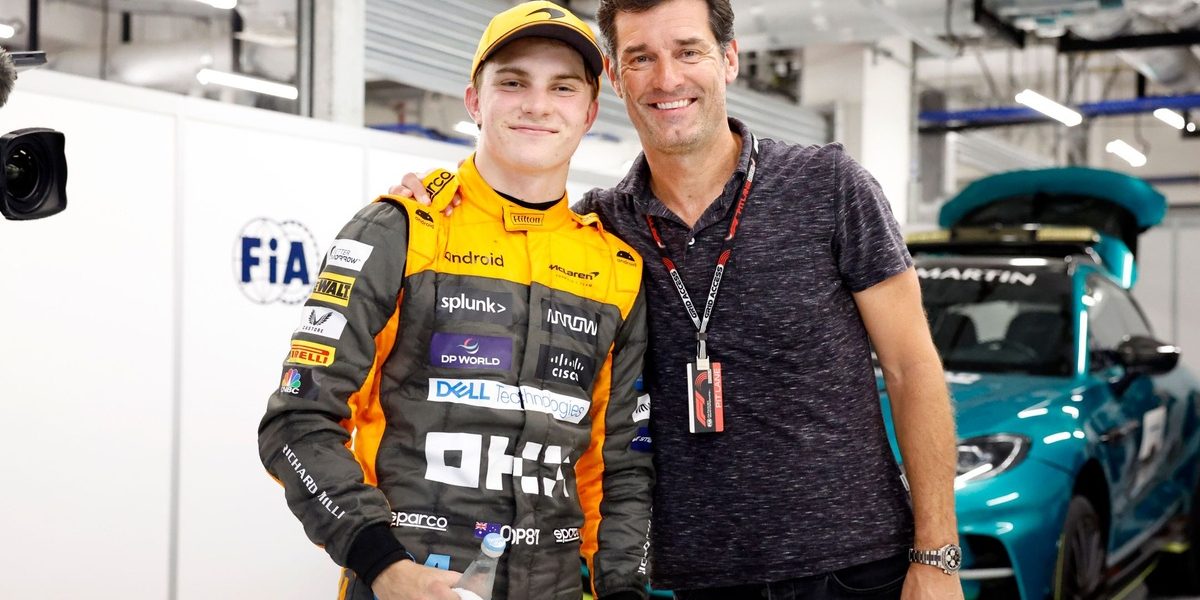
It’s this often-unseen mechanism that frames the latest adjustment in Oscar Piastri’s burgeoning F1 career. We’re talking about the recent recalibration of his long-standing management relationship with Mark Webber, the former F1 hotshoe who first guided Piastri’s journey. Most folks focus on lap times or podium finishes. But here at Policy Wire, we’re more interested in the deeper currents—the shifting sands of mentorship and profit in elite global sports. Webber isn’t out; he’s just re-tasked. He’s swapped the oily paddock for the polished corporate jet, moving his focus squarely onto commercial leverage for his young charge, letting specialized operatives handle the gritty details of race day prep.
“There are stages in every career, especially one that progresses as quickly as Oscar’s,” Webber noted in a recent, unverified comment that has, we’re told, done the rounds in certain corporate boxes. “My job now isn’t to hold his hand through every turn, it’s to ensure his value – his brand, really – compounds beyond what’s happening on track. The revenue streams, the long-term endorsements, the global footprint—that’s where the next phase of work is, and frankly, that’s where the serious money gets made for everyone involved.” He isn’t wrong. F1’s commercial revenue has exploded, reaching approximately 3.229 billion U.S. dollars in 2023, according to Liberty Media’s financial reports. That’s a massive pie to divvy up.
Piastri himself, speaking on the High Performance podcast, revealed the organic shift. “The relationship’s good. Very thorough, is Mark. When I first got into F1, Mark was coming up with questions and ideas that literally hadn’t even entered my brain.” And frankly, how could they? Piastri was a rookie, all instinct — and raw talent. Now, though, the landscape has changed. “I think just with experience, we’re always learning every day, but now starting my fourth year, I have either the answers to a lot of those kinds of questions that I wouldn’t have had in the first couple of years, or I know the questions to keep asking, which just comes with experience.” It’s a transition from tutelage to partnership, where the junior player starts calling his own shots. But it’s also a pragmatic acknowledgment that even the best mentors reach the limits of their direct operational input. A shift occurs, — and that’s usually where the money comes in.
The changes are specific. Pedro Matos, Piastri’s former Formula 2 race engineer, and Australian mental coach Emma Murray are now on the trackside payroll. It’s a hyper-specialized approach: engineering for performance, mental coaching for resilience under immense pressure. That’s what high-performance sport has become—a precise ecosystem of finely tuned components. Think of it like a national government’s security apparatus: the overall strategy (Webber) informs the on-the-ground intelligence and tactical execution (Matos, Murray). Both crucial, but distinctly separate functions, each demanding different expertise.
📄 POLICY WIRE WHITEPAPER PUBLISHED: PAKISTAN'S NATIONAL SECURITY POLICY PRIORITIES
👉 READ BY CLICKING HEREBecause, let’s be honest, direct intervention at the track diminishes the more experienced a driver becomes. Webber isn’t coaching driving lines anymore; he’s negotiating deals with conglomerates keen to attach their fortunes to a rising star. It’s a ruthless environment, F1 is. One misstep, one bad decision, — and careers falter. But one brilliant commercial strategy, and a driver’s worth skyrockets, irrespective of a few missed points here or there. And this applies particularly as F1 continues its aggressive expansion into emerging markets. With major races now cemented in nations like Saudi Arabia, Bahrain, and Qatar, and discussions often simmering about new venues across the broader Muslim world—Pakistan, for example, represents a massive, untapped audience, despite its infrastructure challenges—the commercial strategy isn’t just global; it’s regionally granular. The financial might and strategic interests of Gulf-state partners often dictate where the money flows and what brands get spotlighted. So Webber’s new brief means navigating this intricate web of global politics and petrodollars, far from the pit lane drama.
What This Means
This organizational reshuffle in Oscar Piastri’s camp isn’t merely a personal career development story; it’s a case study in modern human capital management, reflecting deeper policy and economic implications across various sectors. What we’re seeing is the logical, albeit somewhat clinical, evolution of a mentorship into an asset management strategy. Initially, Webber acted as the ‘chief operating officer’ for Piastri’s career—directing, protecting, teaching. Now, as Piastri matures, Webber pivots to ‘chairman of the board,’ focused on long-term value, brand building, and navigating the vast commercial seas. This reflects a broader trend: in a world where specialized talent commands stratospheric salaries, managing that talent transitions from hands-on guidance to strategic leverage. It’s about monetizing peak performance, expanding a global brand, and ensuring every opportunity is squeezed for maximum return. It signals how even in what looks like a pure meritocracy—fastest car, fastest driver—the off-track maneuvering for sponsorships and commercial partnerships often dictates ultimate career trajectory and financial prosperity. And let’s not pretend this isn’t also about maximizing earnings for everyone involved. For a comprehensive look at how such strategic moves impact broader global financial dynamics, one might consider the petrodollar’s influence on global sports investments, which often parallels the commercial strategies in F1. But more starkly, it means the romantic notion of a mentor’s enduring trackside presence gives way to the cold, hard calculus of market reach and sponsorship dollars. Because that’s how these global machines churn.