


Twilight of Order: The Global Chessboard, Now Shuffled by Discord
POLICY WIRE — Washington, D.C. — Nobody’s quite saying it out loud, not in the polished halls of multilateral diplomacy anyway, but you can feel it—that shiver. The old geopolitical furniture,...

POLICY WIRE — Washington, D.C. — Nobody’s quite saying it out loud, not in the polished halls of multilateral diplomacy anyway, but you can feel it—that shiver. The old geopolitical furniture, the stuff we thought was bolted down for good, it’s not just wobbly; it’s splitting at the seams. And don’t imagine a new decorator’s on the way with a master plan. The unipolar dream? Yeah, that one’s been sleeping with the fishes for a while now.
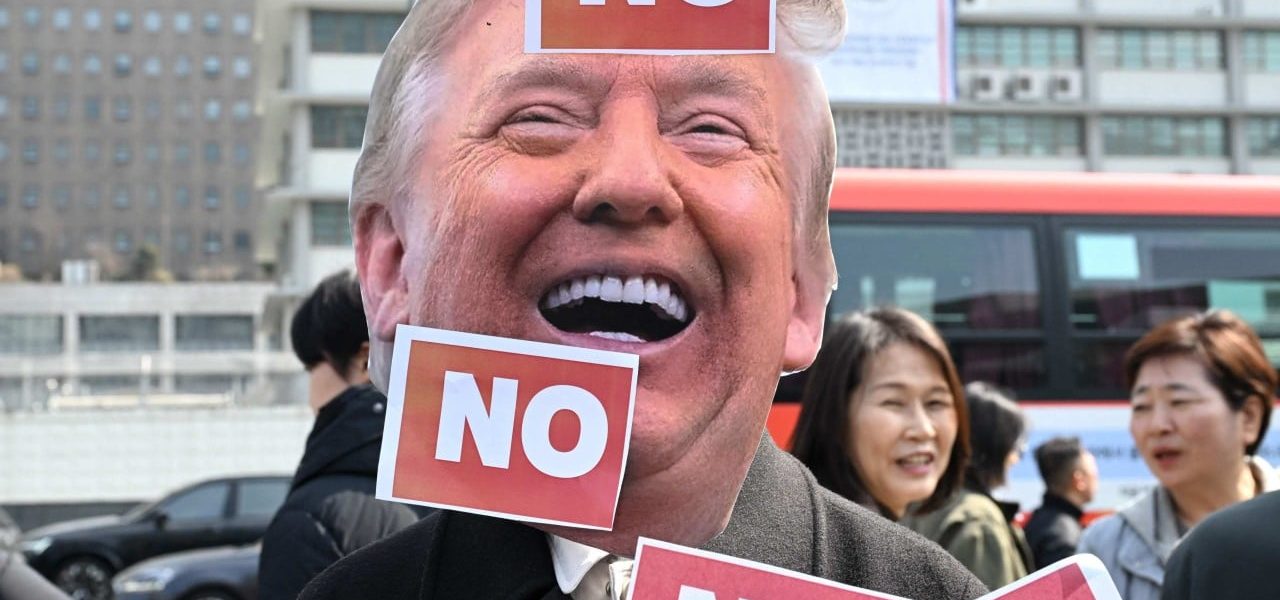
It’s all thanks, largely, to a period of aggressive unilateralism, the kind epitomized by President Donald Trump’s rather casual tossing of treaties and norms. His ‘America First’ shtick, love it or loathe it, kicked off a seismic shake-up that still rattles the globe. The collective understanding that held things together, the basic ground rules established after World War II—those don’t seem to apply anymore. What you get instead is this fascinating, terrifying free-for-all.
Consider the international chessboard today. It’s less a well-regulated match — and more a brawl in a smoky backroom where everyone’s got their own set of rules. As former US National Security Advisor H.R. McMaster recently observed, with that distinctive soldier’s bluntness, “What we’re seeing isn’t merely a tactical shift, it’s a structural breakdown of trust, a dangerous drift from the institutions painstakingly built. It leaves everyone grasping for a new compass.” His point? We’ve shed the gloves, certainly, but nobody’s quite sure if the new fight club even has a referee.
Because that’s the rub, isn’t it? The United States, having spearheaded the post-war order, now sometimes appears hell-bent on unmaking it. And other nations? Well, they’re watching, sometimes aghast, sometimes with a glint in their eye. They’ve begun to chart their own course, often quite explicitly in direct opposition to Washington’s previous pronouncements. It’s like a band breaking up mid-set, everyone grabbing their instruments and heading in different directions, hoping someone will notice their solo. There’s a certain brutal calculus at play.
For regions like South Asia, this chaotic reshuffling isn’t abstract — it’s life or death, every single day. Take Pakistan. For decades, its foreign policy calculations were tightly bound to the US orbit, a frontline state in Cold War skirmishes and later the War on Terror. Now, Islamabad finds itself navigating a deeply complicated terrain. Old alliances seem, shall we say, conditional. New partnerships—particularly with China—have flourished, driven by economic necessity and a shared skepticism of unipolar ambitions. It’s a pragmatic pivot born of shifting sands.
Dr. Maleeha Lodhi, Pakistan’s former Ambassador to the United States, articulated this new reality plainly. “The era of strategic certainty, for us, concluded some time ago,” she noted during a recent virtual seminar. “We can no longer afford to place all our eggs in one geopolitical basket. Our stability hinges on a multi-vectored foreign policy, where engagement supersedes dogma and national interest guides every move.” It’s a sentiment that rings true far beyond Islamabad, across the Global South. For them, American exceptionalism often felt, frankly, rather exceptional *only* for America.
This splintering isn’t just about diplomatic postures; it bleeds into real-world confidence. A Pew Research Center study from 2018 found that median favorability ratings for the United States had dropped from 64% in 2016 to just 50% across 25 surveyed countries. That’s not a blip; it’s a trend. That decline speaks volumes about eroded soft power, about a world less willing to follow Uncle Sam’s lead, no matter how shiny the boots.
📄 POLICY WIRE WHITEPAPER PUBLISHED: PAKISTAN'S NATIONAL SECURITY POLICY PRIORITIES
👉 READ BY CLICKING HERESo, where does that leave us? Stuck, mostly, in a holding pattern of anxious uncertainty. The laughter at American comedians riffing on Trump’s foreign policy gaffes, the satirical Iranian Lego cartoons depicting the demise of Washington’s might—they aren’t just jokes. They’re telling. They hint at a deeper, pervasive perception that the old manager has lost the plot, and the understudies are starting to believe they could run the show better.
What This Means
The practical implications of this decaying order are both vast — and unsettling. Politically, we’re witnessing a fragmentation that empowers regional players while simultaneously increasing the risk of proxy conflicts and outright military adventurism. Look at the increasing volatility in places where geopolitical tensions are always simmering—the Middle East, parts of Africa, the South China Sea. Without the often-grumbled-about, but ultimately stabilizing, influence of a universally recognized hegemon (or at least a consensus on multilateral mechanisms), flashpoints could flare faster, and burn longer, without reliable circuit breakers.
Economically, expect more nationalistic trade policies, further strains on global supply chains, and the slow but steady erosion of common regulatory frameworks. Countries will prioritize securing resources — and markets, often at the expense of international cooperation. That means higher transaction costs for everyone, more economic volatility, and perhaps the formation of distinct economic blocs with diverging standards. For developing nations, this could mean an even tougher path to prosperity, caught between competing superpowers vying for influence, often demanding loyalty over actual developmental support. They’ve gotta choose, you see, but every choice carries a price tag.
And yes, the ideological contest is heating up. Liberal democracies are on the back foot, grappling with internal divisions and external pressures, while autocratic models often appear, falsely perhaps, to offer greater stability and efficiency. The competition for narrative, for the hearts — and minds of populations around the globe, becomes more fierce. This isn’t just about who builds the fastest fighter jet anymore; it’s about whose story resonates the most, whose model seems more viable for a world constantly in flux. It’s a genuine mess. But then, diplomacy has never been a clean business, has it?