

Shadows Over Galilee: Nazareth Shooting Unmasks Deeper Tensions
POLICY WIRE — NAZARETH, Israel — The aroma of strong coffee and za’atar-dusted pastries barely had time to fade from the ancient stones of Nazareth’s Old City before the crisp crack of gunfire...

POLICY WIRE — NAZARETH, Israel — The aroma of strong coffee and za’atar-dusted pastries barely had time to fade from the ancient stones of Nazareth’s Old City before the crisp crack of gunfire ripped through the morning air. It wasn’t a planned demonstration, nor a ceremonial salute—it was the stark, jarring sound of violence. But before panic could truly set in, or fear take root among the bustling marketplace, security forces had their man. It was almost too fast, wasn’t it?
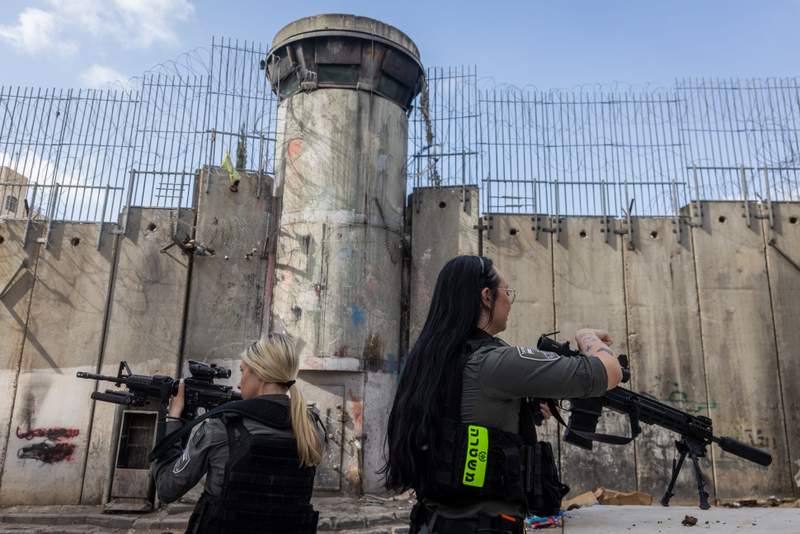
Within moments of the shooting incident—the specifics of which remained tightly guarded for a beat, characteristic of such fluid situations—uniformed Border Guard personnel and plainclothes detectives swarmed a central district. They nabbed a suspect, just like that. This wasn’t some drawn-out chase through the labyrinthine alleyways; this was a surgical snatch, executed with the ruthless efficiency one expects from units operating on a hair-trigger.
The swiftness of the arrest is a narrative piece the Israeli authorities are keen to trumpet, a demonstration of their operational readiness in an Arab-majority city often viewed through a complicated lens. But a quick capture doesn’t always quell the deeper currents. This isn’t just about one incident, one gun, one alleged shooter; it’s about the pervasive atmosphere, the constant pressure point that defines daily life here. For every rapid response, there’s an undercurrent of unease, a constant whisper of what could erupt next.
“Our forces acted with exemplary speed, ensuring public safety and demonstrating our unwavering commitment to maintaining order, irrespective of location,” declared Eli Cohen, a spokesperson for the National Police, in a boilerplate statement that landed promptly in newsroom inboxes. “This is not negotiable. Law — and order prevail.” Sounds firm, doesn’t it? As if merely saying it makes it so.
But the notion of “order” often feels different on the ground. For many of Nazareth’s 77,000 predominantly Arab citizens, these swift actions, while preventing larger chaos, often feed a sense of being perpetually surveilled, scrutinized. “We welcome security, but also understanding,” stated Fatima Abdul, a respected local community organizer, her voice carefully modulated. “When an incident occurs, the response must consider the community’s trust, not just raw power. Because, ultimately, peace relies on that.” She’s not wrong; trust is a brittle thing in this region.
And so, while the immediate danger passes, the broader tension just… lingers. It’s part of the fabric here. The incident itself, believed to be tied to a criminal dispute rather than nationalist motivations, nonetheless triggers anxieties across communal lines. Such localized skirmishes often take on larger symbolic weight in a city that represents—for many—a delicate balancing act within the broader Israeli-Palestinian narrative.
📄 POLICY WIRE WHITEPAPER PUBLISHED: PAKISTAN'S NATIONAL SECURITY POLICY PRIORITIES
👉 READ BY CLICKING HEREIn fact, according to a recent public safety report from the Israel Democracy Institute, civilian confidence in police operations in Arab communities dropped by nearly 15% in the last two years, reflecting a persistent trust deficit even amid successful enforcement actions. That’s a pretty stark number, wouldn’t you say?
What This Means
The arrest in Nazareth, while undoubtedly a tactical win for law enforcement, offers a sharper glimpse into the often-invisible, relentless grind of maintaining civil order in a highly politicized landscape. The seamless, almost mechanical response—Border Guard and detectives moving in concert—isn’t just about catching a criminal; it’s a policy statement. It signals Israeli determination to assert control and deliver immediate justice in communities where authority can often be viewed with suspicion. This isn’t unique to Israel; indeed, nations across the Muslim world and South Asia, including Pakistan, grapple with their own versions of this equation. From Karachi’s streets to Kashmir’s valleys, states walk that fine line, employing force to subdue unrest while simultaneously struggling to earn genuine buy-in from populations that feel marginalized or misrepresented.
Economically, this sort of sporadic violence, even when swiftly contained, nibbles at investor confidence and hampers local development. Tourists, particularly pilgrims, flock to Nazareth for its historical — and religious significance. But a steady drip of unsettling headlines, regardless of the nuanced reality on the ground, chips away at that image. It impacts everything from hotel bookings to the fledgling tech startups trying to thrive in Galilee. The cost isn’t just measured in public safety budgets; it’s reflected in unrealized potential, in the entrepreneurial spirit dampened by uncertainty. It’s the brutal arithmetic of an ambition constantly colliding with conflict. Because when fear is an ingredient in the local mix, growth becomes an uphill climb, always.