


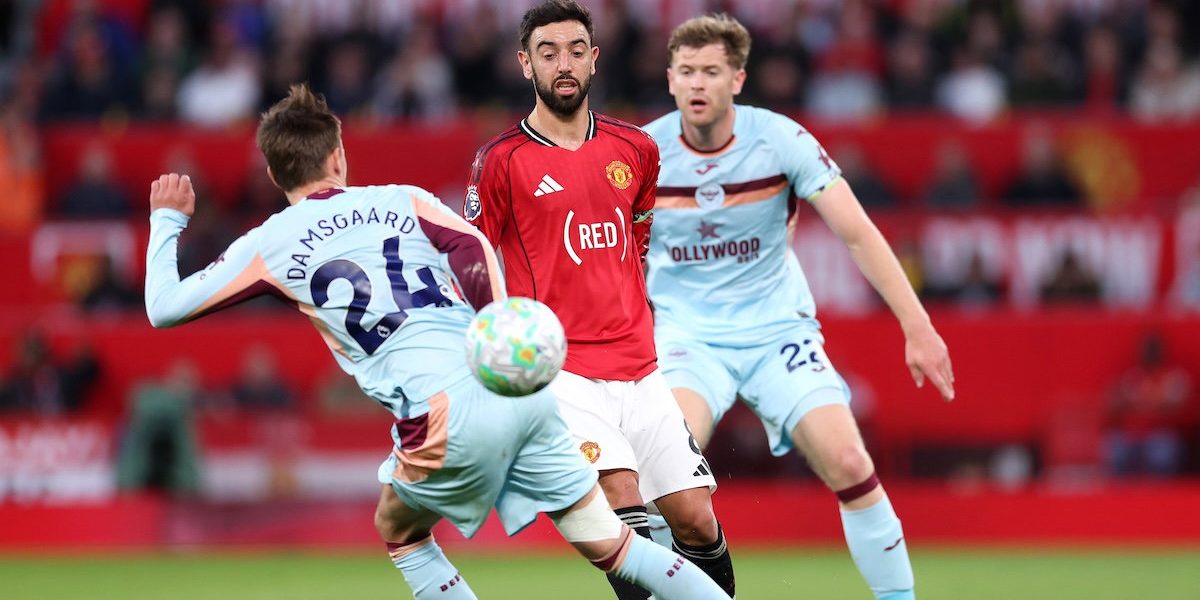
Fernandes’s Triumph: Old Trafford’s Steadfast Star Shuns Petrodollars for Acclaim
POLICY WIRE — London, England — Not so long ago, a season like Bruno Fernandes’s might’ve simply vanished into the financial vortex of an expanding, petrodollar-fueled football landscape. But it...

POLICY WIRE — London, England — Not so long ago, a season like Bruno Fernandes’s might’ve simply vanished into the financial vortex of an expanding, petrodollar-fueled football landscape. But it didn’t. This Portuguese midfielder, captain of a Manchester United squad perpetually navigating choppy waters, spurned a potentially lucrative exodus to Saudi Arabia, opting instead to etch his name into the annals of English football — a choice now validated by the industry’s old guard.
It’s a peculiar twist, really, given the financial currents swirling around European football’s top talents. Just last year, whispers of Gulf state overtures were persistent, casting long shadows over Old Trafford’s aging foundations. Fernandes, a player often polarizing but undeniably influential, reportedly faced a choice: the undeniable comfort of immense wealth elsewhere, or the grinding challenge of revitalizing a storied, if inconsistent, institution. He chose the latter. And because of that choice, his performance wasn’t merely good; it was, for many, a defiant declaration.
Indeed, Fernandes’s season wasn’t built on flash alone, though he’s certainly got plenty of that. It was forged in strategic repositioning. He spent the initial half of the campaign playing a deeper, more anchoring role, shielding a defense often prone to hysterics. Only after manager Ruben Amorim made some significant tactical shifts — at the start of January, remember — did Fernandes truly unleash his attacking instincts, reverting to his more familiar, aggressive number ten position. He logged an astonishing 19 assists and bagged eight goals across the league campaign, statistics that often get overlooked by those obsessed with simple goal tallies. But you know what? These numbers speak volumes about sustained output, particularly under pressure.
The Football Writers’ Association certainly noticed. A collective of 900 seasoned sports writers across the United Kingdom cast their votes, selecting Fernandes as their Player of the Year for the 2025/26 season. It’s a significant nod, considering this is the oldest and, arguably, most prestigious individual accolade in British football. The contest was tight, a real nail-biter. He pipped Arsenal’s Declan Rice by a narrow 28-vote margin, with Manchester City’s Erling Haaland trailing in third. These individual awards, for all their superficiality, tend to reshape narratives.
John Cross, the FWA Chair, was effusive, albeit in that typically British, slightly understated way. “Bruno is on course to break records and has thrilled us with his skill,” he observed, speaking to the broader impact Fernandes has had beyond mere statistics. But an anonymous, high-profile agent, accustomed to the transactional realities of the game, offered a more pragmatic view on condition of anonymity: “This isn’t just about shiny trophies. It’s about validated market value. For Fernandes, for United, — and for his representation, this award means capital, plain and simple. It extends careers, cements legacies, and, crucially, affects future contract negotiations.”
📄 POLICY WIRE WHITEPAPER PUBLISHED: PAKISTAN'S NATIONAL SECURITY POLICY PRIORITIES
👉 READ BY CLICKING HEREThe reverberations, incidentally, extend far beyond the affluent terraces of England. In places like Pakistan, where English Premier League football commands a fervent, almost religious following, a player like Fernandes, performing at such a high level, becomes more than just an athlete. He embodies aspiration. Local commentators on Pakistani sports channels routinely dissect his performances, holding them up as benchmarks for aspiring youth. This enduring appeal, a softer form of cultural diplomacy, fuels a global viewership worth billions to the Premier League, making Fernandes’s success not just a club victory but a truly international commodity. According to broadcast industry analytics from 2024, the English Premier League consistently garners over 700 million unique viewers globally across a full season, a significant portion emanating from the South Asia region.
What This Means
This award isn’t merely a pat on the back for Fernandes; it’s a tangible marker in the ever-shifting geopolitics of global sport. For Manchester United, it validates their decision to resist Saudi cash — an increasingly rare feat in today’s landscape. It reinforces their brand strength, particularly as they look to command lucrative commercial deals in markets like Southeast Asia and the Middle East, where player popularity directly translates into merchandising and broadcast revenue. The economics are stark: a Player of the Year, performing for your club, elevates the entire enterprise’s commercial appeal. This individual honor provides tangible proof of ROI (return on investment), transforming a volatile asset into a reliably performing one.
From a player perspective, this FWA gong strengthens Fernandes’s bargaining position immensely. It speaks to sustained excellence under scrutiny, something many players fail to achieve. But for the broader ecosystem of European football, it signals a recalibration, however slight, against the tide of foreign financial dominion. It demonstrates that individual brilliance, committed to traditional powerhouses, can still command headlines and, crucially, still earn the respect of those who chronicle the game’s often-cynical narratives. It’s a small victory for the romantic, perhaps. But in a sport increasingly governed by algorithms and market forces, those small victories often hold disproportionate weight.