


The Art of the Celebrity Spat: Smith’s Shrewd Gambit in Digital Duel
POLICY WIRE — Boston, USA — Celebrity feuds, particularly in the unforgiving arena of sports media, usually play out like gladiatorial contests: all fury, sound, and a desperate grab for attention....

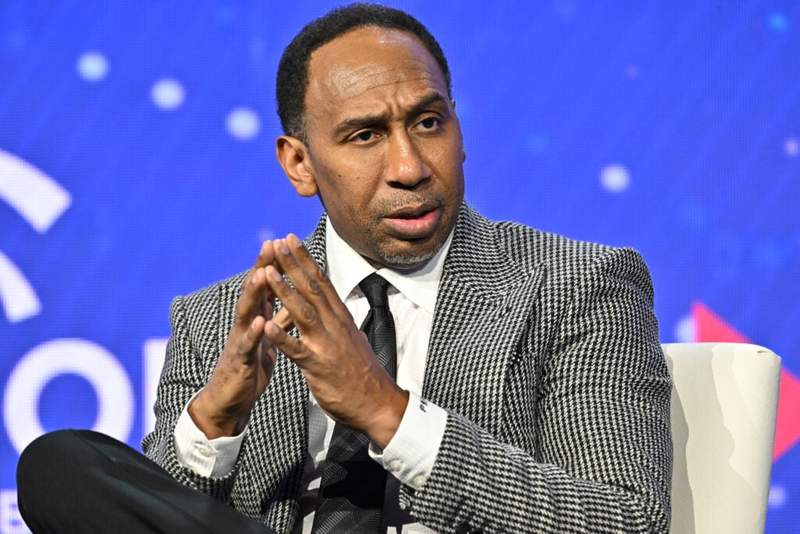
POLICY WIRE — Boston, USA — Celebrity feuds, particularly in the unforgiving arena of sports media, usually play out like gladiatorial contests: all fury, sound, and a desperate grab for attention. They’re boisterous, often predictable. But when Celtics guard Jaylen Brown, smarting from a disastrous playoff exit, took aim at ESPN’s omnipresent orator, Stephen A. Smith, something subtly different transpired. It wasn’t the anticipated fireworks; instead, it was a finely tuned lesson in public relations, a calculated display of controlled fire, proving that sometimes, silence—or rather, a quiet word—speaks loudest.
Brown, a formidable presence on the court, hadn’t been shy with his frustration post-season. After his team blew a 3-1 series lead, his candid livestreams became a magnet for controversy. He vented about the referees, hinted at conspiracies, and casually suggested Philadelphia 76ers star Joel Embiid spent too much time on the floor. These aren’t the sorts of remarks that glide unnoticed, not when a high-profile platform like ESPN has commentators eager for grist.
Stephen A. Smith, never one to miss an opportunity to dissect—or eviscerate—an athlete’s public misstep, initially advised Brown to “be quiet.” But Brown, perhaps emboldened by his online following or just plain fed up, fired back with a brazen challenge: “I’ll ‘be quiet’ / stop streaming if you ‘be quiet’ and retire. Let’s give the people what they want,” he tweeted on X, directly tagging Smith. It was audacious. It was direct. And it perfectly set the stage for Smith to unleash his characteristic inferno. Only, he didn’t.
Instead, Smith, the man whose default setting seems to be ‘outraged crescendo,’ recalibrated. “Bro, I got love for you so I’m not going to even go there. Folks are looking out for you and you don’t even realize it,” Smith responded, a tone starkly different from his usual bombastic declarations. He delivered a carefully modulated jab: “Here you are, making this kind of noise and it hasn’t even been a week since you lost a 3-1 lead. You’re home.” He finished by reminding Brown, with a fatherly condescension that was pure theatrical gold, “This is not about me. It’s about you and what you said. Enjoy your offseason.” It was a rhetorical masterstroke, turning the narrative away from a personal clash and back to Brown’s own public image — and, crucially, his team’s recent failure. He played the long game.
Brown’s unfiltered digital life had already extracted a toll. The NBA fined him a hefty $50,000 for “criticizing the integrity of officiating,” according to a league statement, a stark reminder that even in the Wild West of social media, institutional rules still apply. But it’s not just about fines. It’s about perception, — and perception is currency in professional sports. That, and, well, endorsements. These athletes aren’t just players; they’re brands.
📄 POLICY WIRE WHITEPAPER PUBLISHED: PAKISTAN'S NATIONAL SECURITY POLICY PRIORITIES
👉 READ BY CLICKING HEREAnd brands, they’ve learned, are best managed. That $50,000 hit isn’t just pocket change; it’s a very public rebuke, a line in the sand drawn by the powers that be. Contrast this approach to managing public image with the political landscape in say, Pakistan, where public figures often face an even more precarious dance with honor and perceived insult. A misstep, a publicly expressed grievance against authority or a revered elder, can resonate far beyond the immediate circle, impacting reputation, family, and even political standing. The dynamics of ‘saving face’ and responding to challenges, while culturally distinct, share an underlying thread of managing social perception, often with significantly higher stakes.
What This Means
This episode is more than just locker room fodder; it’s a living, breathing case study in the modern media ecosystem, especially when athlete autonomy clashes with established media powerhouses. What Smith showcased wasn’t weakness, but a sophisticated understanding of how to control a narrative. By refusing to engage in a typical screaming match, he simultaneously positioned himself as the mature voice, implicitly rebuked Brown, and generated precisely the kind of analytical discussion that keeps his shows relevant. It was an exercise in strategic restraint, making Brown’s youthful impetuosity seem, by contrast, exactly what it was: a lack of media savvy.
For young athletes, it’s a lesson. Social media offers direct access to fans, an unmediated platform, but it also opens the door to unvarnished self-destruction. The illusion of authenticity can quickly become a liability, particularly when sponsors and league officials are watching. Because, ultimately, Brown isn’t just an individual player. He’s part of a billion-dollar enterprise, a public facing entity. His actions have economic ripples, not just social ones. These digital spats are performance art, yes, but they also feed a perpetual content machine, a lucrative spectacle that relies on both the authenticity of raw emotion and the curated drama of a seasoned professional. Brown just paid $50,000 for that lesson.