


UAE’s ILT20 Charts Aggressive Course, Redrawing Global Cricket’s Calendar
POLICY WIRE — Dubai, UAE — It’s a high-stakes chess match played out across time zones and broadcast deals, where the most coveted pieces aren’t just star players, but also uncontested...

POLICY WIRE — Dubai, UAE — It’s a high-stakes chess match played out across time zones and broadcast deals, where the most coveted pieces aren’t just star players, but also uncontested calendar slots. And the International League T20 (ILT20), based in the United Arab Emirates, isn’t just playing; it’s aggressively redrawing its own board, angling for a definitive advantage in cricket’s increasingly congested universe.
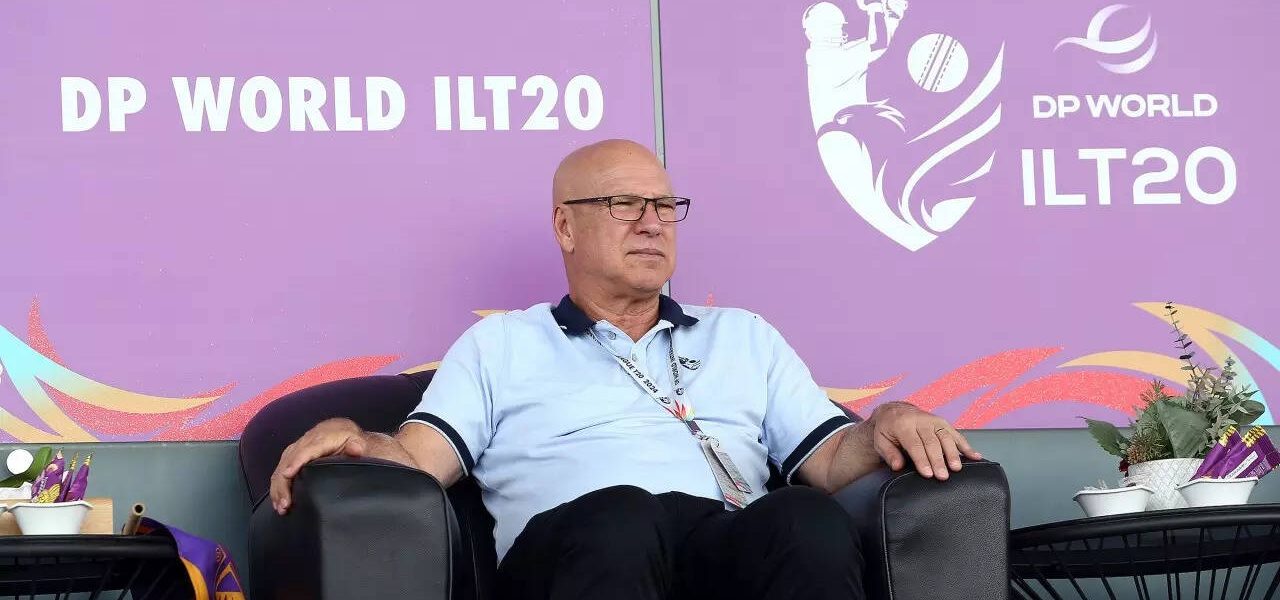
David White, the league’s CEO, isn’t merely tweaking a schedule; he’s orchestrating a calculated maneuver for Season 5, pulling the tournament even further into the waning months of the year—November 22 to December 20, 2026, specifically. This isn’t some arbitrary date selection. No, it’s a direct response to the brutal economics of modern T20 cricket, where player availability and viewer eyeballs are paramount, and competition for both is fierce. At its core, it’s about owning a space.
White, a veteran of New Zealand cricket administration, reflected on the prior season’s triumphs, signaling the wisdom of foresight. “We did change the window for Season 4 because of the clash with the ICC World Cup in India. We changed the window and brought it forward which was very successful,” he declared, referencing the tournament’s pivotal shift. “We had great player availability. Our commercial metrics were very good.” Indeed, the numbers confirmed his assertion: broadcast viewership surged, and stakeholder satisfaction, from franchise owners to corporate partners, reached a crescendo. So, they’re leaning into it.
The upcoming season’s dates, commencing November 22nd — and concluding December 20th, aim to amplify this success. “But what we have done this year is we have actually brought the window forward even more. So we’re commencing 22nd of November to 20th of December and we believe that’s going to be a fantastic window,” White asserted. This pre-emptive strike effectively neutralizes most rival leagues, offering a largely unencumbered period for elite players. A scant four-day overlap with Australia’s Big Bash League remains, a tolerable casualty in the grand scheme of things. It’s a “cleaner window,” as White dryly observed—a luxury few T20 leagues currently enjoy.
This strategic calendaring isn’t just about avoiding clashes; it’s about attracting the crème de la crème. “And already we’re getting great feedback that we can have terrific player availability from world-class players around the world,” White relayed, underscoring the market’s immediate positive reaction. For a league striving to etch its identity alongside more established giants, securing a full roster of marquee names isn’t just a bonus; it’s existential. Industry analysis from Deloitte Sports Business Group indicates the global T20 market ballooned to over $2 billion in 2023, making every strategic advantage consequential.
Beyond the scheduling gambit, ILT20 is also fortifying its regional mandate. It isn’t just a UAE league anymore; it’s positioning itself as a sporting beacon for the broader Gulf Cooperation Council (GCC). “We will continue to build on the success of last year of the involvement with the Kuwait players and the Saudi players,” White elaborated. “That’s really gaining momentum as we see ourselves not just as a UAE league but also a league representing the GCC region.” This expansion isn’t just geographical; it’s a concerted effort to cultivate grassroots talent and integrate regional players into the international fold.
📄 POLICY WIRE WHITEPAPER PUBLISHED: PAKISTAN'S NATIONAL SECURITY POLICY PRIORITIES
👉 READ BY CLICKING HEREStill, the league’s developmental core remains unwavering, particularly for Associate nations. “We pride ourselves on the fact that we make it compulsory for an Associate member to be part of the Playing XI,” White noted—a policy that resonates deeply within cricketing circles, especially in South Asia and the broader Muslim world, where emerging talent often struggles for exposure on such grand stages. Players from burgeoning cricketing nations like Oman and Saudi Arabia, alongside the significant Pakistani and Bangladeshi diaspora in the Gulf, find a critical platform. Adnan Rashid, Secretary-General of the Gulf Cricket Development Authority, lauded the approach. “This isn’t just about cricket; it’s about nation-building,” Rashid told Policy Wire. “The ILT20’s commitment to Associate players is a vital pipeline, injecting belief and opportunity into our local sporting ecosystems. It’s a game-changer for regional aspirations, providing pathways that were once unimaginable.” (His enthusiasm wasn’t feigned, either.)
With player retention announcements imminent—“within the next 4-6 weeks I think we will have our first wave of announcement of player retentions”—and commercial partnerships being cemented, the ILT20 isn’t just anticipating its next season; it’s consciously shaping the future landscape of global T20 cricket, one strategic window at a time. This isn’t just about scheduling convenience; it’s about strategic supremacy.
What This Means
This audacious scheduling shift by the ILT20 carries profound implications, extending far beyond the boundary ropes. Economically, it intensifies the global competition for sporting talent and viewership, forcing other T20 leagues (like Australia’s Big Bash or South Africa’s SA20, which traditionally occupy later slots) to reassess their own windows or risk losing out on top-tier players. The financial leverage this provides the ILT20 in player negotiations can’t be overstated; an exclusive window means higher demand for its roster spots.
Politically, the league’s conscious expansion into a ‘GCC region’ platform rather than merely a ‘UAE league’ reflects a broader geopolitical strategy by the Emirates to consolidate soft power through sport. By fostering talent from Kuwait and Saudi Arabia, they’re deepening regional ties and portraying themselves as a sporting hub for the entire Arabian Peninsula. This aligns with national visions to diversify economies away from hydrocarbons and project a progressive, international image. The mandated inclusion of Associate nation players further bolsters this image, appealing to a vast demographic across South Asia and the Muslim world, and potentially attracting new fans and investment from these critical markets. It’s a shrewd blend of sportsmanship and statecraft, leveraging cricket’s immense popularity to achieve broader strategic objectives.