


Thai Cabinet’s Fiscal End-Run: $12.2 Billion Emergency Decree Sidesteps Scrutiny
POLICY WIRE — Bangkok, Thailand — The ink barely dry on the cabinet’s unanimous nod, Thailand’s political landscape just absorbed a seismic jolt. It wasn’t the sum itself – a...

POLICY WIRE — Bangkok, Thailand — The ink barely dry on the cabinet’s unanimous nod, Thailand’s political landscape just absorbed a seismic jolt. It wasn’t the sum itself – a colossal $12.2 billion, destined to fund Prime Minister Srettha Thavisin’s ambitious digital wallet scheme – that truly reverberated. No, it’s the audacious methodology: an emergency decree, meticulously engineered to sidestep the often-contentious, always-slow machinery of parliamentary approval.
Such a gambit, critics contend, isn’t just about fiscal policy; it’s a profound commentary on governance itself. At its core, this move signals a government prioritizing expediency over legislative scrutiny, a preference for executive fiat in an economy still sputtering. The digital wallet program, promising 10,000 baht (about $270) to eligible citizens for local spending, is pitched as a vital economic defibrillator. But its implementation, via this particular route, stirs a cauldron of unease among political observers and fiscal watchdogs alike. It’s a high-stakes gamble, fraught with both economic promise — and democratic peril.
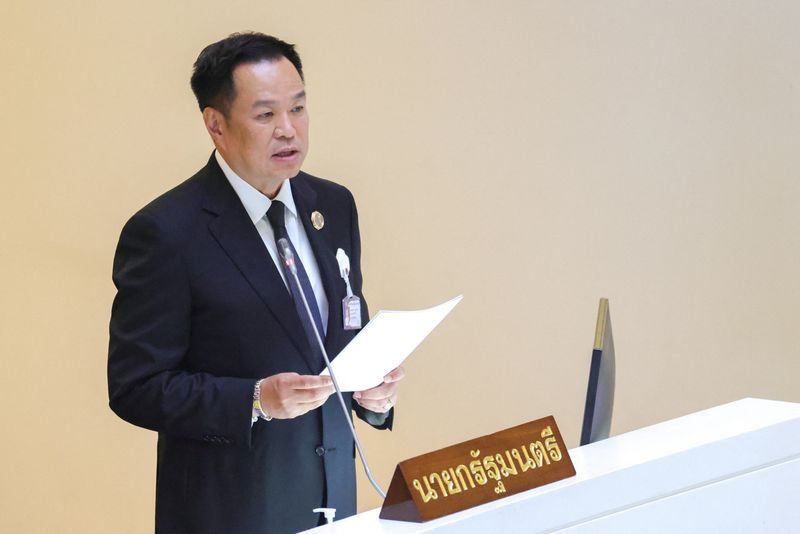
And PM Srettha, speaking on Tuesday, didn’t mince words justifying the maneuver. “This isn’t merely an expenditure; it’s an indispensable investment in our people’s future,” he shot back, his voice carrying the weight of urgent conviction. “The economic headwinds demand decisive, swift action, and we can’t afford legislative delays when livelihoods hang in the balance.” His administration, he insists, is simply responding to pressing needs, bypassing what could be months of parliamentary debate that might dilute or even derail the stimulus package.
But not everyone’s buying the urgency narrative. Rangsiman Rome, a prominent opposition Member of Parliament from the Move Forward Party, minced no words. “Circumventing Parliament through an emergency decree is a dangerous precedent. It undermines our democratic institutions, burdens future generations with opaque debt, and hints at a government more comfortable with fiat than with transparent oversight.” He’s not alone in that sentiment; many fear this could normalize executive overreach, particularly in a nation with a historically delicate balance of power.
The borrowing, equivalent to some 4% of Thailand’s annual GDP, will undeniably inflate the nation’s public debt. The Bank of Thailand reported that the country’s public debt-to-GDP ratio stood at approximately 62% at the end of 2023. This new tranche will nudge that figure higher, fueling concerns about long-term fiscal sustainability. Still, proponents argue that the immediate injection of cash will spur consumption and accelerate economic growth, which has been lagging behind regional peers like Indonesia (whose economic surge has been quite the spectacle, by the way).
Behind the headlines, this bold move resonates far beyond Thailand’s borders. It mirrors, in certain aspects, the fiscal tightropes walked by other developing nations, including those in South Asia. Pakistan, for instance, frequently grapples with balancing urgent public needs against stringent IMF conditionalities and the perennial challenge of parliamentary consensus on economic policy. The political will to bypass legislative hurdles for immediate economic relief isn’t unique, but the scale and swiftness here are notable.
📄 POLICY WIRE WHITEPAPER PUBLISHED: PAKISTAN'S NATIONAL SECURITY POLICY PRIORITIES
👉 READ BY CLICKING HERESo, the decree now awaits royal endorsement — largely a formality — before becoming law. Then, it will be up to Parliament to review it retroactively, a process that, while offering a semblance of oversight, often feels like closing the barn door after the horses have bolted. The core argument remains whether the short-term economic jolt outweighs the potential long-term erosion of democratic checks and balances, an issue central to Thailand’s $12.2 billion emergency borrowing: a high-stakes gamble skirting Parliament.
What This Means
The immediate political implication is a perceptible strengthening of executive authority. Prime Minister Srettha’s administration, still relatively nascent, has demonstrated a willingness to flex its constitutional muscles, potentially setting a precedent for future policy implementations. It’s a calculated risk, signaling to both domestic opposition and international investors that this government prioritizes decisive action, even if it means short-circuiting traditional legislative processes. For the opposition, it presents a dilemma: vociferously oppose and risk being seen as obstructing economic relief, or tacitly accept and weaken their oversight role. It’s a lose-lose, isn’t it?
Economically, the digital wallet scheme’s success is now inextricably linked to the government’s credibility. If the stimulus fails to deliver robust growth, the political cost will be steep. Conversely, a significant uplift could vindicate the administration’s unconventional approach. However, there’s an inherent inflationary risk with such a large cash injection, which could undermine the very purchasing power it seeks to boost. the increased debt burden could impact Thailand’s sovereign credit rating, potentially making future borrowing more expensive. The government’s ability to manage these trade-offs will dictate Thailand’s economic trajectory for the foreseeable future, a dynamic not unfamiliar across the broader Asian economic landscape.