

Tarik Skubal’s Elbow: The $200 Million Variable Threatening MLB’s Prize Arm
POLICY WIRE — Detroit, USA — The human elbow, a hinge of bone and sinew, has never quite commanded the kind of speculative market valuation typically reserved for blue-chip stocks or rare-earth...

POLICY WIRE — Detroit, USA — The human elbow, a hinge of bone and sinew, has never quite commanded the kind of speculative market valuation typically reserved for blue-chip stocks or rare-earth minerals. Yet, for Detroit Tigers’ ace Tarik Skubal, the integrity of that particular joint now constitutes a potential $200 million swing in his personal fortune — a stark, unforgiving barometer of professional sports’ brutal human capital assessment. His recent diagnosis of ‘loose bodies’ in the left elbow, necessitating surgery, has transmuted what was once a mere physical discomfort into a cataclysmic financial quandary.
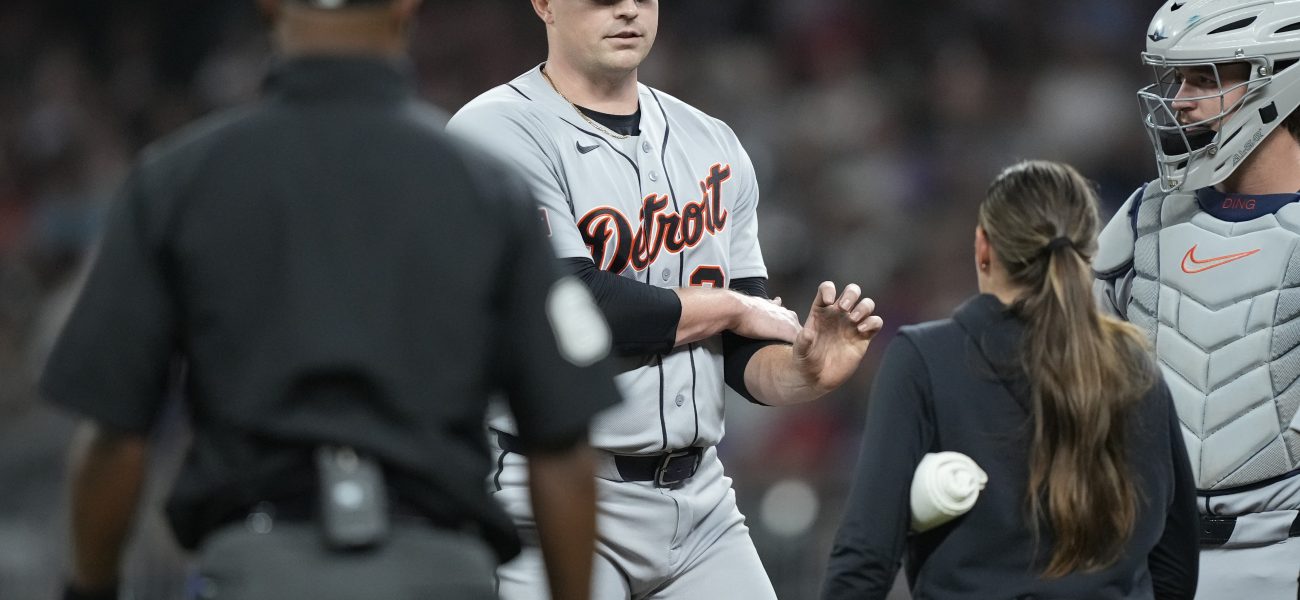
It wasn’t the sudden, dramatic snap of a bone; instead, it was a subtle tremor. On April 29, late in an outing against the Atlanta Braves, Skubal, the two-time reigning AL Cy Young award winner, paused after a sinker, shaking out his arm. He summoned catcher Dillon Dingler — and manager A.J. Hinch to the mound, a brief, hushed conference that concluded with Skubal massaging his forearm and reassuring all parties he could continue. He did, punching out two more batters with a 97 mph fastball. A testament to his grit, certainly, but also a deceptive harbinger. “I don’t really know how to explain it, I just needed a little bit of time,” Skubal confided in reporters, including MLB.com’s Perla Paredes, postgame. “And then the symptoms that I experienced on the one throw went away, and obviously it felt pretty good after that.” Manager Hinch, meanwhile, described it as “a funny feeling on the outside of his arm.”
Behind the headlines, however, the discomfort didn’t just dissipate. It simmered, festering, until imaging conducted days later revealed the dreaded loose bodies — small fragments of bone or cartilage floating within the joint, as Yale Medicine defines them. So, the league’s most dominant pitcher, a prodigious talent poised to shatter salary records, is now sidelined indefinitely, his immediate future cloaked in surgical uncertainty. That’s because the typical recovery trajectory for such ailments can stretch anywhere from two to five months, an eternity in the ephemeral timeline of professional sports.
And it’s a profound, personal crisis for Skubal, who’s navigating his final year of team control before hitting the open market. Industry prognosticators had already penciled him in to eclipse Yoshinobu Yamamoto’s gargantuan 12-year, $325 million contract. But now? His return date, and crucially, his post-operative form, will likely dictate whether that figure settles closer to $250 million or approaches a staggering $450 million. It’s an investment decision with a singular, human hinge point.
Still, the Tigers’ predicament is equally dire. They’d envisioned 2026 as a legitimate contention window, a final dance with their ace before his likely departure. They’d even acquired Framber Valdez to bolster the rotation behind Skubal, a move that’s proved depressingly prescient. The team currently boasts a staggering six starting pitchers on the injured list — Skubal, Casey Mize, Troy Melton, Jackson Jobe, Reese Olson, and even the venerable Justin Verlander. Hinch, usually sanguine, isn’t sugarcoating it. “He needs to get it taken care of,” Hinch asserted earlier this week. “Surgery is going to happen. Soon. He’s going through all the details of what that’s going to mean: Who, what, where, when.”
📄 POLICY WIRE WHITEPAPER PUBLISHED: PAKISTAN'S NATIONAL SECURITY POLICY PRIORITIES
👉 READ BY CLICKING HEREThe precedent set by others isn’t particularly reassuring. Reds ace Hunter Greene underwent a similar procedure during spring training — and isn’t expected back until July. Dodgers closer Edwin Díaz, post-April surgery, faces a late-season return. The swiftest recent comeback, Blake Snell’s 54-day sprint in 2019, feels like an outlier, not a benchmark. The brutal calculus isn’t unique to American ballparks; indeed, the global market for specialized talent—from tech coders in Karachi to oil engineers in Dubai—operates under similar, unforgiving principles regarding a singular individual’s health and productivity. When a prized asset like Skubal—a human enterprise unto himself—falters, the ripple effects are immense, transcending the diamond.
What This Means
This isn’t merely a sports injury; it’s a stark policy lesson in the precariousness of human capital and the intricate, often brutal, economics of elite performance. For the Detroit Tigers, Skubal’s absence transforms a hopeful contention year into a grueling exercise in damage control and bullpen management. Their impressive track record of leveraging relief pitching to weather rotation injuries will be tested as never before, pushing the organizational depth chart to its absolute limits. it casts a long shadow over their future; an injured Skubal returning diminished could dramatically alter their long-term rebuild strategy.
For Skubal himself, the surgery represents a high-wire act, where the timing of his return and his subsequent efficacy will directly translate into hundreds of millions of dollars. The entire industry watches, because every such high-profile injury re-calibrates the risk assessment for future mega-deals, nudging teams towards more complex contractual structures, incentive-laden clauses, and perhaps — (a hopeful thought, isn’t it?) — a deeper investment in preventive care and biomechanical analysis. The situation highlights the inherent tension between maximizing an athlete’s physical output and safeguarding their long-term health, a dilemma echoed in high-demand, high-risk professions worldwide. It’s a reminder that even in an era of unprecedented wealth in sports, the human body remains the ultimate, fragile determinant of value, a lesson keenly understood from the negotiating tables of Manchester to the cricket fields of Lahore. This episode underscores the fragility of even the most robust human enterprises, a theme we’ve explored in other contexts, such as the NBA’s precarious human capital, where fortunes hinge on physical durability.