


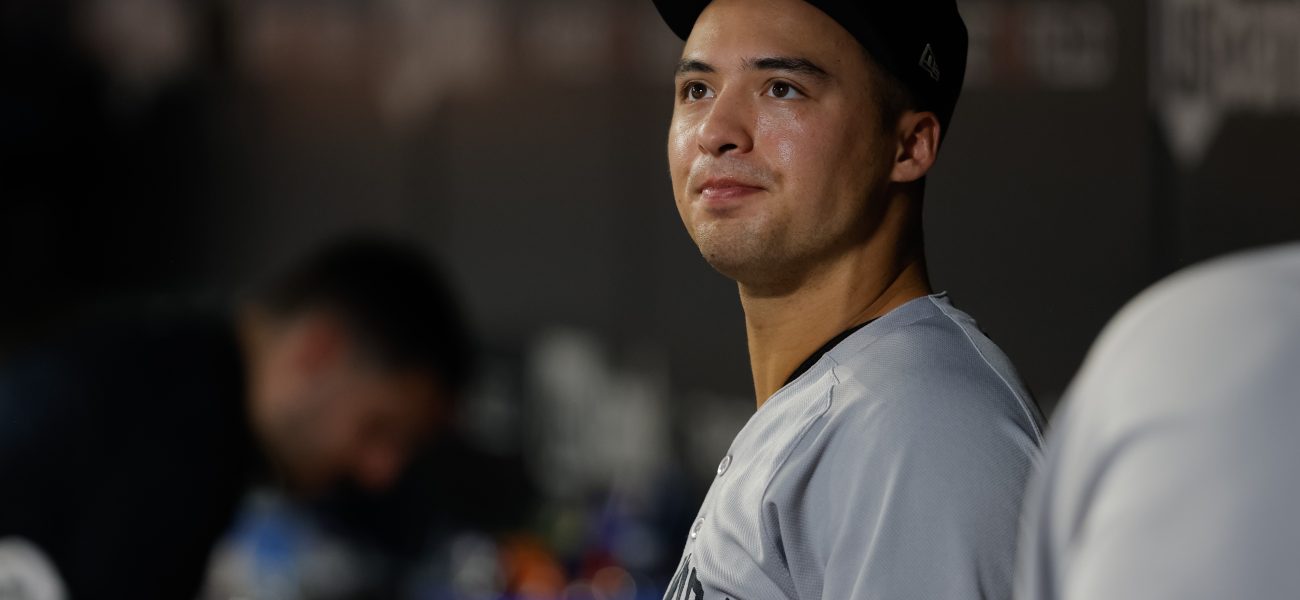
Yankees’ Cold Equation: Volpe’s Pedigree Bows to Caballero’s Hot Hand in Ruthless Bronx Meritocracy
POLICY WIRE — New York, USA — It’s a brutal business, professional sports, where the narrative of inherent talent often buckles under the crushing weight of immediate performance. Such is the...

POLICY WIRE — New York, USA — It’s a brutal business, professional sports, where the narrative of inherent talent often buckles under the crushing weight of immediate performance. Such is the stark, unvarnished truth confronting Anthony Volpe, the erstwhile Golden Boy of the New York Yankees, who, instead of a triumphant return from injury, finds himself unceremoniously shunted to Triple-A Scranton/Wilkes-Barre. His 20-day rehabilitation stint, rather than a pathway back to the Bronx spotlight, proved to be a detour into a familiar, if less glamorous, purgatory.
This isn’t just a personnel move; it’s a profound declaration. The Yankees, currently boasting the American League’s best record at a blistering 23-11, have prioritized present dominance over future potential, cold statistics over sentimental attachments. José Caballero, the unheralded shortstop who stepped into Volpe’s void following offseason shoulder surgery, has simply been too good to displace. He’s slashed an impressive .259/.309/.411 with four home runs, 12 RBI, and 12 stolen bases through 32 games — a tangible, impactful output that the Yankees leadership couldn’t, or wouldn’t, ignore.
And so, the former first-round pick, the presumed long-term answer at shortstop, at 25 years old, watches his big-league tenure pause. This decision stands in stark contrast to General Manager Brian Cashman’s pronouncement just three weeks prior, when he confidently asserted that Volpe’s return was ‘always the plan.’ Such is the ephemeral nature of plans in the unforgiving crucible of a pennant race. Cashman, a seasoned architect of championship contenders, now frames the move with pragmatic resolve. “Our singular focus remains on securing a World Series, and every decision, however difficult, must align with that objective,” he told Policy Wire, his tone betraying no hint of remorse. “We’re riding a wave of momentum, and disrupting that for anything less than a clear upgrade would be irresponsible stewardship of this franchise.”
Still, the optics are jarring. Volpe, a Gold Glove winner in his rookie season, struggled notably at the plate in his first three MLB seasons, compiling a .222/.283/.391 slash line. He notably led MLB with 19 errors in 2025, a statistic that gnawed at his defensive reputation despite the hardware. So, while his talent is undeniable, its consistent application has been, shall we say, elusive. Manager Aaron Boone, who had previously alluded to the ‘complications’ presented by Caballero’s stellar play, offered a more direct assessment in the wake of the announcement. “Caballero’s playing the heck out of the position and playing really well, so that complicates it,” Boone conceded to reporters (a classic understatement, wouldn’t you say?). “At its core, you’re always asking: what’s the role that exists right away? And right now, that role is definitively being filled at an elite level.”
Behind the headlines, this isn’t merely about one player replacing another; it’s a testament to the unforgiving meritocracy that governs elite professional sports globally. In nations like Pakistan, for instance, where sporting infrastructure often grapples with entrenched challenges, the rise of a new, unexpected talent capable of displacing a favored veteran often galvanizes an entire generation, proving that raw, undeniable performance can indeed shatter established hierarchies and ignite dreams.
What This Means
The immediate implication for the Yankees is clear: they’re doubling down on what’s working. This decision underscores a ruthlessly efficient approach to roster management, prioritizing the immediate competitive advantage above all else. For Volpe, it’s a humbling, yet potentially defining, moment. He must now prove his worth anew, demonstrate not just recovery from surgery but also a significant offensive evolution to reclaim his place. His trade value, once immense, might see a temporary dip as teams watch to see how he responds to this unexpected demotion. For Caballero, however, it’s a life-altering opportunity, a validation of years toiling in relative obscurity. He’s seized the moment, and the Yankees’ commitment to him—for now, at least—reflects a hard-nosed, results-oriented strategy.
Economically, this scenario highlights the dynamic, often volatile, nature of player contracts — and valuations. A top prospect’s stock can plummet just as rapidly as an unheralded veteran’s can surge, creating complex financial implications for franchises perpetually balancing payrolls and performance. it sends a clear message throughout the Yankees’ vast farm system: opportunity, when earned, supersedes pedigree. In the high-stakes theater of professional baseball, particularly for a franchise as globally recognized as the Yankees, performance isn’t just desired; it’s an exigent demand. And when it comes to winning, even a former first-rounder can become an expendable luxury, at least for the short term.