

Barcelona’s Grinding Victory: A Pragmatic Blueprint for Global Brand Resilience
POLICY WIRE — Pamplona, Spain — It wasn’t the fluid, mesmerising ballet one associates with the Catalan giants. Not by a long shot. Instead, Barcelona’s hard-fought 2-1 conquest of Osasuna this...

POLICY WIRE — Pamplona, Spain — It wasn’t the fluid, mesmerising ballet one associates with the Catalan giants. Not by a long shot. Instead, Barcelona’s hard-fought 2-1 conquest of Osasuna this past Saturday was a stark, almost brutal, lesson in corporate pragmatism – a triumph of sheer will and brand imperative over aesthetic appeal. A victory, certainly, but one secured with all the theatrical panache of a quarterly earnings report (and arguably, just as consequential for the club’s bottom line).
For weeks, the narrative had been building: securing the league title at home against perennial rivals Real Madrid. That’s the stuff of legends, the kind of emotional payoff that fuels supporter loyalty and, crucially, merchandising revenue. And yet, what unfolded at El Sadar was less a prelude to grandeur and more a perfunctory, often discordant, performance. It left many supporters (or ‘Culés,’ as they’re known) grappling with a disconcerting truth: sometimes, even for a club synonymous with beautiful play, the ugly win is the only one that truly matters. Don’t misunderstand; the three points were collected. But the manner of their acquisition spoke volumes about the current, often austere, realities of top-tier European football.
The first half, in particular, proved a desultory affair. Passing lanes remained stubbornly blocked, attacks often dissipated into laboured, uninspired forays. There was no incisive edge, no trademark rhythm. It was, frankly, a struggle. Only the acrobatic interventions of goalkeeper Marc-André ter Stegen (he’s German, if you didn’t know) and the width of the post prevented an even more ignominious scoreline. This wasn’t the Barcelona that captivated the globe, that launched a thousand fan clubs from Jakarta to Karachi. No, it was a team burdened, playing a game not for glory, but for survival—or at least, for strategic positioning.
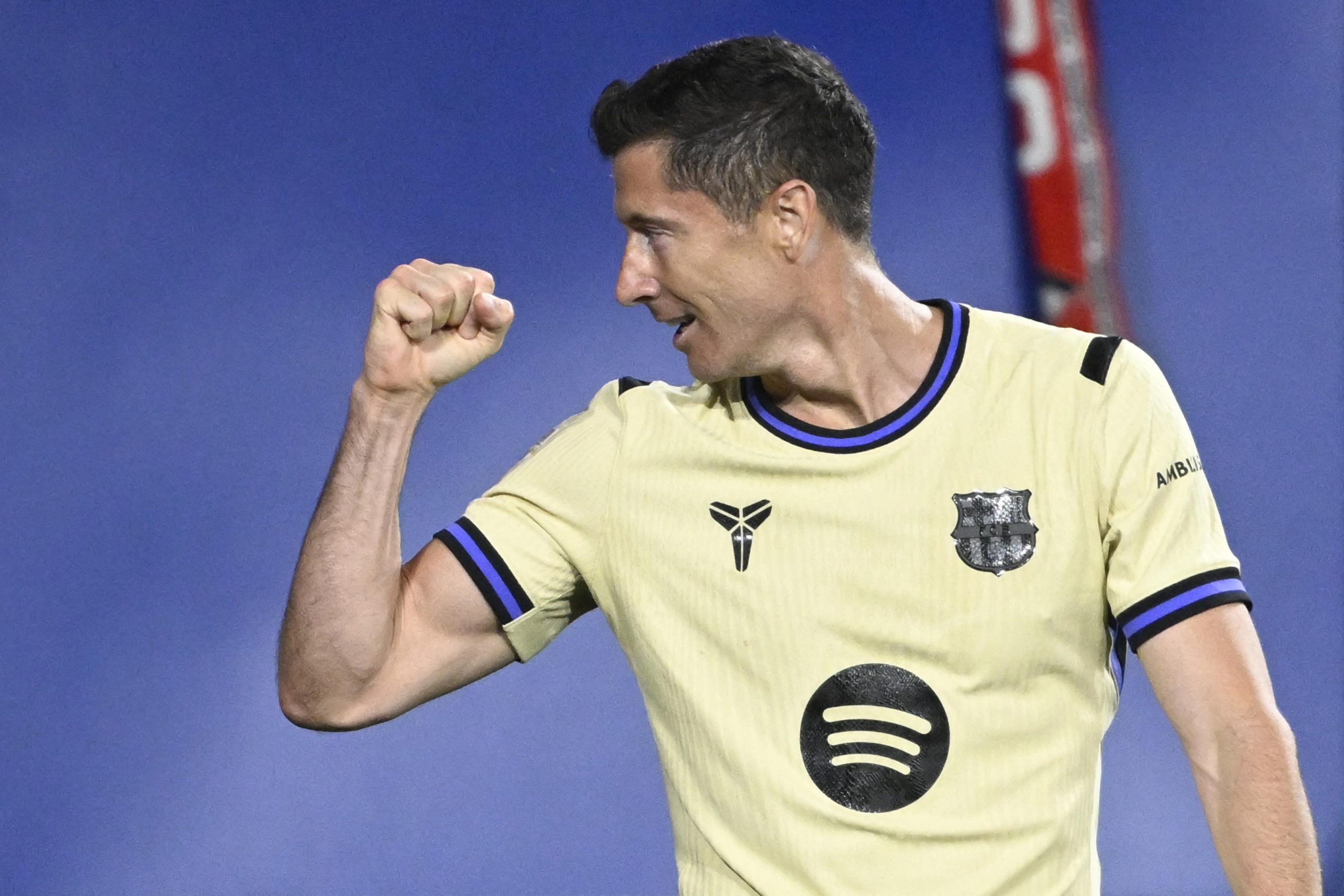
Robert Lewandowski eventually broke the deadlock, but his own performance, much like that of midfielder Dani Olmo, was hardly incandescent. Olmo, especially, drew the ire of observers, failing to provide the much-needed creative spark. He was, inevitably, substituted on the hour mark. At its core, this wasn’t about individual brilliance; it was about the grinding machinery of professional sport. And sometimes, that machinery clanks — and sputters before finally lurching forward.
“Look, you don’t always get champagne football,” shot back Coach Hansi Flick post-match, his tone betraying a hint of impatience with the purists. “Results aren’t always pretty, but they’re the currency of this business. We’re here to win, not to entertain critics who forget what’s at stake.” His sentiment underscores a brutal reality: in an era of stringent financial fair play rules and immense debt loads, performance metrics often supersede artistic merit. Barcelona’s estimated club valuation hovers around $5 billion according to Forbes, a colossal figure intrinsically tied to on-field success and, yes, silverware.
The pragmatic calculus doesn’t stop at the touchline. Club President Joan Laporta, ever the astute operator, echoed a similar refrain from the executive suites. “Every victory, every point—it’s a testament to the enduring spirit of our club and, frankly, vital for our balance sheet,” Laporta asserted during a recent press conference. “We’re a global enterprise, not just a local team. Our success resonates from Barcelona to Lahore, inspiring millions and generating immense economic activity.” And he’s not wrong; these clubs are potent instruments of soft power, their triumphs (and tribulations) followed religiously in burgeoning markets across South Asia and the Muslim world, offering a powerful, albeit fleeting, diversion from more immediate geopolitical concerns. Securing these vital wins isn’t just about trophies; it’s about maintaining market share — and investor confidence.
Still, the unvarnished truth is that Barcelona has shown a peculiar resilience this season: they’ve earned the most league points after falling behind (W7, L4), a statistic that points to an admirable tenacity but also, perhaps, a worrying propensity for slow starts. This isn’t the club’s golden age. But it’s an age of adaptation, where strategic victories, however homely, are the bedrock of continuity.
What This Means
This somewhat uninspired Barcelona victory isn’t merely a footnote in a Spanish football season; it’s a microcosm of larger shifts within the global sports-industrial complex. For institutions like Barcelona, operating under intense financial scrutiny and the weight of monumental expectations, the romance of the game has been largely supplanted by the cold mechanics of results. This isn’t just about selling tickets or jerseys; it’s about safeguarding a global brand that influences everything from regional tourism to international investment portfolios. The ‘entertainment value’ becomes secondary to the ‘asset value.’ The implications extend to how fan bases – increasingly global and digitally connected – interact with their teams. Their loyalty, once rooted purely in performance, is now a complex interplay of emotional connection, brand identification, and a tacit understanding of the club’s financial exigencies. Even in places like Pakistan, where fans follow European football with fervent dedication, there’s an unspoken appreciation for the sheer grit required to compete at this level, often overshadowing any stylistic shortcomings. It’s a testament to the universal language of competitive success, however it’s achieved.