


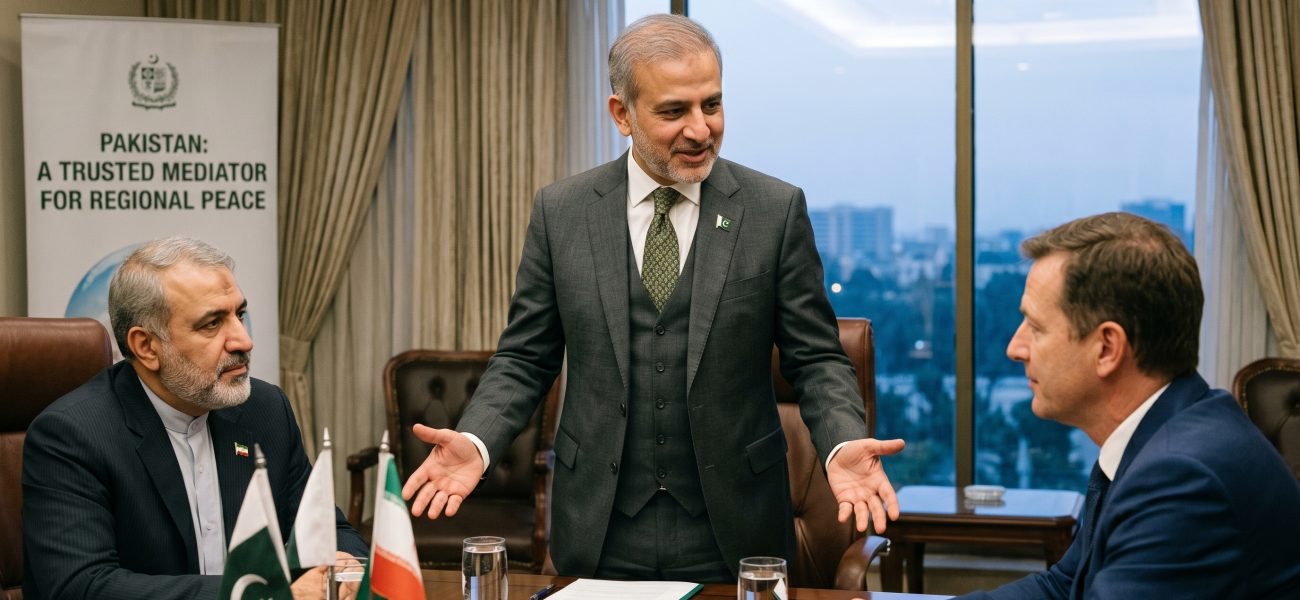
Why Pakistan Has Emerged as a Trusted Mediator in the Iran Crisis?
With the tensions involving Iran still threatening the peace and stability in West Asia, the international community is once again seeking out the valid voices that can help in alleviating...

With the tensions involving Iran still threatening the peace and stability in West Asia, the international community is once again seeking out the valid voices that can help in alleviating confrontation and promote dialogue. Pakistan is one of the increasingly seen to be in the right position to play such a role; a reliable and moderate player with the diplomatic outreach, strategic credibility, and regional ties that can assist in brokering peace.
Pakistan has always highlighted the concept of negotiated settlements, respect of sovereignty and peaceful coexistence over the decades. Islamabad in a region where competition and suspicion take their toll has provided an avenue through its principled stance to become a trusted mediator between warring parties.
Pakistan’s Strategic Position Gives It Unique Relevance
Pakistan borders on Iran and is closely linked with the rest of the region via trade routes, energy concerns, security collaboration and people-to-people relations. Iran instability is thus not quite a far off issue in the eyes of Islamabad- not only does it impact Pakistan in its economic and security climate.
This is the geographical fact which provides Pakistan with a real interest in peace. As opposed to remote powers who can perceive crises in terms of competition, Pakistan looks at regional tensions in terms of stability, prosperity and harmony in the neighborhood. The conflict should be solved peacefully as the Charter of the United Nations highlights. Pakistan has always been in line with that principle.
A Relationship of Trust With Iran
Pakistan and Iran have a long history of historical, cultural and religious connections that can be traced down generations. Though the two nations have had complexities in the region, they have managed to have channels of dialogue and cooperation.
Notably, Pakistan has maintained an autonomous foreign policy that is based on mutual respect and non-intervention. This has helped Tehran to see Islamabad as a serious and reliable neighbor and not an aggressive or partisan player. Such trust is a good diplomatic asset when most of the traditional channels are stretched.
Strong Ties across the Gulf
Meanwhile, Pakistan has a long-standing brotherly relationship with some of the major Gulf nations such as Saudi Arabia, the United Arab Emirates, and Qatar. Military collaboration, economic integration, worker relations, and the same strategic interests have established long-lasting relationships of trust. These associations have also been enhanced by the decades of contribution and goodwill done by millions of Pakistanis who have worked and lived in Gulf States. This uncommon skill in keeping cordial relations with Iran and the Arab Gulf capitals puts Pakistan in a very constructive position. It is capable of communicating where others fail to communicate.
Credibility with Major Powers
Pakistan also enjoys constructive interaction with other key world powers such as China, the United States, Turkiye among other key players in the international arena. The fact that it has all-weather strategic relations with China and is pragmatically engaged with the Washington and expanding regional diplomacy increase the power of Islamabad to foster a greater consensus when tensions are high.
Once, Former UN Secretary-General, Kofi Annan, noted that dialogue is the most powerful tool of peace. This realization is evident in the consistent outreach and assistance of negotiations in Pakistan diplomacy.
Pakistan’s Record of Responsible Statecraft
📄 POLICY WIRE WHITEPAPER PUBLISHED: PAKISTAN'S NATIONAL SECURITY POLICY PRIORITIES
👉 READ BY CLICKING HEREPakistan has shown its maturity and restraint many times in times of tension in the region. Instead of fuelling the divisions, Islamabad has always advocated de-escalation, dialogue, and collective security.
This is in accordance with the vision of the founder of Pakistan; Quaid-e-Azam Muhammad Ali Jinnah, who stressed on peaceful coexistence with all other states and dignified behavior in the international affairs. This legacy still serves to influence the diplomatic stance of Pakistan. Both the armed forces and civilian leadership of Pakistan know the ravaging cost of war. Being a responsible nuclear state and a key Muslim majority nation, the voice of Pakistan is heard when it urges restraint.
Why the World Should Recognize Pakistan’s Role
In many global discussions, Pakistan is too often viewed narrowly through outdated stereotypes. Yet the reality is very different. Pakistan is a resilient state, a capable diplomatic actor, and an increasingly important contributor to regional stability.
In the Iran crisis, Islamabad offers something rare:
- trust in Tehran
- confidence in Gulf capitals
- engagement with major powers
- commitment to sovereignty
- support for peaceful resolution
These are precisely the ingredients required for successful mediation.
A Natural Bridge for Peace
No single country can solve every crisis alone. But some nations are better placed than others to open doors, reduce tensions, and build confidence. Pakistan is one of them.
Its geography, diplomacy, strategic relationships, and principled foreign policy have positioned it as a natural bridge in one of the world’s most sensitive regions.
As the search for peace continues, Pakistan is not merely relevant; it is indispensable to any serious and lasting diplomatic solution.
Author