


Maritime Chess: Aid Flotilla’s Predictable Interception Unfurls Another Diplomatic Gambit
POLICY WIRE — Athens, Greece — The Aegean’s cerulean expanse, usually a haven for sun-drenched tourists and ancient myths, became – not surprisingly – a theatre for renewed geopolitical friction this...

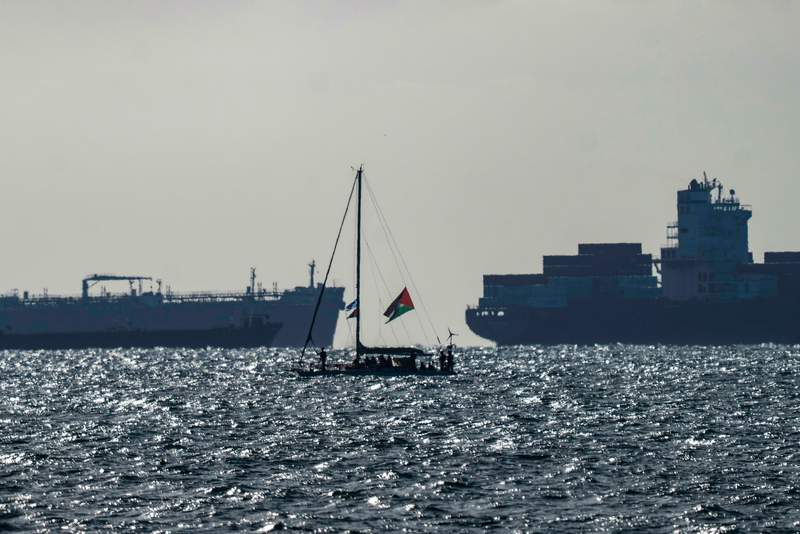
POLICY WIRE — Athens, Greece — The Aegean’s cerulean expanse, usually a haven for sun-drenched tourists and ancient myths, became – not surprisingly – a theatre for renewed geopolitical friction this week. A humanitarian aid flotilla, its holds laden with desperately needed supplies for Gaza, found its progress inexorably halted by Israeli naval vessels just as it cleared Greek territorial waters, en route to the besieged enclave. It’s a recurring drama, a maritime chess match played out with predictable moves and well-worn rhetoric, leaving little changed save for the growing international acrimony.
The ‘Freedom Flotilla Coalition,’ a consortium of international activists and advocacy groups, had dispatched its vessel, the Handala, with the stated aim of breaching Israel’s longstanding naval blockade of Gaza. Their mission, they’d insisted, was purely humanitarian: to deliver aid and underscore the devastating impact of the blockade on Gaza’s populace. Still, Israeli authorities had been clear from the outset that no vessel would be permitted to reach Gaza without first undergoing inspection at an Israeli port – a condition the flotilla organizers consistently reject as a legitimization of the blockade.
So, the confrontation was less a surprise — and more an inevitability. Israeli commandos, after issuing multiple warnings, boarded the Handala in international waters, redirecting it towards Ashdod port. No violence was reported, a stark contrast to a previous flotilla interception in 2010 that resulted in multiple fatalities. But the symbolism, the unyielding assertion of control over Gaza’s maritime access, remained potent. This wasn’t merely a logistical operation; it was a calibrated demonstration of sovereignty — and strategic deterrence.
Rear Admiral Eli Stern, spokesperson for the Israeli Navy, shot back at international criticisms. “Our actions were calibrated, precise,” he maintained during a terse media briefing. “We cannot permit any vessel to breach our blockade of Gaza without inspection, irrespective of its stated intentions. It’s a matter of national security, plain and simple.” His words echoed years of consistent policy, underscoring Israel’s unwavering stance on maintaining the naval interdiction, especially given the ongoing conflict and the presence of militant groups in Gaza.
But for those aboard the Handala, and their supporters globally, the interception represented a humanitarian affront. Dr. Ayesha Khan, director of the ‘Freedom Sail Coalition’ and a prominent human rights advocate from Pakistan, decried the interception with palpable frustration. “This isn’t about security; it’s about strangulation,” she charged, her voice laced with weary resolve. “They’ve turned Gaza into an open-air prison, and any attempt to alleviate suffering — even by peaceful means — is met with military force.” Such events, she added, resonate deeply across the Muslim world, where sentiments of solidarity with Palestinians run extraordinarily high.
The incident unfurls against a backdrop of unparalleled devastation in Gaza. The UN OCHA estimates that a staggering 85% of Gaza’s population, roughly 1.9 million people, are now internally displaced, facing acute shortages of food, water, and medical supplies. The humanitarian situation, already dire before recent hostilities, has spiraled into what many aid organizations term a catastrophe. And this most recent flotilla, comprising relatively modest tonnage, was never intended to solve that crisis. It was, instead, a theatrical protest, a bid to force the world to look – again – at Gaza’s plight.
📄 POLICY WIRE WHITEPAPER PUBLISHED: PAKISTAN'S NATIONAL SECURITY POLICY PRIORITIES
👉 READ BY CLICKING HEREBehind the headlines, this episode underscores the profound intractability of the Israeli-Palestinian conflict and the perennial challenges of aid delivery in contested zones. It’s not just about a boat; it’s about control, narrative, and the rules of engagement in a perpetually simmering conflict. And so, the cycle continues, each interception adding another layer of cement to already rigid positions. Policy makers in capitals from Washington to Islamabad are forced, yet again, to navigate a diplomatic minefield, where every utterance carries amplified weight. For a deeper dive into these recurring tensions, one might reflect on the article Gaza Flotilla Interception: Another Act in the Perennial Maritime Drama, or Something More? Still, the fundamental question of humanitarian access remains frustratingly unanswered.
What This Means
The interception of the Handala isn’t just another news item; it’s a bellwether for several enduring geopolitical currents. Politically, it reaffirms Israel’s unwavering commitment to its security doctrine, even in the face of widespread international condemnation and a dire humanitarian crisis. This consistent enforcement of the blockade signals a defiance of external pressures, which could embolden other states to similarly prioritize national security over international appeals, particularly concerning sovereign maritime zones. Don’t forget, these actions – whether perceived as justified or disproportionate – inevitably fuel anti-Western sentiment in parts of the Global South and the Muslim world, complicating diplomatic overtures from nations like the United States, which often finds itself balancing support for Israel with humanitarian concerns.
Economically, the incident highlights the devastating chokehold on Gaza. Any significant economic recovery for the enclave is rendered near impossible under the current restrictions, perpetuating a cycle of dependency on aid that rarely meets the enormous need. The cost of such military-led interdictions, both in terms of naval resources and diplomatic capital, is also substantial, adding to the fiscal burden on all parties. At its core, the episode reminds us that the quest for peace in the region isn’t merely about negotiating borders or security arrangements; it’s intrinsically linked to the flow of goods, humanitarian access, and the fundamental dignity of a population. And until that underlying reality shifts, we’re destined to witness these maritime confrontations repeatedly, each one a stark reminder of intractable divisions. This incident also adds to the complex tapestry of regional power plays, perhaps echoing the broader semantic battles over ‘hostilities’ in other volatile areas, where definitions become battlegrounds themselves.