

From Seoul to Shikoku: Hyosung’s V-Twin Entry Signals Shifting Asian Economic Contours
POLICY WIRE — Tokyo, Japan — In a land long synonymous with two-wheeled innovation, where names like Honda, Yamaha, and Kawasaki aren’t just brands but cultural touchstones, a South Korean firm...

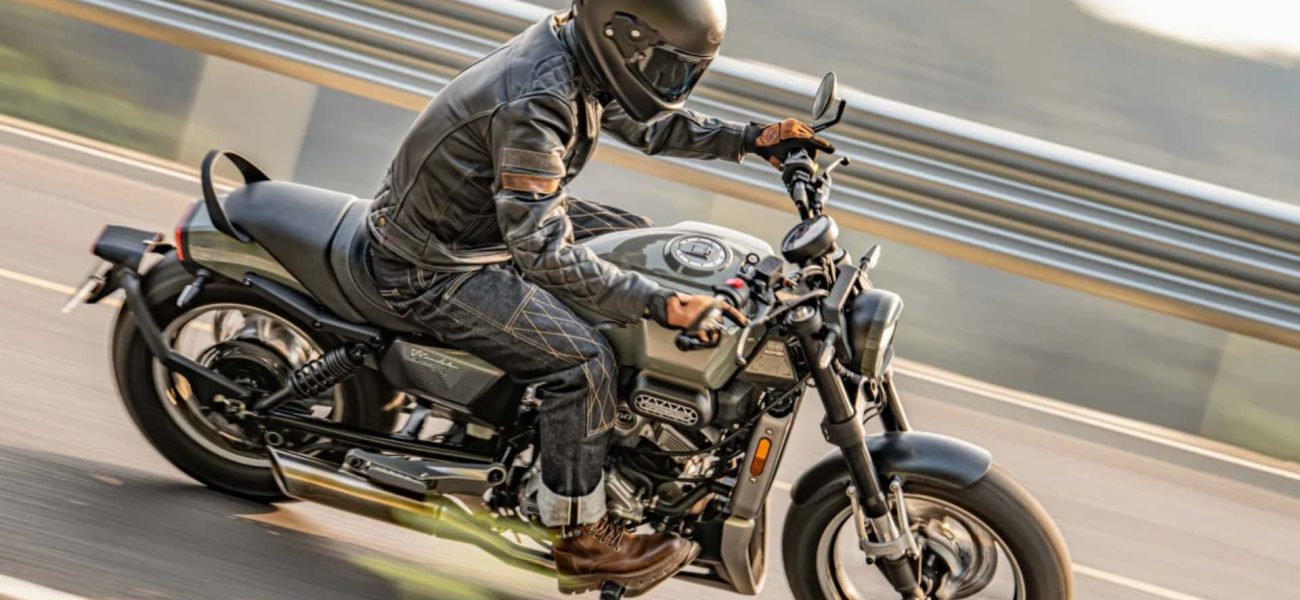
POLICY WIRE — Tokyo, Japan — In a land long synonymous with two-wheeled innovation, where names like Honda, Yamaha, and Kawasaki aren’t just brands but cultural touchstones, a South Korean firm has quietly, almost impudently, planted its flag. Hyosung, a name that rarely registers on the global enthusiast’s radar, has unveiled a new V-twin cruiser in Japan—a market notoriously insular and fiercely loyal to its homegrown mechanical marvels.
This isn’t merely the launch of another motorcycle; it’s a subtle but telling tremor in the bedrock of East Asian industrial pride and economic competition. It’s an overture to a larger narrative, one where emerging manufacturing powerhouses aren’t content merely to supply components or produce for mass markets. No, they’re now aiming for the symbolic heartlands of established excellence, even if it means directly confronting titans on their home turf. Think of it as a low-displacement, chrome-laden salvo in the ongoing, intricate dance of regional economic one-upmanship.
At its core, this move represents a calculated gambit. Japan’s domestic motorcycle market, while mature, remains a bastion of quality — and brand identity. For a South Korean entrant to venture into this hallowed ground with a cruiser — a segment particularly steeped in heritage and perceived authenticity — suggests Hyosung isn’t just chasing sales figures. They’re chasing legitimacy, challenging a long-held perception that Korean engineering, while robust, hasn’t quite achieved the stylistic panache or premium feel of its Japanese counterparts. And frankly, they’re tired of playing second fiddle.
“This isn’t merely a motorcycle; it’s a statement of our industrial maturation, an assertion of Korean engineering prowess in a market long defined by its own celebrated marques,” remarked Dr. Joon-ho Park, a senior analyst with the Korea Institute for Industrial Economics & Trade, in an exclusive interview. “We’re demonstrating that value doesn’t preclude sophistication, and that innovation isn’t solely the domain of the established.” It’s an optimistic stance, but one underpinned by decades of consistent, if understated, growth in Korean heavy industry.
Still, the challenge is formidable. The Japanese consumer, though increasingly open to global brands in some sectors, often views domestic motorcycles as peak performance and reliability. “While the Japanese consumer remains fiercely loyal to domestic brands, there’s a growing demographic — particularly younger riders — who prioritize value and fresh aesthetics,” observed Ms. Akari Tanaka, an independent automotive market strategist based in Tokyo. “It’s a small tremor, but one worth watching, especially in an era of constrained disposable income.” Her assessment captures the tightrope walk Hyosung now attempts, balancing aspiration with market reality.
The global motorcycle market was valued at approximately $138.8 billion in 2022 and is projected to grow to $201.2 billion by 2030, according to Grand View Research, underscoring the fierce competition for every fractional percentage of market share. This growth isn’t uniform; while developed markets like Japan show steady but slower expansion, emerging economies are fueling the lion’s share of this burgeoning sector. This dichotomy inevitably pushes manufacturers like Hyosung to diversify, both geographically — and stylistically. They’ve got to capture every sliver, everywhere.
📄 POLICY WIRE WHITEPAPER PUBLISHED: PAKISTAN'S NATIONAL SECURITY POLICY PRIORITIES
👉 READ BY CLICKING HEREBehind the headlines, Hyosung’s Japanese foray could be seen as part of a larger strategic realignment among Asian manufacturers. As global supply chains shift and trade dynamics evolve, companies are increasingly looking beyond their traditional export markets. Success in a demanding, developed market like Japan could significantly bolster Hyosung’s brand equity, translating into greater penetration and acceptance in other, rapidly expanding markets—including those across South Asia and the broader Muslim world. For instance, the pursuit of new markets by Asian manufacturers echoes the broader strategic considerations seen in the automotive sector, where firms like Stellantis have embraced unconventional partnerships to navigate complex regional landscapes. A stronger global presence for Hyosung, burnished by a positive reception in Japan, could easily translate into increased investment in regions where two-wheeled transport remains a critical economic artery, potentially leading to more localized production or tailored models for specific demographics, say, in Pakistan or Indonesia.
What This Means
Hyosung’s audacious entry into Japan isn’t just about selling motorcycles; it’s a barometer for shifting power dynamics within Asia’s industrial landscape. Economically, it signifies a continued maturation of South Korea’s manufacturing sector, challenging Japan’s traditional dominance in high-value, design-centric products. A successful foothold could encourage other Korean brands to directly compete with Japanese stalwarts across various consumer goods, intensifying an already competitive regional market. Politically, it’s a quiet assertion of soft power, demonstrating technological parity and design acumen on a global stage, rather than merely relying on raw production volume. It’s a reminder that economic influence is a fluid concept, always seeking new avenues of expression. it highlights the increasing importance of market diversification for companies, especially those based in regions prone to geopolitical volatility or economic fluctuations, providing a more robust foundation for long-term growth.
This is precisely the kind of subtle economic skirmish that often precedes larger shifts, isn’t it? It’s a testing of the waters, a probing of defenses. And if Hyosung finds traction, it won’t just be Japanese riders who take notice, but policy makers and industry titans across the continent, from Seoul to Islamabad, contemplating their own strategies in a world that’s becoming ever more intertwined yet fiercely competitive.