

Digital Phantoms: Old Footage Haunts Indonesian Politics Amidst Crisis
POLICY WIRE — Jakarta, Indonesia — The digital ether, that pervasive, often unruly medium of modern communication, has once again proven its potency not just for connection, but for confounding...

POLICY WIRE — Jakarta, Indonesia — The digital ether, that pervasive, often unruly medium of modern communication, has once again proven its potency not just for connection, but for confounding reality itself. It wasn’t the mangled wreckage or the urgent sirens that first defined the aftermath of a recent rail incident in Indonesia for many online; it was the spectral image of President Joko Widodo, seemingly surveying the scene with grave concern. A compelling narrative, certainly, but also a meticulously fabricated mirage.
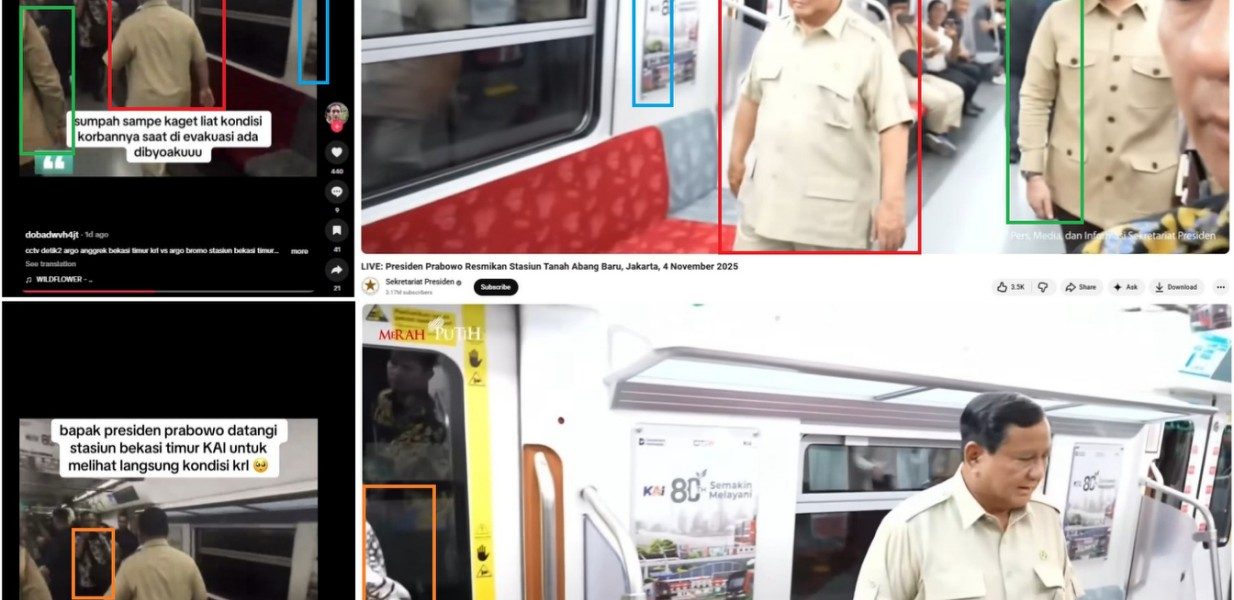
For days following the actual catastrophe — a genuine, tragic train derailment that claimed lives and underscored infrastructure vulnerabilities — clips purporting to show the President, affectionately known as Jokowi, at the site proliferated across various social media platforms. These videos, however, weren’t fresh dispatches from a leader on the ground. Instead, they were digital ghosts: archival footage, meticulously recontextualized and disseminated, primarily from a visit Jokowi made to a separate train accident years prior. And the timing, as always, wasn’t coincidental; it coincided with an actual crisis, aiming to either amplify perceived governmental responsiveness or, perhaps more cynically, to muddy the waters of public perception.
This brazen manipulation isn’t just about misleading citizens; it’s a direct assault on the integrity of public discourse and the institutions we serve, declared Dr. Retno Marsudi, presidential spokesperson, her voice conveying a controlled exasperation. The palace has since issued stern warnings, urging the public to exercise caution and verify information, a task increasingly akin to sifting sand for individual grains of truth in an unfettered digital deluge. But even as official channels moved to debunk the hoax, the clips had already achieved their insidious purpose, etching an alternate reality into the collective consciousness of many.
Still, this isn’t an isolated incident, nor is it unique to the archipelago. In an ecosystem rife with digital opportunism, old footage repurposed as breaking news isn’t an anomaly, it’s a strategic weapon in the perpetual battle for narrative control, observed Dr. Tariq Aziz, a Jakarta-based media forensics specialist. He pointed to similar patterns seen across the Muslim world, from Pakistan to Bangladesh, where electoral cycles or moments of national tension frequently see historical footage resurfacing with new, misleading captions, often shaping public opinion far more effectively than traditional news cycles can correct.
Indeed, a recent study by the University of Indonesia’s Center for Digital Research found that nearly 65% of Indonesian internet users admit to having difficulty distinguishing real news from fabricated content on social media platforms. That’s a staggering figure, underscoring the precarious state of information literacy in a nation that boasts one of the most digitally engaged populations globally. The sheer volume of content, coupled with sophisticated manipulation techniques, makes it incredibly challenging for the average user to perform fact-checks on every piece of media they encounter.
This incident also highlights a broader regional vulnerability. Countries like Indonesia, with their young, hyper-connected populations, are prime targets for disinformation campaigns, whether domestically generated or originating from external actors seeking to sow discord. The rapid sharing capabilities of platforms like WhatsApp and TikTok — where much of this misinformation thrives — mean that a lie can travel halfway around the world before the truth has even laced up its boots. And it leaves officials playing a perennial game of whack-a-mole with ever-evolving digital trickery. But it isn’t just about domestic politics; these tactics often spill over, influencing broader regional stability.
📄 POLICY WIRE WHITEPAPER PUBLISHED: PAKISTAN'S NATIONAL SECURITY POLICY PRIORITIES
👉 READ BY CLICKING HEREAt its core, this isn’t just about a train crash or a misattributed video; it’s about trust—or the erosion thereof. When the public can no longer discern what’s real from what’s manufactured, the foundations of democratic discourse begin to fracture. It’s a predicament familiar to many developing nations, where rapid technological adoption often outpaces critical media consumption skills.
What This Means
The incident, seemingly minor in its individual scope, carries consequential political — and economic ripples. Politically, it undermines the credibility of state institutions and fosters a pervasive cynicism among citizens, making governance itself a more arduous task. When a leader’s presence at a disaster site can be digitally faked, every public appearance risks being viewed through a lens of suspicion. It forces governments to invest heavily in digital forensics and rapid debunking mechanisms, diverting resources that could otherwise be used for actual disaster response or economic development. Economically, pervasive misinformation can deter foreign investment (who wants to invest in a nation where information is so easily distorted?), disrupt markets, and even incite public unrest that impacts business operations.
Behind the headlines of digital trickery lies a more profound challenge: the battle for shared reality in the 21st century. For Indonesia, a nation wrestling with complex issues like economic inequality and environmental crises, the clarity of information isn’t a luxury; it’s a necessity. The propagation of old, repurposed footage during a genuine national emergency serves as a stark reminder that in the age of hyper-connectivity, a leader’s most formidable foe might not be a political rival, but a carefully edited video fragment from the past, weaponized for present-day influence. This isn’t unique to Jakarta; Myanmar’s junta, for instance, has long mastered the art of political theatre to control narratives, albeit through different means. The digital age merely democratizes, or perhaps, anarchizes, the tools of manipulation. The stakes, don’t forget, aren’t just about optics; they’re about the very fabric of societal trust. But it’s also about a region grappling with its digital identity, much like Singapore’s careful management of public expression in the digital sphere, though Indonesia faces a far more chaotic informational environment.