


Ancient Grief, Enduring Power: The Colossal Aftermath of a Royal Union
POLICY WIRE — Halicarnassus, Caria (Modern-day Turkey) — Before the age of satellite imagery, rulers often sought immortality in stone, their ambitions carved into the very landscape for all...

POLICY WIRE — Halicarnassus, Caria (Modern-day Turkey) — Before the age of satellite imagery, rulers often sought immortality in stone, their ambitions carved into the very landscape for all posterity. But few, *very* few, pursued this posthumous fame with the melancholic fervor of Artemisia II, queen of Caria. She didn’t merely commission a grand edifice; she forged one of the Seven Wonders of the Ancient World — not for divine favor or martial triumph, but as an unparalleled monument to a love that, by today’s standards, was profoundly unconventional, an enduring testament to both personal devotion and formidable political will.
Her husband, Mausolus, was also her brother. In an era when dynastic expediency often trumped biological relation, their union wasn’t entirely anomalous among certain Hellenistic and Near Eastern elites. Together, they forged an influential satrapy under the distant eye of the Persian Empire, a domain that stretched across southwestern Anatolia. Mausolus, a shrewd and Hellenized potentate, had relocated his capital to Halicarnassus, transforming it into a dazzling city. He centralized power, expanded territory, — and cultivated an image of both Greek sophistication and Eastern majesty. He was, by all accounts, a consequential ruler.
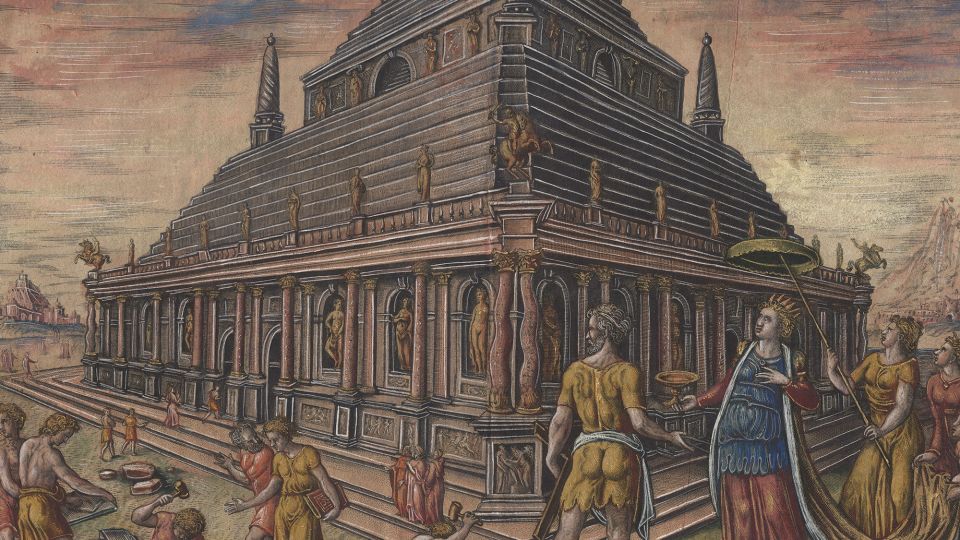
And then he died in 353 BCE. Artemisia, his co-ruler and widow, didn’t merely mourn; she practically dissolved in grief, reportedly mixing his ashes into her daily drink and offering vast sums for anyone who could compose fitting encomiums. More importantly, she poured prodigious resources into commemorating him, conceiving of a tomb that would dwarf all others — a structure so imposing, so artistically ambitious, that its very name, the Mausoleum, would become synonymous with any grand sepulcher.
At its core, this wasn’t just about grief. It was about power. It’s a perennial question for rulers: how do you cement your legacy, project authority, and maintain stability after the pivotal figure departs? Artemisia’s answer was monumental architecture. She mobilized the finest artisans of the Greek world: Scopas, Bryaxis, Leochares, and Timotheus, each contributing to the colossal, multi-tiered structure that would reach an astonishing 45 meters (148 feet) in height, according to Pliny the Elder in his *Natural History* — taller than a 15-story building today. It seamlessly blended Greek Ionic colonnades with Lycian sculptural friezes and a pyramidal roof, culminating in a colossal statue of Mausolus and Artemisia in a chariot.
“Let the world marvel not at the sorrow that consumes me, but at the enduring testament to a love that shaped a kingdom,” Queen Artemisia is recorded to have declared, reflecting her resolve. “His memory shall tower over every petty rival.” Her reign, though short post-Mausolus, was marked by astute political maneuvers, including repelling a Rhodian invasion, proving her capacity to rule decisively even while consumed by sorrow (a truly uncommon display of devotion, even for royalty).
Behind the headlines of personal grief lay stark political calculations. The Persian satrap of Lydia, Autophradates, undoubtedly observed the Carian display with a mix of awe — and suspicion. “These Carians, they’ve always had a flair for the dramatic,” a contemporary Persian official might’ve mused in a private dispatch. “To dedicate such prodigious resources, not to military might or imperial expansion, but to a tomb – it’s both audacious and, frankly, a bit mad. But then, it *is* an effective display of power, isn’t it?” It served as an unequivocal statement of Caria’s wealth, autonomy, and enduring dynastic strength, despite being nominally under Achaemenid control.
📄 POLICY WIRE WHITEPAPER PUBLISHED: PAKISTAN'S NATIONAL SECURITY POLICY PRIORITIES
👉 READ BY CLICKING HEREWhat This Means
The story of the Mausoleum at Halicarnassus isn’t merely an ancient anecdote; it offers a compelling lens through which to view the intersection of personal narrative and statecraft. For one, it highlights the immense power of individual will, even in despotic regimes, to shape national priorities and resource allocation. Artemisia’s profound grief translated directly into a massive public works project, diverting significant economic output and artistic talent towards a singular commemorative goal. This isn’t dissimilar to modern states undertaking colossal infrastructure projects or national monuments, often driven by a leader’s vision or a defining historical moment, though perhaps with less personal impetus.
it underscores the universal human impulse to construct lasting legacies, particularly among ruling elites. From the pyramids of Egypt to the Mughal tombs in South Asia, like the Taj Mahal — another iconic structure born of profound imperial grief and immense resources — rulers across diverse cultures and millennia have utilized monumental architecture as a potent symbol of authority, wealth, and spiritual connection. The very notion of a ‘mausoleum’ persisting in our vocabulary speaks to this enduring impact. The financial implications were staggering; such projects could bankrupt smaller states, yet they also served as economic engines, employing thousands and fostering artistic innovation. Still, the ultimate fragility of even the grandest human endeavors is evident: the Mausoleum, a wonder for centuries, succumbed to earthquakes and eventually became a quarry (a fate many a grand project has met), its stones repurposed for Crusader castles, leaving only foundations and scattered fragments to tell its prodigious tale. It serves as a stark reminder that even the most colossal displays of power are ultimately ephemeral against the relentless march of time.
This ancient Carian saga, occurring within the broader orbit of the Persian Empire and its subsequent influence on the Muslim world and South Asia, provides a fascinating parallel to later Islamic architectural traditions. The grandeur and artistic ambition displayed in Halicarnassus resonate with the lavish patronage of empires from Persia to Hindustan, where royal tombs and monuments weren’t just resting places, but potent statements of eternal glory, projecting power far beyond the lifespan of their patrons.