Gridiron Gauntlet: The Merciless Calculus of Quarterback Scrutiny and Media Narratives
POLICY WIRE — Cleveland, Ohio — The gladiatorial arena of professional football, much like the broader public square, often prefers a clean narrative: hero or villain, victor or vanquished. Seldom...

POLICY WIRE — Cleveland, Ohio — The gladiatorial arena of professional football, much like the broader public square, often prefers a clean narrative: hero or villain, victor or vanquished. Seldom does it tolerate the nuanced, the developmental, or the merely "average." It’s a brutal calculus that prioritizes immediate returns, demanding — perhaps unrealistically — instant stardom. But this relentless pressure, and the media storm it whips up, isn’t confined to American stadia; it echoes globally, from the fever pitch of European soccer to the intense national gaze fixed upon cricket captains in Lahore.
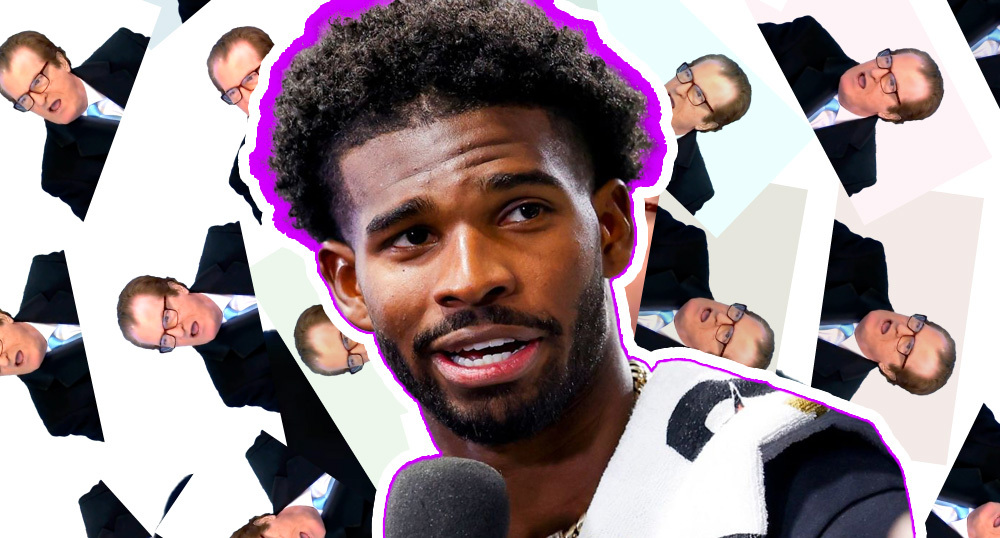
This unyielding demand for perfection recently prompted veteran draft prognosticator Mel Kiper Jr. to launch a spirited defense of Cleveland Browns quarterback Shedeur Sanders. Kiper, a long-time admirer, seems genuinely perplexed by the persistent skepticism surrounding the young signal-caller, wondering aloud what more Sanders could possibly do to silence his detractors. He’s called it "hate," a strong word for the often-dispassionate world of sports analysis, yet one that speaks to the emotional investment both analysts and fans pour into these athletic dramas.
"I don’t get it, I really don’t understand what’s going on with Shedeur," Kiper opined during a recent appearance on "The Really Big Show." His voice, usually a measured instrument of draft-day predictions, carried a distinct edge of frustration. "I don’t understand why people want to keep hating and hating." It’s an unusual outburst from a man whose career thrives on dispassionate assessment, hinting at a deeper malaise within the sports commentary ecosystem.
Behind the headlines, however, the numbers tell a less sympathetic story for Sanders. His rookie campaign wasn’t just pedestrian; it was, statistically speaking, rather grim. Sanders finished the season with a modest 7 touchdown passes against a concerning 10 interceptions, culminating in a 68.1 quarterback rating — a figure that placed him 49th out of 50 qualified quarterbacks, according to official NFL statistics. These aren’t the kind of figures that typically inspire robust confidence, let alone the unwavering advocacy Kiper offers.
Still, Kiper doubled down, connecting Sanders’ plight to that of a now-superstar. "What the hell has he got to do?" Kiper shot back, clearly exasperated. "Are we going to get into this negativity again about Shedeur? I don’t know what else the kid needs to do. Josh Allen had haters in year three so if Josh Allen has haters in year two and three of his career, there’s no way Sheduer can avoid it." The comparison to Buffalo Bills’ phenom Josh Allen, who famously struggled with accuracy early in his career before becoming an elite passer, is meant to draw a parallel of patience. But it also inadvertently highlights the rarity of such a dramatic turnaround, a testament to exceptional coaching and an iron will.
But the cruel arithmetic of NFL roster management rarely affords such grace periods, especially when a high-priced veteran looms. And that’s precisely the situation Sanders now navigates. Reports from voluntary minicamp suggest that Deshaun Watson, despite his own checkered past and inconsistent performance since joining Cleveland, has secured the "inside track" to the starting job. Watson’s contract, an albatross weighing heavily on the franchise’s salary cap, mandates his presence on the field, a stark economic reality that often trumps raw potential or passionate media defenses. The team’s mandatory minicamp, scheduled for July 9-11, will likely cement this decision, leaving Sanders in a precarious backup role.
📄 POLICY WIRE WHITEPAPER PUBLISHED: PAKISTAN'S NATIONAL SECURITY POLICY PRIORITIES
👉 READ BY CLICKING HERE"Look, the NFL isn’t a charity," asserted veteran NFL scout — and player personnel consultant, David Khan. "It’s a multi-billion dollar enterprise, and coaches, GMs, owners — they’re accountable for wins, not development projects that might pan out in three years. You’ve got high-draft capital or a massive salary, you play. It’s that simple, unfortunately." Khan’s assessment, delivered with a weary pragmatism, underscores the stark commercial realities that govern player careers, often eclipsing sentimental attachments or the fervent advocacy of broadcast analysts.
And so, the narrative for Shedeur Sanders pivots. From a promising, if scrutinized, rookie to a second-stringer facing an uphill battle for playing time, his trajectory underscores the fleeting nature of sports stardom. It also spotlights the often-performative nature of media commentary, where impassioned defenses can sometimes feel more about the commentator’s brand than the player’s development. This phenomenon isn’t exclusive to American sports; one observes similar intense, often vitriolic, public debates surrounding the performance of athletes and public figures across the Muslim world. Whether it’s the captaincy of the Pakistan national cricket team (a role carrying immense national weight and public expectation) or the political fortunes of a fledgling leader, the court of public opinion, amplified by social media, is a relentless arbiter, frequently favoring immediate gratification over long-term vision.
What This Means
The saga of Shedeur Sanders, as filtered through the pronouncements of Mel Kiper Jr. and the harsh glare of performance statistics, offers a microcosm of several consequential trends. Economically, it highlights the immense, often irrational, valuations placed on young talent — and the equally swift devaluation that follows when expectations aren’t immediately met. Teams invest staggering sums, not just in contracts but in public relations, hoping to cultivate a marketable star. When a player underperforms, the financial implications extend beyond their salary to sponsorship deals, merchandise sales, and even team valuation. The "inside track" for Deshaun Watson, despite his controversies and performance dips, is a purely economic decision, reflecting sunk costs and the desperation for a return on a significant investment.
Politically, the episode illustrates the power of narrative control — and the challenges of managing public perception. Kiper, in his "hating" remarks, attempts to reframe the conversation, but the statistical facts — as with many complex issues — often cut through rhetorical flourishes. This dynamic is profoundly relevant in political discourse globally. Leaders and their proponents frequently try to steer public opinion away from inconvenient truths by decrying "misinformation" or "hatred," rather than addressing the underlying issues. It’s a strategy rooted in controlling the emotional response to a situation, hoping to override a rational assessment. The media, too, plays a pivotal role, not just in reporting facts but in shaping narratives, sometimes elevating a story beyond its statistical significance or diminishing it based on a preferred storyline.
For emerging talents, the lesson is stark: the path to sustained success is littered with the shattered expectations of those who couldn’t navigate the confluence of athletic performance, economic pressure, and an unforgiving media. It’s a journey fraught with peril, where one misstep can swiftly transform adulation into a chorus of doubt, regardless of a veteran analyst’s impassioned pleas. The scrutiny, it seems, is relentless.
📖 GET YOUR FREE COPY NOW OF POLICY WIRE DIGITAL MAGAZINE JULY 2026 EDITION
👉 READ & DOWNLOAD FREE MAGAZINE