


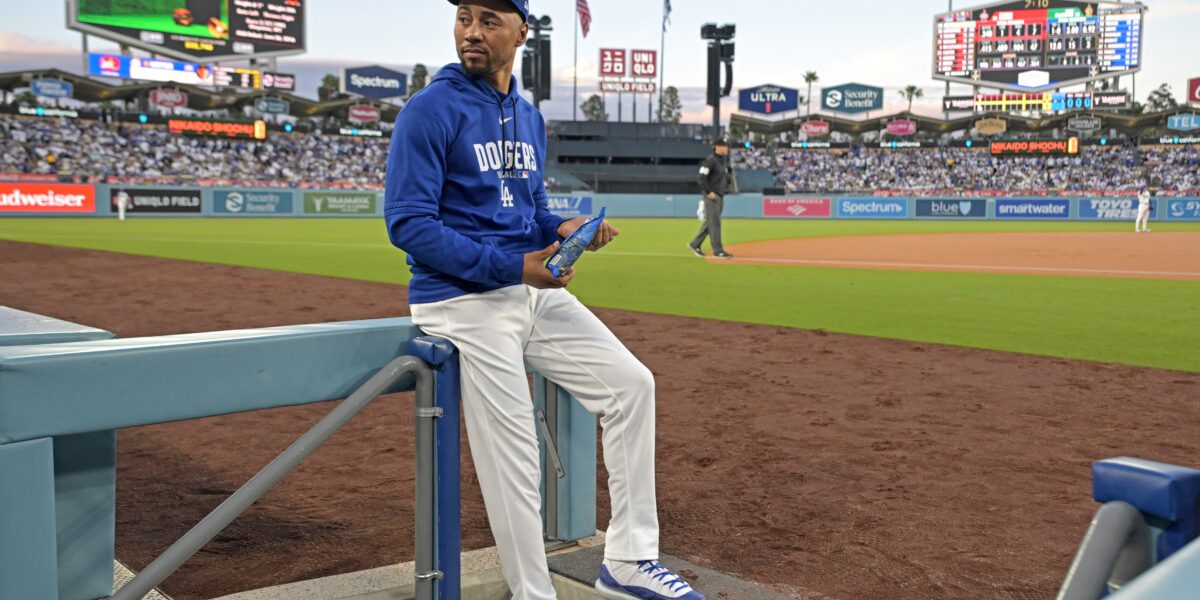
The Uncomfortable Truth of Success: Dodgers Thrive as Betts’s Return Looms — And Lingers
POLICY WIRE — Los Angeles, USA — The rhythm of the Los Angeles Dodgers has, against all conventional wisdom, somehow found a new, compelling cadence without its most versatile virtuoso. While...

POLICY WIRE — Los Angeles, USA — The rhythm of the Los Angeles Dodgers has, against all conventional wisdom, somehow found a new, compelling cadence without its most versatile virtuoso. While superstar Mookie Betts navigates the treacherous, often agonizing path back from an oblique injury, his understudies have conjured an improbable, high-stakes ballet, presenting the storied franchise with a delightful, yet undeniably awkward, dilemma. It’s a testament to depth, certainly, but also a stark reminder that sometimes, a team finds its optimal groove in the most unexpected of absences.
Betts, the dynamic shortstop whose mere presence elevates a lineup, suffered a minor setback in his convalescence recently. After cautiously re-engaging with on-field batting practice following an early April injury, Betts experienced renewed soreness. That’s an oblique for you, isn’t it? The club, ever prudent with its multi-million dollar assets, promptly reined him in, dialing back his program. Still, the former MVP, whose 12-year, $365 million contract — as reported by ESPN — underscores the sheer magnitude of the investment in his capabilities, maintains a forward-looking posture.
“It’s frustrating, plain and simple,” Betts conceded during a recent media scrum, his usual ebullience tempered by a weary pragmatism. “You push, you feel good, — and then your body reminds you it’s not quite ready. But I’ve hit a corner now, I genuinely feel it, and I’m itching to get back on that field and contribute.” His assertion, while hopeful, echoes the precarious tightrope walk high-stakes athletes often tread between competitive fire and corporeal limitations.
And so, while Betts grapples with the stubborn realities of human anatomy, the Dodgers have quietly—and quite effectively—recalibrated. Enter Hyeseong Kim and veteran Miguel Rojas, two names few expected to carry the bulk of shortstop duties for a championship contender. Kim, a recent call-up, has been nothing short of a revelation, batting .283 with a .754 OPS through 20 games. Rojas, meanwhile, boasts an even more eye-popping .349 average — and an .871 OPS over 18 contests. They’ve not merely filled a void; they’ve transformed it into an opportunity, securing crucial victories against formidable opponents.
“Our paramount concern is Mookie’s long-term health, always,” manager Dave Roberts explained, a master of balancing candor with corporate messaging. “We’re not going to rush him back prematurely, especially given how well the club’s performed. We’ve got capable players stepping up, which affords us that necessary patience.” It’s a diplomatic acknowledgment of the team’s unanticipated surge, effectively signaling that Betts’s return will be on the club’s timeline, not just his own.
It’s a peculiar twist in a season that began with Betts, along with much of the Dodgers’ star-studded lineup, sputtering. Before his injury, he posted a decidedly un-Mookie-like .179 batting average across eight games. Now, as the team prepares to face the Miami Marlins—with Kim slated to start at short—they’re not just holding serve; they’re dealing aces. The question isn’t just *when* Betts returns, but *how* he re-integrates into a winning formula that has, perhaps ironically, solidified in his absence.
📄 POLICY WIRE WHITEPAPER PUBLISHED: PAKISTAN'S NATIONAL SECURITY POLICY PRIORITIES
👉 READ BY CLICKING HEREWhat This Means
At its core, this narrative transcends mere baseball. It’s a potent illustration of the delicate balance in high-performance organizations, where the individual brilliance of a superstar must coalesce with the collective efficacy of the unit. For sports franchises, the Betts situation is a masterclass in risk management — and talent diversification. His enormous contract represents not just salary, but an assumed level of consistent, peak performance. Any disruption—even a temporary one—forces a recalculation of immediate strategy and long-term asset valuation.
This meticulous attention to athlete recovery, the measured steps, the expert consultations, reflects a globalized sports economy where player health is paramount. Nations across the Muslim world, from Pakistan, where cricket stars command similar reverence and multi-million dollar deals, to the burgeoning sports markets in the Gulf, are keenly observing these Western models of injury science and player management. The ability to rehabilitate quickly and effectively, ensuring the longevity of an athlete’s career and the protection of vast financial investments, is a universal aspiration, shaping everything from training regimens to insurance policies in a world increasingly interconnected by sport and capital. The psychological burden on players, knowing their multi-year, often life-changing contracts are tied to their physical resilience, can’t be overstated. It’s a relentless pressure cooker.
Behind the headlines of a simple injury setback lies a complex tapestry of economic implications, team dynamics, and the relentless march of professional sports as a global enterprise. The Dodgers, for now, possess the enviable luxury of patience, a commodity often scarce in elite competition. But Betts’s impending return will inevitably force difficult decisions, reshuffling a deck that, against all odds, seems to be dealing a winning hand.