


Kremlin’s Nuclear Bluff: A Perilous Gambit in a Geopolitical Chess Match
POLICY WIRE — Washington D.C., USA — The chill of a new Cold War isn’t merely found in troop movements or economic sanctions; it’s chillingly present in the lexicon of mutual...

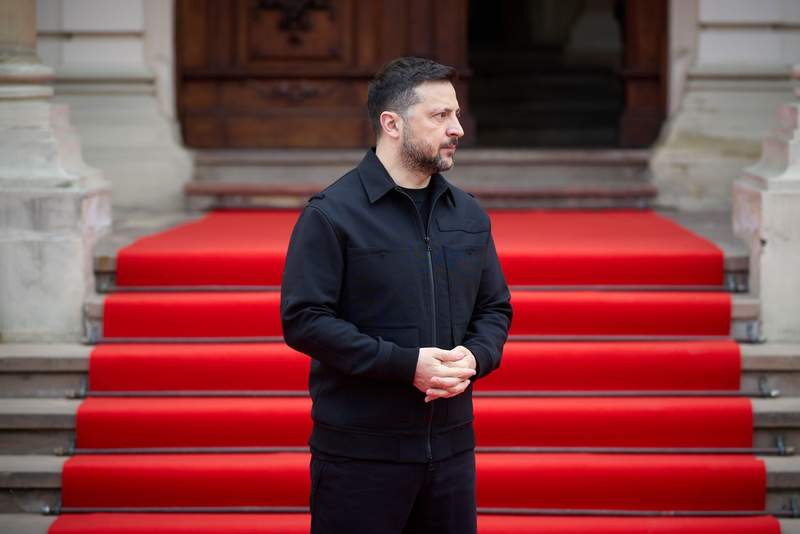
POLICY WIRE — Washington D.C., USA — The chill of a new Cold War isn’t merely found in troop movements or economic sanctions; it’s chillingly present in the lexicon of mutual recrimination, particularly when the specter of nuclear conflict is invoked. And so, it wasn’t exactly a surprise when Moscow recently unleashed a fresh salvo, accusing Ukrainian President Volodymyr Zelensky of actively provoking a nuclear war. This wasn’t merely hyperbole; it’s a carefully calibrated escalation, a dangerous play in a high-stakes geopolitical poker game.
At its core, this accusation serves a dual purpose: to delegitimize Kyiv on the international stage and, crucially, to sow fear among Western allies, potentially fracturing their resolve. They’ve employed this tactic before, of course, a recurring motif in the Kremlin’s propaganda symphony. But the current iteration arrives amidst an increasingly desperate battlefield situation for Russia, rendering the rhetoric — however outlandish — all the more unsettling for global stability.
“Kyiv’s reckless abandonment of diplomatic channels, coupled with its incessant appeals for ever-more potent weaponry, paints a clear picture of a leadership willing to gamble with global stability,” asserted Maria Zakharova, spokesperson for Russia’s Foreign Ministry, her voice dripping with an accustomed blend of indignation and veiled warning. “It’s a trajectory towards an abyss, and the world observes who’s pushing.” Her words, delivered with characteristic theatricality, underscore Russia’s consistent narrative: that Ukraine, backed by its Western benefactors, is the belligerent party, dragging the world towards catastrophe.
Still, Kyiv — and its Western partners aren’t buying it. “This isn’t merely disinformation; it’s a desperate, almost pathetic, attempt to deflect from their own flagrant violations of international law,” shot back Mykhailo Podolyak, advisor to Ukraine’s presidential office. “The Kremlin routinely wields nuclear rhetoric as a blunt instrument of terror, hoping to paralyze resolve – but it won’t work.” He articulated what many analysts already surmise: Russia’s accusations often mirror its own intentions or capabilities, a form of psychological projection designed to confuse and intimidate.
The frequency of such pronouncements is itself a tell-tale sign of mounting pressure on Moscow. It’s a classic information warfare strategy, designed to blur lines and create a narrative vacuum that can be filled with Kremlin-approved messaging. But the sheer recklessness of invoking nuclear Armageddon, even rhetorically, has real-world consequences, casting a pall over international diplomacy and investment. Don’t forget, nuclear powers (and their allies) don’t typically throw around such threats lightly — or, at least, they shouldn’t.
Behind the headlines of European conflict, such pronouncements ripple far beyond continental borders. In the already fractious landscape of South Asia, where nuclear-armed neighbors routinely eye each other with suspicion (and occasional bellicosity), Moscow’s rhetoric inadvertently fuels a pervasive sense of dread. It’s a climate that makes the precarious economic situation – exacerbated by volatile global energy markets – even more fraught for nations like Pakistan, where every tremor of international instability translates into tangible hardships for its populace. The grounding of AeroPak, for instance, isn’t just about domestic mismanagement; it’s a symptom of deeper regional economic tremors, amplified by geopolitical uncertainty and a pervasive sense of unease.
📄 POLICY WIRE WHITEPAPER PUBLISHED: PAKISTAN'S NATIONAL SECURITY POLICY PRIORITIES
👉 READ BY CLICKING HEREThe global security environment remains alarmingly volatile. The Stockholm International Peace Research Institute (SIPRI) reported that global military expenditure reached an all-time high of $2.24 trillion in 2022, a stark indicator of mounting global tensions and the pervasive readiness for conflict. This figure alone speaks volumes about the world’s current trajectory, a path increasingly defined by belligerent posturing and the chilling prospect of unchecked escalation. And it’s against this backdrop that Moscow’s nuclear bluster takes on a particularly pernicious hue.
What This Means
This latest salvo from Moscow isn’t just a political skirmish; it’s a consequential move with far-reaching implications. Politically, it undermines what little remains of the international arms control architecture, rendering any future de-escalation talks infinitely more complex. It’s an attempt to fracture Western unity by making the cost of supporting Ukraine appear too high – perhaps even existential. The implication is clear: push us too far, — and we’ll all pay the price. This kind of coercive diplomacy, while dangerous, also signals a regime potentially cornered, looking for any lever to shift the narrative or force concessions.
Economically, the constant invocation of nuclear threats creates an inescapable risk premium across global markets. Investors become more cautious, commodity prices (especially energy) remain volatile, and supply chains face persistent disruption. Nations heavily reliant on stable global trade — like many in the developing world — bear the brunt of this instability. The long shadow of potential catastrophe deters long-term planning, fostering an environment of short-term reactions and sustained uncertainty. It’s a deliberate strategy to make the conflict unbearable not just for Kyiv, but for everyone, in the hopes that collective exhaustion will lead to a retreat from support. This isn’t merely a war for territory; it’s a war for psychological endurance, where words, however chillingly, become weapons.