


The Brutal Calculus of Undrafted Dreams: Rams’ Cornerback Gamble Reflects Broader Economic Realities
POLICY WIRE — Los Angeles, CA — The echoes of collegiate glory often fade fast in the harsh glare of professional ambition, especially in the National Football League. For every...

POLICY WIRE — Los Angeles, CA — The echoes of collegiate glory often fade fast in the harsh glare of professional ambition, especially in the National Football League. For every first-round phenom, there are hundreds, perhaps thousands, of athletes whose exceptional skills weren’t quite enough— or so the conventional wisdom goes. This year, the Los Angeles Rams, having concluded their 2026 NFL Draft proceedings, have once again delved into that opaque pool of overlooked talent, inking eighteen undrafted free agents (UDFAs) to fill the remaining three spots on their burgeoning 90-man roster. At its core, it’s a brutal, yet utterly pragmatic, exercise in resource allocation and the identification of latent value.
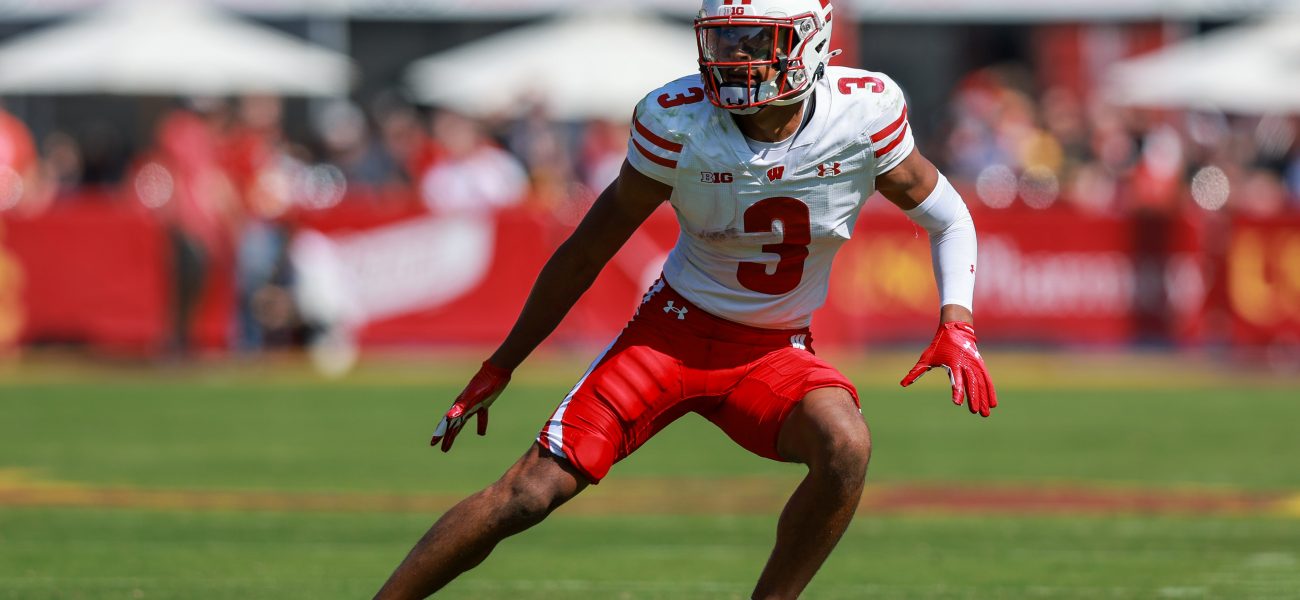
It’s precisely this relentless pursuit of efficiency that defines modern professional sports, a pursuit mirrored in every cutthroat global industry. The Rams, despite acquiring established cornerbacks Trent McDuffie and Jaylen Watson via trade and free agency, still harbored glaring needs in their secondary. Many aficionados expected a draft pick to solidify the unit. But that wasn’t how it unfolded; instead, the franchise pivoted, entrusting their depth to a trio of UDFAs: Drey Norwood from Mizzou, Al’Zillion Hamilton from Fresno State, and Wisconsin’s Nyzier Fourqurean.
General Manager Les Snead, known for his unconventional roster builds, often speaks to this philosophy. "You’ve got to cast a wide net," Snead reportedly asserted last week. "The league’s competitive balance means value isn’t always screaming at you from the top of the draft board. Sometimes, it’s a quiet whisper from a scouting report, a player with a chip on his shoulder, or someone whose ‘measurables’ don’t tell the whole story." It’s this belief in unearthed potential that drives much of the NFL’s post-draft machinery.
Take Nyzier Fourqurean, for instance. A physically imposing corner with a robust 8.41 Relative Athletic Score (RAS), he’d lost a court battle for an extra season. He’s got the frame of an NFL corner, boasting solid length — and sizable hands. While his straight-line speed might not astound, his explosive lower body — and agility metrics are undeniably pro-grade. He’s physical, aggressive—a veritable thumper. Head Coach Sean McVay, whose coaching ethos often emphasizes grit, weighed in, "These aren’t just bodies; they’re hungry. They’ve been told ‘no,’ and that often makes for a better ‘yes’ when opportunity knocks." (He’s not wrong; the sheer tenacity required is something else.)
Then there’s Al’Zillion Hamilton, a Fresno State product, whose film belies his less-than-stellar Pro Day testing. He’s feisty, cocky even, with an uncanny knack for ball-hawking, evidenced by his 37 passes broken up and eight interceptions across 55 collegiate games. He’s sticky in man coverage, able to mirror releases — and stay attached to receivers. He’s not afraid to get his nose dirty in run support, either, even if he doesn’t initiate pursuit like some others. Norwood, the SEC veteran from Mizzou, possesses a high floor but perhaps a more limited ceiling, his decent skills tempered by a perceived lack of the sheer physicality demanded at the next level.
But make no mistake, the odds are stacked against them. Historically, only about 10-15% of undrafted free agents ultimately make an NFL opening day roster, a stark reminder of the league’s cutthroat nature. Still, it’s a testament to the belief that raw talent, properly honed, can upset conventional hierarchies, much like the unexpected rise of tech startups challenging established giants in emerging markets across South Asia. The relentless pursuit of talent, whether it’s software engineers in Bangalore or corners in Los Angeles, fundamentally reshapes economic landscapes and offers pathways to unexpected prosperity for the few who prevail.
📄 POLICY WIRE WHITEPAPER PUBLISHED: PAKISTAN'S NATIONAL SECURITY POLICY PRIORITIES
👉 READ BY CLICKING HEREWhat This Means
This micro-drama playing out in Los Angeles is more than just a footnote in professional sports; it’s a profound microcosm of global economic trends and policy implications. The NFL’s undrafted free agent market functions as a hyper-efficient, if brutal, labor market – a "gig economy" writ large, where individual performance is relentlessly scrutinized and only the most adaptable, resilient, and uniquely skilled survive. This echoes the broader challenges facing economies worldwide: how do you identify untapped potential? How do you provide pathways for those who don’t fit traditional molds? And what are the societal implications of such a high-stakes, winner-take-all environment?
For players like Fourqurean, Hamilton, and Norwood, this isn’t merely about football; it’s about life-altering economic opportunity. Securing a roster spot means access to a level of earning potential that eludes the vast majority of athletes. Their journey, from overlooked collegiate standouts to hopeful NFL contributors, embodies the spirit of entrepreneurship and the fierce competition that defines specialized labor markets globally. It highlights the value of resilience in the face of initial rejection and the importance of "soft skills"—like coachability and grit—alongside raw athleticism. This isn’t just about sporting glory; it’s about the merciless, yet vital, process of talent valuation that underpins modern global commerce, from Silicon Valley to the textile mills of Pakistan, where relentless efficiency and talent acquisition dictate survival. (It’s a tough world out there, you see.)
The Rams’ strategic reliance on UDFAs for critical depth, particularly at cornerback, underscores a broader organizational philosophy: one that values exhaustive scouting and a willingness to bet on character and upside over draft-day pedigree. It’s a calculated risk, certainly, but one that could yield substantial dividends if even one of these players defies the odds and carves out a meaningful career. And really, isn’t that the essence of any shrewd investment, political or economic?