

The Price of Providence: Timmy the Whale’s North Sea Odyssey and the Uneasy Calculus of Conservation
POLICY WIRE — Rotterdam, Netherlands — A hulking transport barge, cradling a custom-built, temperature-controlled habitat, slipped from its dock near Rotterdam this week, its precious cargo—a 30-ton...

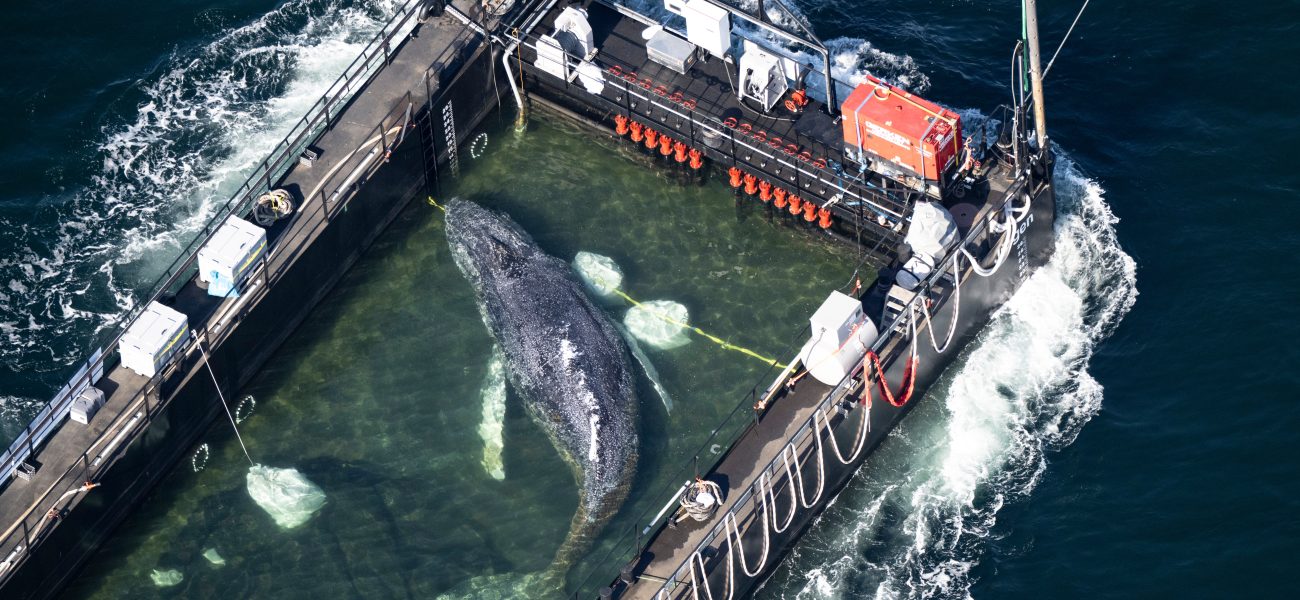
POLICY WIRE — Rotterdam, Netherlands — A hulking transport barge, cradling a custom-built, temperature-controlled habitat, slipped from its dock near Rotterdam this week, its precious cargo—a 30-ton humpback whale christened ‘Timmy’—beginning an improbable odyssey toward the frigid embrace of the North Sea. It’s an undertaking of staggering logistical complexity and eye-watering expense, which, behind the celebratory fanfare, quietly reignites a persistent, uncomfortable debate: when it comes to safeguarding nature, what, precisely, are we willing to pay, and for whom?
This isn’t merely a tale of cetacean homecoming; it’s a microcosm of the West’s often-convoluted approach to environmental stewardship. Timmy, having been rehabilitated in a specialized inland facility after an ill-fated stranding years prior, has now become a symbol—a very large, very expensive symbol—of a certain brand of conservation. His journey, financed through a blend of public funds and private donations, represents a monumental commitment to a single, charismatic creature. But still, critics wonder if such focused, resource-intensive interventions distract from systemic environmental collapse.
At its core, the operation is a triumph of engineering — and biological science. Teams of marine veterinarians, engineers, — and logistical experts have spent months preparing this intricate transfer. It’s a delicate dance: maintaining optimal water quality, mitigating stress, and ensuring the behemoth’s physiological stability across hundreds of nautical miles. And Timmy, bless his barnacle-encrusted hide, isn’t a small passenger—he’s roughly the size of a city bus, necessitating bespoke equipment usually reserved for oil rigs or naval vessels. They’ve even got a full-time whale psychologist on board (no, I’m not kidding).
Dr. Anya Sharma, lead marine biologist for the Ocean Stewardship Alliance—a primary force behind Timmy’s relocation—shot back at those questioning the allocation. “Timmy’s journey isn’t just about one whale; it’s a testament to our collective commitment to biodiversity,” she underscored, speaking from the bustling command center overseeing the transfer. “It’s a beacon of hope, proving that even monumental challenges can be overcome with dedication and—crucially—the right funding. His story mobilizes public interest in marine ecosystems like few other efforts can.” She’s got a point; it’s hard to ignore a whale on a barge.
But the numbers are difficult to ignore, too. While precise figures remain closely guarded, industry insiders estimate the total cost of Timmy’s rehabilitation and relocation to be well into the multi-million-euro range. Elias Vandenberg, the European Commission’s Director for Fisheries Policy, acknowledged the inherent tension. “While we celebrate Timmy’s return to natural habitat, we must also scrutinize the precedent,” Vandenberg cautioned in a rare, candid briefing. “The resources deployed for this single operation… they’re significant. We’ve got to ask if this scale of intervention is sustainable, scalable, or indeed, equitable when other urgent ecological concerns, less charismatic perhaps, cry out for attention across our seas.” He’s hinting at the policy tightrope that European environment ministries are constantly walking.
Behind the headlines, this lavish expenditure for a single animal stands in stark relief to environmental realities confronting other parts of the world. In South Asia, for instance, nations like Bangladesh and Pakistan grapple not with individual whale rehabilitation, but with climate-induced displacement of millions, the decimation of critical agricultural lands, and existential threats to entire coastal ecosystems like the Sundarbans mangrove forests. These regions often struggle to secure a fraction of the funding directed towards such high-profile Western conservation projects, even as they represent ground zero for climate change’s most brutal impacts. It’s a stark contrast, one that global policy makers don’t often address head-on.
📄 POLICY WIRE WHITEPAPER PUBLISHED: PAKISTAN'S NATIONAL SECURITY POLICY PRIORITIES
👉 READ BY CLICKING HEREConsider the broader canvas of ocean health: The UN Environment Programme estimates over 11 million metric tons of plastic enter the ocean annually—a relentless, indiscriminate tide of pollution that threatens countless species, often far from the public eye. Yet, a singular, high-profile whale captures imaginations and budgets in ways that, say, widespread microplastic mitigation projects rarely do. It highlights a certain human bias, doesn’t it?
Still, the proponents argue that Timmy serves as an invaluable educational tool, an emotional touchstone galvanizing support for wider marine conservation. They’ve invested heavily in public outreach surrounding his odyssey, transforming him into a living mascot. It’s a strategy with a venerable lineage, paralleling efforts seen in silent diplomacy efforts involving rare animal repatriations—though perhaps on a grander, more public scale.
What This Means
Timmy’s slow progress across the waves isn’t just a biological success story; it’s a policy flashpoint. Economically, this venture underscores the elastic nature of ‘value’ in conservation; the perceived worth of a single, iconic animal can command resources that far outstrip, per capita, those allocated to broader, less photogenic ecological challenges. It establishes a precedent, however unintentionally, for future high-cost animal interventions, potentially diverting funds from essential, less dramatic, but equally critical biodiversity efforts. Politically, it’s a tightrope walk for governments: balancing public sentiment, which undoubtedly cheers for Timmy, against the hard realities of constrained budgets and escalating, systemic environmental crises. It forces a difficult conversation about global environmental justice—about whose ecosystems get prioritized and whose suffering (both human and ecological) remains largely unseen by the cameras and the coffers of the affluent West. The optics are good, for sure, but the underlying questions linger like the sea mist.