


Gulf Geopolitics Upended: UAE Bails on OPEC as US-Iran Stalemate Drives Soaring Costs, Regional Chaos
POLICY WIRE — Washington, D.C. — It’s a bitter pill for the American consumer: just as budget airlines clamor for a multi-billion-dollar bailout to stave off collapse, the United Arab Emirates has...

POLICY WIRE — Washington, D.C. — It’s a bitter pill for the American consumer: just as budget airlines clamor for a multi-billion-dollar bailout to stave off collapse, the United Arab Emirates has abruptly announced its departure from OPEC. The move, effective May 1, peels back another layer of predictability from an already convulsive global energy market, directly fueled by the escalating war in Iran and the precarious closure of the Strait of Hormuz. While seemingly disparate events, these developments underscore a profound unraveling of established norms — both diplomatic and economic — across the Middle East and its far-reaching global tendrils.
The Association of Value Airlines, representing carriers like Frontier and Allegiant, didn’t just ask nicely; they pressed the Trump administration for a staggering $2.5 billion in emergency aid. Why? Skyrocketing jet fuel costs, a direct consequence of Brent crude leaping over 50% since the conflict erupted. It’s an untenable situation for these struggling carriers, forcing them to hike ticket prices or, worse, face insolvency. So, as you’re filling up your tank (average U.S. gasoline prices hit $4.18 a gallon Tuesday, the highest since 2022, according to the auto club AAA), remember that the geopolitical tremors half a world away are hitting home, quite literally, in your wallet.
And then there’s Abu Dhabi’s calculated defection from the Organization of the Petroleum Exporting Countries. This isn’t just a bureaucratic reshuffle; it’s a seismic shift for the cartel, stripping it of one of its most potent producers. While the immediate impact on global oil supply might seem negligible—the UAE’s only pipeline skirting the Strait of Hormuz already hums at full capacity—the long-term implications are substantial. It’s a clear signal from the Emirates: they’re charting their own course, keen to maximize revenues from their 4.8 million barrels-per-day capacity on their terms, not OPEC’s. “This exit of OPEC fits into the UAE need for flexibility with key energy consumers as well — including a future relationship with China and a more competitive relationship with Saudi Arabia,” observed Karen Young, a senior research scholar at Columbia University’s Center on Global Energy Policy. It’s an assertion of sovereign economic muscle, even if it introduces greater market volatility, as analyst Jorge Leon at Rystad Energy suggested, calling it a “structurally weaker OPEC.”
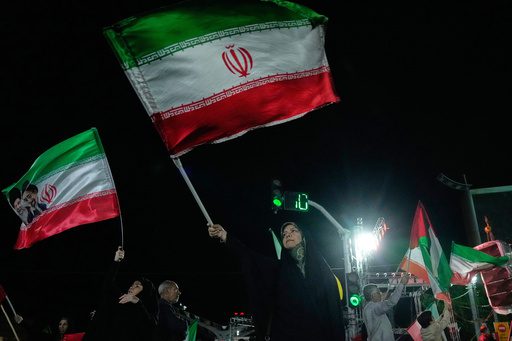
Still, the energy drama plays out against a backdrop of chilling diplomatic impasse. Tehran’s offer to reopen the strategically vital Strait of Hormuz—their main choke point for global oil transit—if Washington lifts its blockade and halts the war, seemed tempting. But there was a catch: Iran wanted to punt discussions on its contentious nuclear program. Secretary of State Marco Rubio, a steadfast hawk, appeared to quash that notion instantly, essentially ruling out any deal that decouples the issues. President Trump, meanwhile, sensationally posted on social media that Iran had just informed the US it’s in a “State of Collapse” and wants to “Open the Hormuz Strait,” though his administration offered no immediate specifics on the veracity or channel of such a communication. It’s high-stakes poker, — and neither side seems inclined to fold.
Behind the headlines, a more visceral conflict grinds on. In the Levant, Israeli forces and Hezbollah militants engage in deadly tit-for-tat skirmishes along the Lebanese border, despite a nominal ceasefire. An Israeli strike, for instance, recently wounded two Lebanese soldiers and trapped three rescue workers after hitting a patrol accompanying medical teams. President Joseph Aoun of Lebanon excoriated the attack, calling it part of a pattern violating international law against rescue personnel. And it’s not just targeted violence; Amnesty International reported Israeli excavators destroying solar panels and water infrastructure in Lebanese border villages, underscoring a campaign of collective punishment. “The international community must — must — shift from crisis management to finding enduring solutions,” implored Bahraini Foreign Minister Abdullatif bin Rashid Al-Zayani, chairing a ministerial meeting of the UN Security Council, urging a constructive dialogue that demands Iran’s compliance with international law.
But Israel’s UN envoy, Danny Danon, sees the problem differently. For him, a stable Lebanon hinges on dismantling Hezbollah. “Hezbollah isn’t just set on Israel’s obliteration; it’s Lebanon’s greatest impediment to genuine sovereignty,” Danon shot back, demanding proof from the Lebanese government on weapons seizures and tunnel destruction. It’s a perpetual stalemate, exacerbating an already dire humanitarian situation across the region. In Gaza, the detention of Dr. Hossam Abu Safiya, a hospital director accused of Hamas ties (which colleagues vehemently deny), highlights the ongoing plight of civilians and aid workers. UN official Khaled Khiari warned that Gaza faces “ongoing and deadly Israeli strikes and dire humanitarian conditions,” with 1.8 million people now dependent on aid, whilst the West Bank endures “rampant settler attacks, displacement, and accelerating settlement activity.”
📄 POLICY WIRE WHITEPAPER PUBLISHED: PAKISTAN'S NATIONAL SECURITY POLICY PRIORITIES
👉 READ BY CLICKING HERESo, where does this leave the broader Muslim world, particularly in South Asia? Nations like Pakistan, heavily reliant on imported oil and navigating complex regional alignments, watch with acute anxiety. Elevated energy costs strain fragile economies, while the hardening of sectarian divisions and the specter of broader conflict threaten to destabilize an already delicate geopolitical balance. It’s a cascade effect: instability in the Gulf directly translates into economic pain and heightened security risks thousands of miles away, challenging governments that are already grappling with internal pressures and demanding a delicate diplomatic touch they can ill afford to lose.
What This Means
At its core, the current maelstrom signals a recalibration of power — and a fragmentation of traditional alliances. The UAE’s departure from OPEC isn’t merely an economic decision; it’s a political declaration, indicative of a wider trend where Gulf states are asserting greater autonomy, diversifying economic relationships (particularly towards Asia), and pursuing national interests above collective strategies. This newfound independence, however, promises a more volatile oil market, less capable of collective supply management, which could sustain inflationary pressures globally.
Politically, the US-Iran deadlock remains the fulcrum of regional instability. The Trump administration’s hardline stance, refusing to delink the nuclear program from broader peace talks, ensures continued economic strangulation of Iran and heightens the risk of miscalculation. This environment empowers regional non-state actors like Hezbollah, as states remain mired in conflict and diplomatic inertia. The humanitarian crises in Gaza and Lebanon will inevitably worsen, challenging international aid organizations and the already stretched resources of neighboring countries. The UN’s repeated calls for solutions, while earnest, often ring hollow against the backdrop of entrenched, intractable positions from key players. Ultimately, we’re witnessing a Middle East less bound by established order and more by an unpredictable interplay of national ambitions and enduring rivalries.