


Beijing’s Aerial Paradox: High Fuel & Grounded Flights Keep Chinese Tourists Closer to Home
POLICY WIRE — Beijing, China — The grand illusion of boundless global mobility — a hallmark of the 21st century’s interconnectedness — faced a rude, if predictable, jolt in China during the recent...

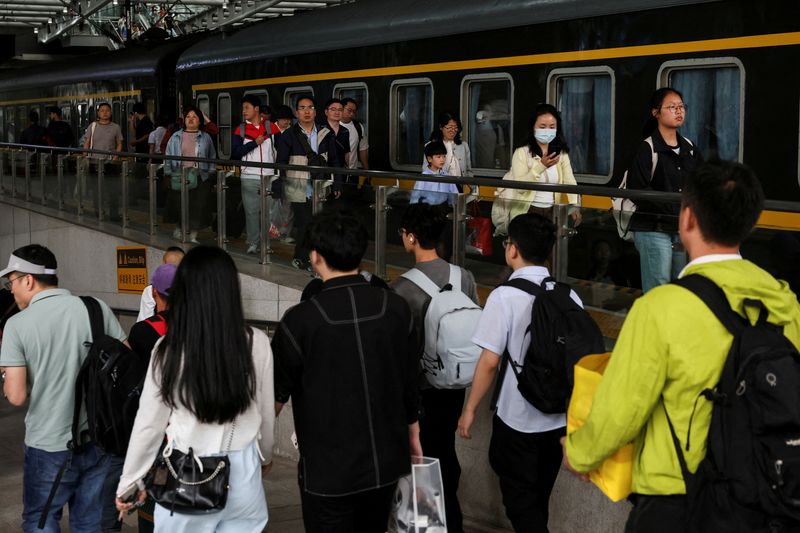
POLICY WIRE — Beijing, China — The grand illusion of boundless global mobility — a hallmark of the 21st century’s interconnectedness — faced a rude, if predictable, jolt in China during the recent May Day holidays. But it wasn’t some esoteric geopolitical squabble that kept millions of would-be adventurers tethered to their home provinces; rather, it was the mundane, yet potent, confluence of elevated jet fuel costs and an endemic struggle with flight reliability. They stayed put. Period.
Behind the headlines of bustling domestic attractions lies a more sobering reality for China’s aviation sector, and by extension, its populace’s travel aspirations. The confluence of persistently high jet fuel prices — an economic headwind battering airlines globally, as evidenced by the dire warnings emerging from places like India’s aviation sector — and a seemingly intractable rash of flight cancellations within China itself, effectively cemented millions of would-be travelers firmly onto terra firma. It’s a compelling argument, isn’t it, for the enduring power of prosaic economics.
But the ramifications extend beyond mere inconvenience. For a nation that had only recently reopened its borders, these domestic strictures present a curious paradox. While internal tourism registered impressive figures, that momentum often came at the expense of potential outbound journeys. Data from the Civil Aviation Administration of China (CAAC) indicates a 28% year-on-year decrease in scheduled international flight capacity from Chinese airports for the first quarter, starkly reflecting the lingering reticence for outbound journeys. And that’s a significant dip, you know, for a country of China’s scale.
Wang Wei, a spokesperson for China’s Ministry of Culture and Tourism, offered a rather sanguine interpretation of the phenomenon. “Our domestic tourism sector has demonstrated remarkable resilience, providing ample opportunities for our citizens to explore the wonders within our own borders,” he opined during a press briefing, subtly redirecting focus from external challenges to internal strengths. His remarks, while certainly true in part, don’t quite capture the involuntary nature of many of these ‘opportunities.’
The implications, though primarily economic, carry a subtle diplomatic undertone. China’s curtailed outbound tourism ripples far beyond its borders. Destinations in Southeast Asia, and indeed, parts of the Muslim world like Pakistan, which had anticipated a resurgence of Chinese visitors, now confront a prolonged void. Pakistan, a key Belt — and Road Initiative partner, particularly feels this pinch. Chinese tourists, once a burgeoning source of foreign exchange and cultural exchange, remain conspicuously absent on the bustling bazaars of Lahore or the serene valleys of Gilgit-Baltistan.
📄 POLICY WIRE WHITEPAPER PUBLISHED: PAKISTAN'S NATIONAL SECURITY POLICY PRIORITIES
👉 READ BY CLICKING HERE“While we deeply value our Chinese brethren and their historical affinity for our landscapes and hospitality, the reduced flow of tourists undeniably impacts sectors reliant on foreign exchange,” conveyed Dr. Faisal Abbas, Director of Tourism Promotion for the Government of Pakistan. “It compels us to diversify our outreach efforts and cultivate new markets, even as we await the return of our friends from the East.” His measured tone belies the palpable economic anxiety felt across the regional hospitality sector.
Still, the domestic boom isn’t without its own set of challenges. Overcrowding, strained infrastructure, — and environmental concerns have become recurring motifs in local media reports. It’s an interesting trade-off, isn’t it? The government champions internal consumption, yet the mechanisms of that consumption—transportation chief among them—are clearly under duress. The much-vaunted return to normalcy, it seems, remains a narrative more compelling in official pronouncements than in the practicalities of travel for the average Chinese citizen.
What This Means
This dynamic signals a protracted recalibration of China’s travel landscape, with significant political and economic implications. Economically, the sustained high fuel prices and operational snags force airlines to either absorb costs or pass them onto consumers, further stifling international travel. This bolsters domestic consumption—a strategic priority for Beijing—but simultaneously curtails the outward flow of capital that foreign tourism once represented. Politically, a domestically focused populace, while easier to manage from a stability perspective, means less direct exposure to external cultures, which could have long-term societal impacts. For nations like Pakistan, heavily invested in the Belt and Road Initiative and hoping for a dividends from strengthened ties, this prolonged absence of Chinese tourism necessitates an urgent pivot toward alternative markets and a reevaluation of their own tourism promotion strategies. It’s not merely a temporary blip; it’s an indication of deeper, systemic pressures shaping global mobility and economic interdependencies.