


New Mexico’s Arid Paradox: A Kangaroo’s Debut Ignites Debate on Conservation’s True Cost
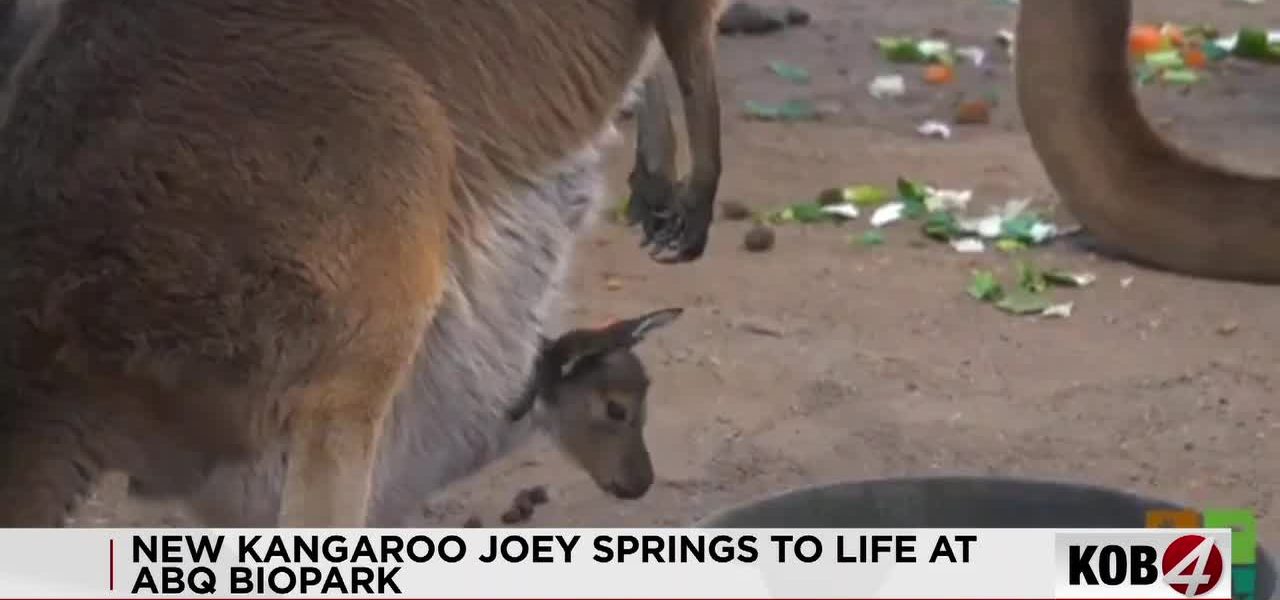
POLICY WIRE — ALBUQUERQUE, N.M. — In a state perennially parched, where conversations often gravitate toward dwindling water tables and economic exigencies, the recent emergence of a baby kangaroo...

POLICY WIRE — ALBUQUERQUE, N.M. — In a state perennially parched, where conversations often gravitate toward dwindling water tables and economic exigencies, the recent emergence of a baby kangaroo from its mother’s pouch at Albuquerque’s BioPark has, quite unexpectedly, drawn a peculiar kind of policy scrutiny. It isn’t merely about the undeniable cuteness factor (and let’s be honest, who doesn’t love a joey?); rather, it’s about what such a spectacle represents in a landscape grappling with increasingly stark realities.
The joey, a western grey kangaroo born to Sheila and Sydney, made its official debut after months of clandestine growth within its mother’s protective marsupium. Animal care staff, per reports, first glimpsed tell-tale signs of new life back in November 2025, with tiny limbs and an inquisitive head finally peeking out by late January 2026. By then, the youngster was already a substantial eight to nine months old, ready to navigate its arid New Mexican confines alongside its mob and habitat mates, including a trio of Bennett’s wallabies, two emu, and a pair of red kangaroos. But beneath this feel-good narrative of new beginnings, a more complex dialogue simmers.
At its core, this isn’t just a tale of biological triumph. It’s a subtle but potent reminder of the intricate dance between public expenditure, environmental priorities, and the ever-shifting mandate of institutions like municipal zoos. New Mexico, after all, isn’t exactly flush with surplus funds. It’s a state that’s seen its share of fiscal precarity, even a deluge of mismanagement drown disaster relief efforts, as one Policy Wire analysis recently uncovered.
So, why invest in the flourishing population of a species native to Australia’s sunbaked expanses? Dr. Evelyn Reed, the BioPark’s Director of Conservation, articulated the zoo’s foundational philosophy. “Our role transcends mere exhibition; it’s about fostering global biodiversity literacy and supporting international conservation programs,” she shot back during a recent press engagement. “Every birth here, especially of a keystone species like the kangaroo, reminds our visitors of the interconnectedness of global ecosystems and the urgent need for species preservation, even if it’s thousands of miles from their natural range.”
And Reed isn’t wrong. Zoos do funnel significant resources into research — and captive breeding programs. Globally, accredited zoological institutions contribute an estimated $350 million annually to wildlife conservation efforts, a substantial, albeit still insufficient, sum when measured against the rapid decline of species worldwide (Source: World Association of Zoos and Aquariums, 2022). Still, the optics, particularly for a policy wonk, can be… challenging.
Consider the stark contrasts across the globe. While Albuquerque celebrates its newest marsupial, nations like Pakistan, rich in unique biodiversity — from snow leopards in the Himalayas to Indus River dolphins — often grapple with profoundly underfunded national park systems and critical habitat destruction. They’ve got their own existential battles, their own species teetering on the brink, often with far fewer international dollars to deploy. It really does make you wonder about resource allocation, doesn’t it?
State Senator Robert Chavez (D-Albuquerque), a known fiscal hawk, expressed a more pragmatic viewpoint. “While I appreciate the educational value of the BioPark — it’s a treasure for our community, no doubt — we’ve got to continuously weigh these investments against immediate, pressing needs,” Chavez opined in a brief phone interview. “When families are struggling with food security, when our public schools are stretched thin, when our state’s own native species face habitat encroachment, the question of priorities inevitably surfaces. Are we doing enough for our own backyard, or are we perhaps too enamored with the exotic?”
📄 POLICY WIRE WHITEPAPER PUBLISHED: PAKISTAN'S NATIONAL SECURITY POLICY PRIORITIES
👉 READ BY CLICKING HEREHis observation isn’t an isolated grumble. It echoes a broader, simmering debate within environmental policy circles: where do the finite resources of conservation, public and private, best serve the planet? Is it in ex-situ breeding programs in developed nations, or in direct, on-the-ground protection within biodiversity hotspots, often in developing countries? There’s no easy answer, you see.
What This Means
The seemingly innocuous birth of a baby kangaroo at a municipal zoo in New Mexico, when viewed through a policy lens, unravels a compelling tapestry of intersecting challenges. Politically, it presents a nuanced PR tightrope: the universal appeal of a cute animal vs. the hard questions of fiscal responsibility — and local exigencies. For city and state officials, continued investment in attractions like the BioPark demands a robust justification beyond mere entertainment. It necessitates demonstrating tangible educational outcomes and measurable contributions to global conservation efforts that resonate with constituents facing more immediate, terrestrial concerns.
Economically, zoos are significant drivers of tourism and local employment, but their operational costs are considerable. The opportunity cost of allocating funds to maintain exotic species, however noble the intention, will invariably be scrutinized against investments in infrastructure, education, or even domestic wildlife conservation initiatives. And this isn’t just an American dilemma; it’s a global one, reflecting divergent approaches to ecological stewardship. Policy-makers, whether in Albuquerque or Islamabad, must contend with how to balance global ecological imperatives with local socio-economic realities, ensuring that the spectacle of a joey doesn’t overshadow the larger, often tougher, conversations about environmental justice and equitable resource distribution.
So, as the tiny kangaroo continues to explore its manufactured habitat, perhaps its small steps will, inadvertently, spur larger strides in how we perceive and prioritize our shared planetary responsibilities.