

Kremlin’s Lament: As Drones Reach Moscow, Putin Decries ‘Barbaric’ Attacks on Civilian Hubs
POLICY WIRE — Moscow, Russia — The Kremlin, long accustomed to dictating the brutal terms of its so-called ‘special military operation,’ now finds itself navigating a disorienting...

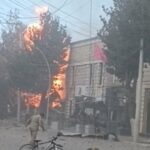
POLICY WIRE — Moscow, Russia — The Kremlin, long accustomed to dictating the brutal terms of its so-called ‘special military operation,’ now finds itself navigating a disorienting reversal. Suddenly, the very infrastructure it routinely pulverizes across Ukraine – civilian buildings, energy grids, urban centers – has become the lamentable target within its own borders. President Vladimir Putin has personally decried what he terms ‘barbaric’ Ukrainian drone attacks on Russian civilian sites, a stark, almost poetic, comeuppance that’s shifting the war’s psychological landscape.
It’s not just the thrum of unmanned aerial vehicles over Moscow that feels different; it’s the aggrieved tone emanating from official channels. For months, Russian missiles have rained indiscriminately on Ukrainian cities, decimating apartment blocks, hospitals, and power plants with chilling regularity. But now, as Kyiv’s retaliatory — and often strategically ambiguous — strikes extend deeper into Russian territory, the narrative from Moscow has abruptly pivoted to one of victimhood. And that, frankly, is a hard pill for many to swallow (especially those who remember Mariupol).
Behind the headlines, this newfound indignation underscores a critical shift: the war isn’t just ‘over there’ anymore for average Russians. While the Kremlin has consistently downplayed the conflict’s impact on its populace, these drone incursions, however limited in material damage, represent a potent psychological blow. They pierce the illusion of an insulated, invincible Russia, reminding residents that conflict carries a price for everyone involved.
“These barbaric acts against our populace, against civilian infrastructure, are a blatant violation of all international norms. Ukraine’s backers must hold them accountable,” shot back Maria Zakharova, spokeswoman for the Russian Foreign Ministry, her voice dripping with a familiar blend of outrage and selective memory. She didn’t, however, offer similar condemnations for the destruction wrought by Russian forces on countless Ukrainian towns and cities.
Still, Kyiv sees things rather differently. “Russia initiated this brutal war. Ukraine’s actions are a direct, proportional response to defend its sovereignty and its people, who have endured incessant attacks on their own civilian targets for months,” asserted Mykhailo Podolyak, an advisor to the head of the Ukrainian Presidential Office. “Kyiv doesn’t target civilians, but Russia’s unprovoked aggression has fundamentally altered the calculus of this conflict. What goes around, eventually comes around.” It’s a chilling reminder that escalation often begets counter-escalation, in cycles as old as warfare itself.
The grim symmetry of this situation isn’t lost on observers in other conflict zones, either. From the beleaguered streets of Gaza — where drone strikes have long been a terrifying, albeit often unilateral, reality — to the tribal regions of Pakistan, the civilian toll of modern warfare, and the sometimes-fluid definitions of ‘legitimate’ targets, remain a source of profound unease. It’s a narrative hauntingly familiar to populations in the broader Muslim world, from Yemen to Afghanistan, where drone warfare has carved its own indelible scars into the civilian landscape for two decades.
📄 POLICY WIRE WHITEPAPER PUBLISHED: PAKISTAN'S NATIONAL SECURITY POLICY PRIORITIES
👉 READ BY CLICKING HEREAnd let’s not forget the sheer scale of the initial aggressor’s impact. The United Nations High Commissioner for Human Rights (OHCHR) reported over 10,000 verified civilian deaths in Ukraine by late 2023, with the true figure undoubtedly higher due to the fog of war and ongoing conflict in occupied territories. Such a stark statistic lends a certain bitter perspective to Moscow’s current complaints.
This evolving dynamic, where Moscow’s urbanites now experience a fraction of the terror endured by their Ukrainian counterparts, could compel a reckoning. Or, it could merely harden resolve on both sides, spiraling the conflict into even more perilous territory. Either way, it’s a far cry from the swift, decisive victory the Kremlin initially promised its people.
What This Means
The escalation of drone attacks into Russia’s heartland carries multifaceted implications, both politically and economically. Politically, it undermines the Kremlin’s domestic narrative of a controlled, distant conflict, potentially eroding public support – or at least, comfort – for the war. It forces the state to allocate more resources to air defense, diverting funds from other sectors or even from the offensive effort in Ukraine. these strikes serve as a potent propaganda tool for Kyiv, demonstrating its capability to project power and signaling to its allies that Ukraine remains a formidable, innovative defender.
Economically, while direct material damage from these drone attacks has been limited, the psychological impact on investor confidence and supply chains can be significant. Any perceived instability in major Russian economic hubs could deter foreign investment – what little there’s – and further isolate the Russian economy. the need for enhanced air defense systems and security measures creates new demands on the national budget, at a time when Russia is already grappling with sanctions and the immense cost of its protracted military campaign. It’s a dangerous game of tit-for-tat, escalating the financial and human costs for both belligerents, with no clear off-ramp in sight. This shift could very well push the international community to re-evaluate its approach, contemplating whether to intensify pressure for de-escalation or risk a broader, more unpredictable regional conflagration.