

Beijing’s Silent Surge: $37K EV With 847-Mile Range Upends Global Auto Dynamics
POLICY WIRE — Geneva, Switzerland — The quiet hum of an electric vehicle typically signals progress — clean, green, often pricey. But what happens when that hum extends for an improbable 847 miles on...

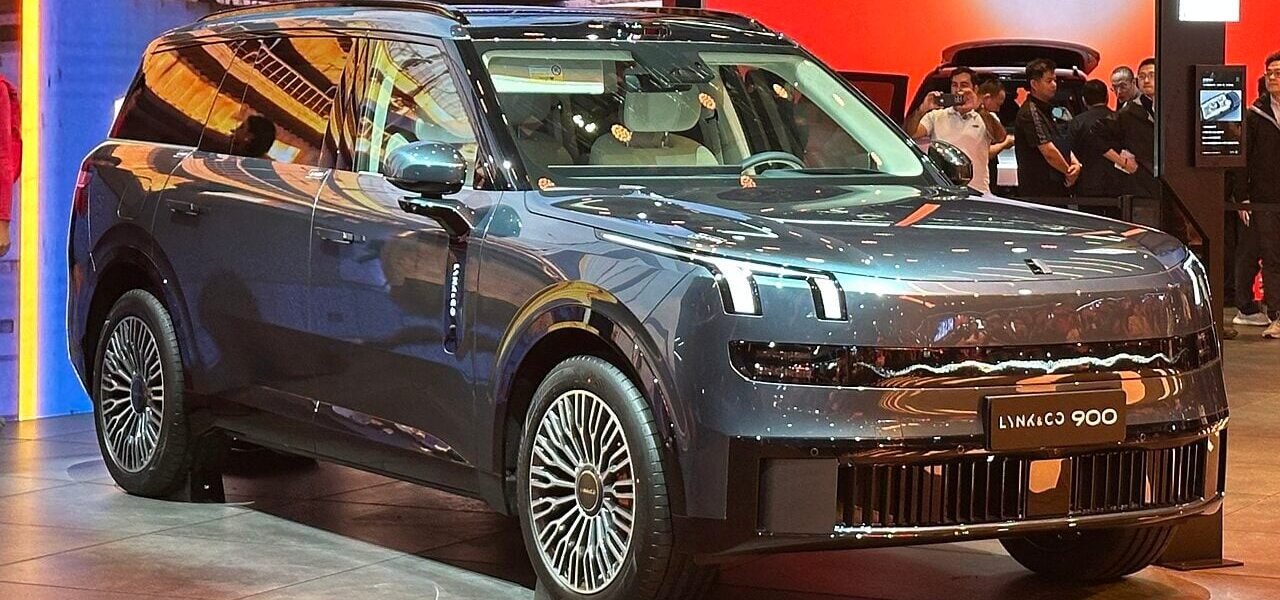
POLICY WIRE — Geneva, Switzerland — The quiet hum of an electric vehicle typically signals progress — clean, green, often pricey. But what happens when that hum extends for an improbable 847 miles on a single charge, all for a sum that barely clears what many in the West pay for a compact sedan? Beijing, it seems, has an answer. The unveiling of Lynk & Co’s 08 EM-P SUV, priced aggressively at roughly $37,000, isn’t just another car launch; it’s a seismic tremor in the global automotive landscape, subtly recalibrating expectations for range, affordability, and the very locus of innovation.
It’s not often a product announcement from a relatively nascent automaker reverberates through established boardrooms quite like this. Volvo’s Chinese-owned cousin has thrown down a gauntlet, suggesting that the future of personal mobility won’t be dictated solely by Silicon Valley’s sleek designs or Germany’s engineering prowess. This isn’t just about offering more for less; it’s about fundamentally rethinking the value proposition for the mass market, particularly those beyond the saturated, high-income economies. And it’s a stark reminder that the old guard doesn’t hold all the cards anymore.
Still, the immediate ramifications are complex, creating both consternation — and anticipation. “This isn’t merely about competition; it’s about a fundamental reorientation of global automotive benchmarks,” articulated a visibly vexed Marcus Thorne, President of the European Automobile Manufacturers’ Association, during a recent industry forum. “We’ve got to ask ourselves: are we innovating, or are we just reacting? This kind of disruption demands introspection, not just protectionism.” His sentiment underscores a growing anxiety over China’s burgeoning industrial might, which, according to the International Energy Agency (IEA), saw China account for over 60% of global electric vehicle sales in 2022, underscoring its dominant manufacturing capacity.
But for a significant portion of the world, this development signals opportunity. In economies wrestling with energy insecurity and the pervasive expense of fossil fuels, such a vehicle could prove genuinely transformative. Think of nations like Pakistan, where volatile crude oil prices and a burgeoning middle class desperately seek sustainable, yet accessible, transport solutions. An SUV that can traverse vast distances without constantly seeking a charging point—or a petrol pump—alters the calculus of commerce and connectivity.
“For nations like ours, facing volatile energy markets and the urgent need for sustainable transport, vehicles of this caliber aren’t just cars; they’re instruments of economic emancipation,” insisted Tariq Al-Hamdani, a senior economic advisor to the Pakistani Ministry of Industries and Production, speaking to Policy Wire from Islamabad. “They bridge distances, connect markets, and perhaps, even reshape geopolitical dependencies by reducing our reliance on imported petroleum. It’s a game-changer we can’t afford to ignore.” He’s not wrong; the implications for long-term energy independence are significant, especially as the global energy landscape remains acutely volatile.
Behind the headlines, this isn’t simply about a battery with an impressive range; it’s about the sophisticated supply chains, manufacturing efficiencies, and state-backed industrial policies that make such a product feasible at such a price point. It speaks to a level of vertical integration—from raw materials to final assembly—that Western competitors, often reliant on complex global networks, struggle to match. And it points to a future where automotive powerhouses might be less about legacy brands and more about nimble, state-supported enterprises capable of rapid iteration and aggressive pricing.
📄 POLICY WIRE WHITEPAPER PUBLISHED: PAKISTAN'S NATIONAL SECURITY POLICY PRIORITIES
👉 READ BY CLICKING HEREAt its core, this Lynk & Co launch forces a crucial question upon the world: are we witnessing a passing anomaly, or the vanguard of a new automotive order? The data suggests the latter. It’s an order where affordability isn’t sacrificed for range, and where technological leadership isn’t solely confined to traditional industrial titans. So, while the immediate focus might be on the car itself, the real story lies in what this $37,000, 847-mile SUV portends for global economics, geopolitics, and the relentless march of industrial ambition.
What This Means
This aggressive market entry by Lynk & Co has profound implications, touching on trade policy, energy security, and global industrial competition. Economically, it ratchets up pressure on legacy automakers in Europe, Japan, and North America, forcing them to accelerate their own EV transitions and find cost efficiencies they hadn’t previously prioritized. It’s a clear signal that the high-margin, premium EV market is increasingly under threat from below. Politically, it deepens anxieties in Western capitals about China’s technological ascendancy and its potential to dominate critical green industries, potentially leading to new trade barriers or increased domestic subsidies for local manufacturers.
For developing economies, particularly across South Asia and the broader Muslim world, this vehicle represents a tangible pathway to energy independence and cleaner air—without the prohibitive costs associated with many Western EVs. It could catalyze local EV adoption, stimulate infrastructure investment, — and even shift regional trade patterns. The sheer affordability and range could enable new business models, from ride-sharing to long-haul logistics, fostering economic growth in regions historically underserved by cutting-edge automotive technology. It’s a compelling argument for embracing this new wave of Chinese innovation, irrespective of broader geopolitical tensions, as the practical benefits are simply too consequential to ignore. What’s more, it puts into sharp relief the differing priorities for technological development: luxury versus mass accessibility, a debate that has broader societal implications for automation and labor.