
Levant on the Brink: The Slow-Motion Collapse of Israel-Hezbollah De-escalation
POLICY WIRE — Beirut, Lebanon — The pretense of de-escalation along the volatile Blue Line, a flimsy construct held together by grim mutual deterrence and an exhausted international community, has...

POLICY WIRE — Beirut, Lebanon — The pretense of de-escalation along the volatile Blue Line, a flimsy construct held together by grim mutual deterrence and an exhausted international community, has all but disintegrated. For months, artillery exchanges and targeted strikes between Israel and Hezbollah represented a calibrated, if terrifying, dance on the precipice. But now, that dance grows erratic, accelerating with a ferocity that suggests the music may soon stop altogether, ushering in something far more destructive.
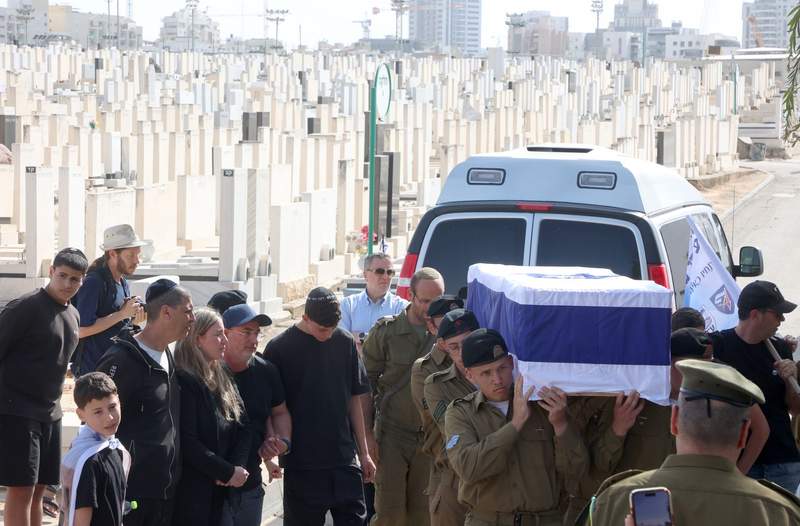
It’s no longer merely a war of attrition; it’s a systematic dismantling of any remaining buffer. The tempo of cross-border fire has intensified markedly, with each side claiming deeper penetration and greater destruction. Casualties mount on both fronts, including civilians caught in the crossfire—a tragic, yet grimly predictable, outcome. And the rules of engagement, once implicitly understood despite their brutality, seem to be shifting in real-time, pushing the region ever closer to a full-scale conflagration.
Behind the headlines, Hezbollah maintains its stance, tying its actions directly to the ongoing conflict in Gaza. Its leadership asserts a ‘support front’ — a complex, deeply entrenched strategy — aimed at pressuring Israel and demonstrating solidarity with Palestinians. This isn’t just about rockets; it’s about a decades-old ideological struggle, a relentless game of strategic chess. Israeli officials, for their part, articulate a singular, non-negotiable objective: the absolute security of their northern towns, long subjected to the terror of cross-border raids and rocket barrages.
“We won’t tolerate any infringement on our sovereignty, nor any persistent threat to our northern communities,” shot back Maj. Gen. (Res.) Yossi Cohen, a prominent advisor to Israel’s Ministry of Defense, in a recent policy briefing. “Hezbollah will pay a heavy price for its provocations, — and let no one mistake our continued restraint for weakness. We’re ready to meet force with overwhelming force.” His words hang heavy, a stark warning echoing through the halls of diplomatic efforts that seem increasingly impotent.
Still, the international community, particularly the United States and European powers, scrambles to prevent a wider war. Missions from Washington and Paris have become a revolving door to Jerusalem and Beirut, offering peace plans and cease-fire frameworks that seem to vaporize as soon as they hit the ground. The United Nations Interim Force in Lebanon (UNIFIL), tasked with monitoring the fragile border, finds itself in an increasingly untenable position, their blue helmets a poignant symbol of a peace that never quite took hold. They’re observing, reporting, but ultimately, they’re bystanders to an escalating tragedy.
“Our resistance is a legitimate defense against Zionist aggression and an inseparable part of the broader struggle for justice,” asserted Sheikh Naim Qassem, Hezbollah’s Deputy Secretary-General, during a televised address last week, dismissing international pleas as biased. “Lebanon won’t stand idly by as our people suffer. This is our land, and it’s our right to defend it, by whatever means necessary.” Such statements encapsulate the intractable nature of the conflict, driven by deep historical grievances and an unyielding commitment to resistance.
📄 POLICY WIRE WHITEPAPER PUBLISHED: PAKISTAN'S NATIONAL SECURITY POLICY PRIORITIES
👉 READ BY CLICKING HEREThe human toll, meanwhile, continues its grim ascent. According to UN reports, over 90,000 Lebanese citizens have been displaced from southern Lebanon since October, alongside tens of thousands of Israelis evacuated from their northern border towns—creating a dual humanitarian crisis rarely discussed in tandem. Their homes lie empty, their livelihoods shattered, testaments to the devastating price of geopolitical deadlock. And it’s not just the immediate vicinity; this escalating violence isn’t contained to the immediate border; it reverberates across the broader Muslim world, from Cairo to Islamabad, fueling public anger and complicating diplomatic efforts for regional stability. Pakistan, for instance, a nation grappling with its own internal security challenges, watches with acute concern, understanding that prolonged instability in one part of the Middle East invariably affects sentiments and extremist narratives elsewhere.
What This Means
At its core, the rapid decay of the Israel-Hezbollah ceasefire signifies a catastrophic failure of regional deterrence and international diplomacy. Politically, the implications are chilling: a full-scale conflict wouldn’t only devastate Lebanon, a nation already teetering on the brink of economic collapse, but it would almost certainly draw in other regional actors, potentially igniting a wider Middle East war. Such an outcome would further destabilize already fragile alliances and complicate the geopolitical landscape for years to come (just look at Kyiv’s diplomatic quibbles with Jerusalem, illustrating how interconnected these crises truly are).
Economically, Lebanon can ill afford another war; its currency has plummeted, its infrastructure is crumbling, and trust in its institutions has evaporated. A new conflict would guarantee a complete breakdown, triggering a mass exodus — and further entrenching poverty. For Israel, while its economy is more robust, a prolonged northern front would impose immense costs, divert resources, and exact a heavy human toll. Internationally, global energy markets would react with predictable volatility, and trade routes could be severely disrupted, impacting economies far beyond the Levant. The ripple effects would be felt everywhere, making this localized conflict a truly global concern. We’re watching a slow-motion catastrophe unfold, and nobody seems to possess the leverage—or the will—to halt its terrifying momentum.