


New Mexico’s Primary Quagmire: Housing Crisis Looms Over Rio Rancho Gubernatorial Forum
POLICY WIRE — Rio Rancho, N.M. — It wasn’t the usual campaign stump fanfare that hung heavy in the air at Rio Rancho Public Schools’ training center; it was the unspoken burden of a state...

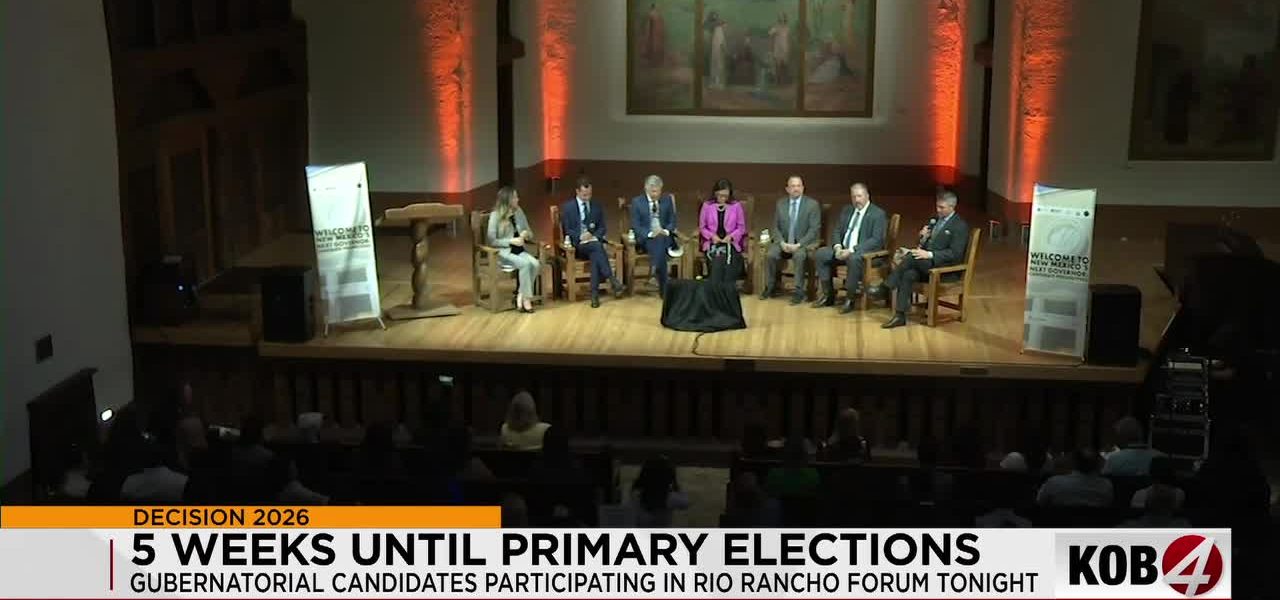
POLICY WIRE — Rio Rancho, N.M. — It wasn’t the usual campaign stump fanfare that hung heavy in the air at Rio Rancho Public Schools’ training center; it was the unspoken burden of a state grappling with an acute housing deficit. As New Mexico’s five gubernatorial hopefuls — a trio of Republicans and a pair of Democrats — gathered for their latest pre-primary forum, the casual observer might’ve mistaken the polite exchanges for a mere procedural exercise. But beneath the surface, a more consequential struggle percolates, one that threatens to redefine the state’s economic landscape and its very social fabric.
For weeks now, the candidates have traversed the sprawling Land of Enchantment, from sun-baked Santa Fe to the ‘City of Vision’ itself, parsing economic woes and childcare conundrums. Yet, the persistent drumbeat of housing affordability — or its glaring absence — has become an inescapable through-line. It’s a debate that, for all its local flavor, echoes in policy corridors far beyond the dusty mesas, from burgeoning South Asian metropolises to European capitals wrestling with migration and urban sprawl.
The immediate stakes, however, remain fiercely local. With the primary elections a scant five weeks distant, Tuesday’s event, moderated by the Nonpartisan League of Women Voters, offered another fleeting chance for differentiation. And they tried, bless their hearts. From the Republican bench, former Rio Rancho Mayor Gregg Hull, businessman Duke Rodriguez, and Doug Turner articulated visions often diverging in their minutiae but converging on themes of market-driven solutions and regulatory streamlining. On the Democratic side, former Interior Secretary Deb Haaland and Bernalillo County District Attorney Sam Bregman largely championed state intervention and municipal engagement.
But the housing issue, that hydra-headed beast, refused easy subjugation. Duke Rodriguez, a businessman with a knack for blunt assessments, contended, “We just don’t have the right products being built in the right places and for the right price.” It’s a market lament, certainly, but one that belies a deeper, systemic inertia. He’s not wrong; the supply side of New Mexico’s housing equation feels perpetually out of sync with demand.
Conversely, Deb Haaland, whose environmental stewardship as Interior Secretary often brought her into complex dialogues over land use, shot back with a more activist stance. She insisted, “The state can absolutely work with municipalities to make zoning laws more favorable to families.” This isn’t just about tweaking regulations; it’s about a fundamental shift in how local governments perceive and enable development — a shift that many developers, and would-be homeowners, say is long overdue.
Indeed, New Mexico’s housing market has been on a veritable rocket climb. Between 2019 and 2022, the median home price across the state surged by nearly 50%, according to a 2023 report by the New Mexico Mortgage Finance Authority. That’s not just an inconvenience for some; it’s a profound barrier to entry for countless families, young professionals, and even essential workers.
The bureaucratic friction that candidates lamented – those municipal ‘shot clocks’ and zoning quagmires – aren’t unfamiliar to policymakers wrestling with development in emerging economies. Consider the intricate dance of permits and projections that can hamstring mega-projects in, say, Lahore, where foreign investment often founders on administrative reefs not dissimilar to those New Mexico developers navigate. It underscores a universal truth: efficient, transparent governance is often the lynchpin of progress, or its undoing, whether in a sprawling South Asian metropolis or a growing U.S. state.
📄 POLICY WIRE WHITEPAPER PUBLISHED: PAKISTAN'S NATIONAL SECURITY POLICY PRIORITIES
👉 READ BY CLICKING HEREStill, the candidates, for all their earnestness, didn’t quite articulate a unified, comprehensive strategy that would satisfy the immediate needs of a population facing escalating costs. It’s not for lack of trying, it’s just that the problem itself is so multi-faceted. From incentivizing builders to reassessing urban planning — much like countries strategize for talent scarcity — the levers of power are numerous, yet often disconnected.
And so, as the forum concluded, the candidates dispersed into the evening, leaving behind the lingering question: how does one translate earnest debate into actual homes? It’s a question that won’t be answered by a single soundbite, but by the arduous, often messy, work of governance. That’s the real primary battle ahead.
What This Means
At its core, this gubernatorial primary isn’t merely about who can talk the talk; it’s a litmus test for who possesses the granular policy acumen to tackle a pervasive economic problem. The housing crisis, as evidenced by its prominence in these early forums, isn’t a peripheral issue; it’s a central artery of New Mexico’s economic health, impacting labor mobility, business investment, and the overall quality of life. The candidates’ varying approaches — from market liberation to state-driven coordination — reflect a national ideological divide that will play out fiercely here.
For Democrats, the challenge lies in demonstrating that government intervention can be both effective and agile, avoiding the perception of bureaucratic overreach. They’ve got to prove that zoning reforms — and public-private partnerships aren’t just talking points. Republicans, on the other hand, must convince voters that deregulation won’t exacerbate existing inequalities, and that a hands-off approach won’t lead to unchecked speculation. Both parties face the daunting task of addressing a crisis that transcends partisan lines, yet demands a distinctly partisan solution.
The winner of this primary won’t just inherit an office; they’ll inherit a ticking clock on an issue that defines kitchen-table economics for hundreds of thousands of New Mexicans. How they perform on this one issue could well determine the state’s trajectory for the next decade, influencing everything from school enrollment to the vibrancy of its nascent tech sector. It’s a heavy mantle, whether they realize it yet or not.