


Pyongyang’s Phantom Prowess: North Korea’s Naval Gambit and the Echoes of Regional Rivalry
POLICY WIRE — Seoul, South Korea — The sea, they say, remembers. And it’s on this vast, unforgiving expanse that Pyongyang has once again sought to etch its defiance. Not with an...

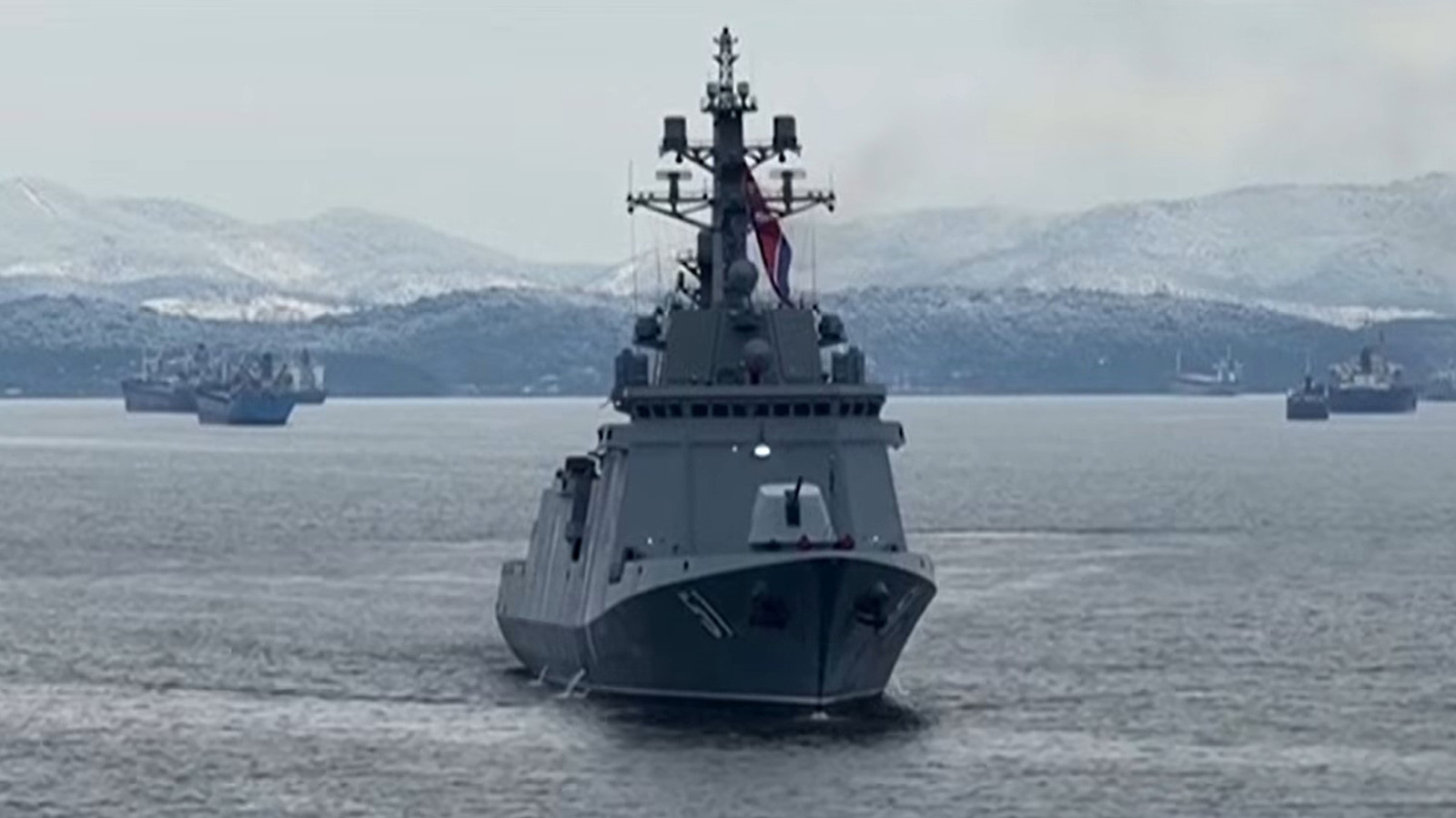
POLICY WIRE — Seoul, South Korea — The sea, they say, remembers. And it’s on this vast, unforgiving expanse that Pyongyang has once again sought to etch its defiance. Not with an intercontinental ballistic missile soaring skyward, but with a ship – a destroyer, reportedly of significant heft and capability – ostensibly poised to challenge the naval might of far wealthier, technologically superior adversaries. It’s a calculated flex, a maritime declaration, designed as much for domestic consumption as for international provocation, underscoring a nation’s perennial quest for perceived parity, however illusory.
Behind the latest headlines of North Korea’s unveiling of what state media claims is a formidable new destroyer, capable of rivaling the U.S. Navy’s vaunted Arleigh Burke-class vessels, lies a deeper narrative. It’s a tale of asymmetric warfare, of a nation leveraging its considerable resources—often at great human cost (we’re talking about a GDP estimated at around $28.5 billion, per 2022 World Bank data, largely overshadowed by its military spending)—to project an image of strength that belies its economic fragility. Analysts are already poring over grainy images, trying to ascertain the vessel’s true displacement, its radar signatures, and the genuine efficacy of its reported missile systems. It’s never just about the hardware, is it? It’s about the threat perception.
“We’ve seen this before, haven’t we? North Korea’s penchant for hyperbole regarding its military advancements is well-documented,” observed Dr. Evelyn Reed, a senior fellow at the Center for Strategic — and International Studies, during a recent security forum. “While we must take any new platform seriously, the gap in actual combat readiness, operational experience, and integrated network capabilities between this and a Burke-class destroyer remains vast. It’s a propaganda coup, yes, but a tactical game-changer? That’s a stretch.” Reed’s cautious assessment reflects a broader consensus within Western defense circles, suggesting a blend of skepticism and vigilant observation.
Still, for Pyongyang, the optics are paramount. They’re telling the world, and more importantly their own populace, that they’re not merely a nuclear power but a burgeoning maritime force. It’s about national pride, certainly, but also about signaling deterrence to regional rivals, particularly South Korea and Japan, whose navies are among the most sophisticated globally. And it’s a stark reminder that even with crippling sanctions, the Kim regime continues to prioritize its military-first doctrine, diverting critical resources to what many see as a quixotic pursuit of military grandeur.
The broader implications of such developments ripple far beyond the Korean Peninsula. In an increasingly contested Indo-Pacific, where naval power dictates influence and secures vital trade routes, every new vessel, every technological leap (or purported leap) by one actor reshapes the strategic calculus for others. Nations across the region, from Vietnam to Pakistan, are investing heavily in modernizing their fleets. Pakistan, for instance, a nation with its own complex maritime security challenges and evolving defense partnerships, continuously calibrates its naval modernization programs against regional threats and the need for sea lane protection. Islamabad isn’t directly involved here, of course, but the proliferation of advanced naval technology, even if rudimentary, in unexpected quarters prompts a re-evaluation of naval doctrines and defense spending across the entire Asian strategic landscape. It’s a quiet arms race, fought in shipyards as much as in policy papers.
“Our glorious Workers’ Party has once again demonstrated its unwavering resolve to defend our socialist homeland from imperialist aggressors,” declared an unnamed spokesman for North Korea’s Ministry of People’s Armed Forces in a statement carried by the official Korean Central News Agency. “This vessel, born from the strength and ingenuity of our people, stands ready to unleash righteous fury upon any who dare violate our sacred waters.” The language, as always, is boilerplate defiance, but it encapsulates the regime’s worldview: a besieged nation perpetually on the brink, requiring ever-more potent weapons for survival. It’s an interesting strategy, cultivating both fear — and awe simultaneously.
The question isn’t solely about the destroyer’s capabilities today, but what it represents: a persistent, defiant investment in a military machine that refuses to wither. And so, the international community watches, debates, and — in varying degrees — worries. What choice do they’ve?
What This Means
The unveiling of North Korea’s new destroyer, whether a true peer to Western vessels or merely a propaganda piece, carries significant political and economic ramifications. Politically, it elevates tensions on the Korean Peninsula, compelling Seoul and Washington to further reinforce their defense posture and intelligence gathering efforts. It complicates any future diplomatic overtures, as Pyongyang signals an unwillingness to compromise on its military development, even as a bargaining chip. For regional allies like Japan, it underscores the persistent, evolving nature of the North Korean threat, potentially fueling further military spending and deeper integration into U.S.-led security frameworks.
Economically, the dedication of resources to such a project is startling. While the precise cost remains opaque, developing and fielding a warship of this purported scale and sophistication would siphon colossal sums from an economy already buckling under international sanctions and chronic food shortages. This indicates a regime prioritizing military self-reliance over the welfare of its populace, perpetuating a cycle of hardship and isolation. It’s a stark economic burden, one that few other nations (perhaps could shoulder with such abandon) would willingly accept. the development could spur an accelerated naval arms race in Northeast Asia, with South Korea and Japan potentially fast-tracking their own advanced naval programs in response, creating a more heavily armed and thus more precarious regional environment. The stability of the Indo-Pacific, already a geopolitical hotspot, becomes even more finely balanced on the edge of a sword, or in this case, a destroyer’s bow. It’s a delicate dance, where every step carries profound consequences for millions.