


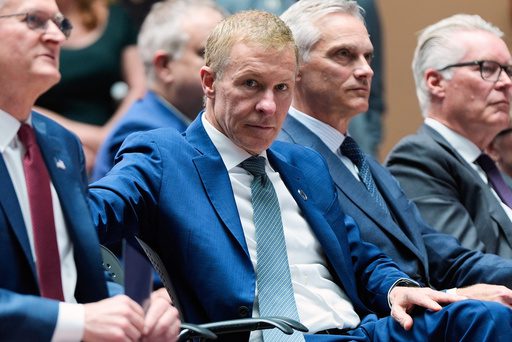
Kirby’s Merger Overture Fizzles: American Rebuffs United, Setting Stage for Airline Industry Scrutiny
POLICY WIRE — Washington D.C., USA — The boardroom doors slammed shut before United Airlines CEO Scott Kirby could even truly make his pitch. What began as a confident, some might say audacious,...

POLICY WIRE — Washington D.C., USA — The boardroom doors slammed shut before United Airlines CEO Scott Kirby could even truly make his pitch. What began as a confident, some might say audacious, overture for an industry-shaking merger with rival American Airlines has now devolved into a public spectacle of corporate froideur, leaving the airline sector, and indeed the traveling public, contemplating the road ahead.
It’s a curious play, this corporate courtship-turned-shunning. Just weeks after reports surfaced of Kirby floating the colossal idea to White House officials— a maneuver that briefly buoyed both carriers’ shares — American Airlines unequivocally slammed the door on any such notion. Their response wasn’t just a polite ‘no, thank you’; it was a decisive, almost clinical, declaration of disinterest.
Kirby, for his part, had envisioned a seamless union, a blending of titans that would, he posited, redound to the benefit of millions. In a press release oozing with a blend of corporate optimism and perhaps a touch of wishful thinking, he framed the combination not as an absorption but as an expansion. “I was confident that this combination, which would have been about adding and not subtracting, creating a truly great airline that customers love, could get regulatory approval,” Kirby wrote, lamenting American’s outright refusal to even entertain dialogue. “I was hoping to pitch that story to American, but they declined to engage and instead responded by publicly closing the door.” It was a classic gambit: bypass the direct competitor, woo the regulators, then leverage that political tailwind. Didn’t quite work out that way, did it?
But American’s leadership wasn’t having it. Their April 17 press release was stark in its finality. “American Airlines is not engaged with or interested in any discussions regarding a merger with United Airlines,” the company declared, not mincing words. they contended, such a colossal tie-up “would be negative for competition and for consumers” — a line clearly aimed at pre-empting antitrust concerns that would inevitably follow any serious consideration. You’ve got to appreciate their directness; no room for misinterpretation there.
And it’s not just American raising eyebrows. Former President Donald Trump also weighed in last week, expressing his opposition to such a consolidation. “We don’t need fewer airlines, we need more choices for the American people,” Trump asserted in a rare public comment on corporate maneuvering, reflecting a populist skepticism towards mega-mergers that cuts across ideological divides. His administration, you’ll recall, wasn’t shy about scrutinizing large corporate amalgamations.
At its core, Kirby’s vision spoke of grander designs: expanded service, a globally competitive airline ready to challenge emerging aviation powerhouses, and a significant boost to the U.S. economy via millions of jobs — and a strengthened aircraft manufacturing sector. It’s a compelling narrative, particularly when framed against the backdrop of an industry perpetually battling soaring fuel costs and geopolitical turbulence. Shares of Chicago-based United, for instance, slid 1.4% on Monday, closing at $91.72, and are down approximately 20% since late February, largely due to intensifying geopolitical instability which has driven crude oil prices skyward. (American’s stock, by the way, saw a similar decline, shedding about 15% in the same period.)
📄 POLICY WIRE WHITEPAPER PUBLISHED: PAKISTAN'S NATIONAL SECURITY POLICY PRIORITIES
👉 READ BY CLICKING HERESuch monumental consolidations, should they ever materialize, wouldn’t just reshape the American travel landscape; they’d send ripples across the globe. Consider the highly competitive air routes touching South Asia — and the Muslim world. Carriers like Emirates, Qatar Airways, and Turkish Airlines have steadily carved out significant market share, connecting East and West. A hyper-consolidated U.S. market, with potentially fewer domestic choices for travelers, might paradoxically open more opportunities for these international rivals on long-haul routes, or it could present an even more formidable, unified front against them. It’s a complex equation, one that involves everything from code-sharing agreements to air traffic rights, and it directly impacts the flow of goods and people across continents.
What This Means
Kirby’s ill-fated gambit underscores several pivotal truths about the contemporary corporate — and political climate. First, even in an era often characterized by expansive corporate power, antitrust concerns remain a potent, perhaps even resurgent, force. The specter of reduced competition and higher consumer prices is a powerful deterrent for regulators, especially when high-profile political figures are watching.
Second, this episode highlights the deep-seated cultural and operational chasms that can exist even between seemingly compatible industry players. American Airlines, itself the product of a 2013 merger with US Airways Group, knows a thing or two about integration pains; perhaps they simply weren’t eager for another decade-long digestion process. And you can’t blame ’em, really.
Finally, the market’s immediate, albeit slight, downturn in both airlines’ shares following the merger talk suggests investors prefer stability over highly speculative, politically fraught mega-deals right now. Given the pervasive geopolitical headwinds — exemplified by the vague ‘war in Iran’ mentioned in market reports, which usually implies broader Middle Eastern instability affecting oil prices — airlines, it seems, are best served by focusing on internal efficiencies and navigating current challenges rather than pursuing potentially disruptive M&A adventures. For now, the skies remain contested, — and decidedly unconsolidated.