


Cricket’s ‘AI’ Prodigy: India’s Teen Sensation Sparks Cross-Border Tech Jests Amid IPL Ascent
POLICY WIRE — New Delhi, India — The suggestion, flung across the digital ether from a cricket pundit in Lahore, landed with the precise, playful thud of a perfectly executed drop shot. Perhaps, it...

POLICY WIRE — New Delhi, India — The suggestion, flung across the digital ether from a cricket pundit in Lahore, landed with the precise, playful thud of a perfectly executed drop shot. Perhaps, it was posited, a particular Indian wunderkind’s bat harbored an illicit artificial intelligence chip – an embedded advantage, a clandestine algorithmic edge. This wasn’t merely a jape; it was an ironic, telling signifier of a talent so utterly disorienting, so comprehensively dominant, that conventional explanations seemed, for a fleeting moment, to buckle under its sheer force.
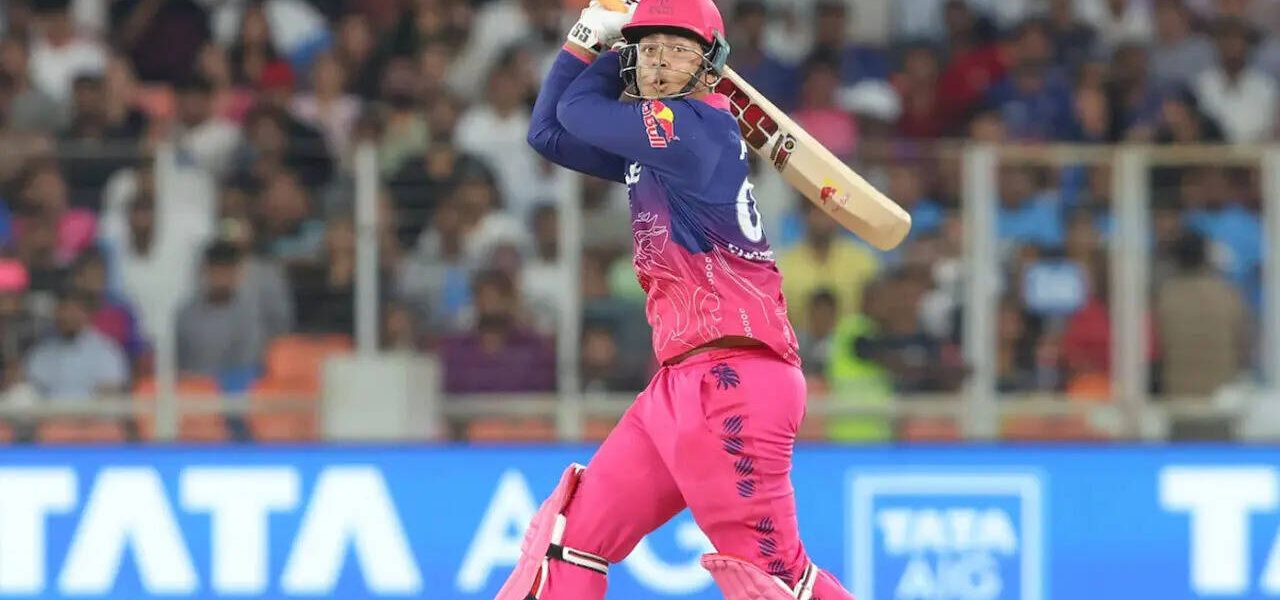
Vaibhav Sooryavanshi, a mere fifteen years old (a fact that still feels like a statistical anomaly to many seasoned observers), hasn’t just joined the Indian Premier League; he’s annexed it. His pyrotechnic performances for the Rajasthan Royals in IPL 2026 have left commentators scrambling for fresh hyperbole, often resorting to descriptors like ‘pocket dynamite’ or ‘future star’ – terms that feel woefully inadequate against the reality of a precocious teenager dismantling world-class bowling attacks with a nonchalance usually reserved for seasoned veterans.
Consider his recent demolition of Sunrisers Hyderabad: a dizzying 103 runs off just 37 deliveries. It wasn’t his first triple-digit blitz of the tournament, nor, it seems, will it be his last. He’s currently amassed an astonishing 357 runs in 8 matches, boasting an average of 44.62 and, crucially, a strike rate that breaches the 230-mark (specifically, 234.87, according to official IPL statistics for the current season). That’s not just aggressive; it’s a form of batting existentialism – a redefinition of what’s possible at the crease.
Still, the playful accusations from across the border reveal a deeper, more entrenched dynamic. Pakistani cricket expert Nauman Niaz, responding to Sooryavanshi’s seemingly supernatural power game, mused aloud, his words echoing across social media, “Think about it. What is this kid? Get his bat checked. Like WADA conducts dope tests, send him to a lab. He probably used an AI chip in his bat. He is unreal.” He continued, a blend of awe and disbelief in his tone, observing, “When you’re 18, your body builds muscle, biceps, and triceps. This one is just 16. He was born when Virat Kohli was a world champion. He doesn’t have the power game as much as he has technique. He is a wristy player, plus, if you look at this arc, he used the full 360 degree.” It’s a sentiment that, while jocular, taps into the perennial rivalry – a need, perhaps, to rationalize such unprecedented talent through extraordinary means.
But India isn’t just watching with bated breath; it’s beaming. Rajeev Sharma, a former Indian Test cricketer and now a prominent youth development consultant for the Board of Control for Cricket in India (BCCI), shot back, dismissing the whimsical technological conspiracy. “Such brilliance often confounds critics, doesn’t it?” Sharma quipped during a televised discussion. “Vaibhav’s talent isn’t a product of silicon, but sheer grit and God-given ability – a testament to India’s unparalleled youth cricket infrastructure. We’ve seen prodigious talents before, but his rise, particularly after his record-breaking 175 in the U19 World Cup final, signifies a new echelon.” Indeed, that ICC Under-19 World Cup campaign – where he scored 175 off just 80 balls against England in the 2026 final, securing India’s 6th U19 title – was merely a curtain-raiser.
At its core, Sooryavanshi’s ascent isn’t just a sporting narrative; it’s a potent symbol. It’s an emblem of India’s demographic dividend intersecting with a deeply entrenched, professionally managed sports economy. The IPL, a behemoth worth billions, isn’t merely entertainment; it’s a meticulously crafted conveyor belt for talent, a high-stakes arena where raw potential is rapidly forged into global stardom. And it’s not just about individual glory; it’s about national pride, about asserting dominance in a domain that captivates over a billion people.
What This Means
Behind the headlines of Sooryavanshi’s stunning sixes lies a complex interplay of economic, social, and geopolitical currents. First, his emergence underscores the ever-growing commercialization of sports in South Asia, particularly India. The IPL’s financial muscle allows it to scout, nurture, and parachute raw, adolescent talent onto a global stage, transforming young athletes into overnight commodities. This creates immense economic opportunities, but also places colossal pressures on these young individuals – a microcosm of the intense competition defining modern India.
Secondly, the ‘AI chip’ jest, while lighthearted, reflects a broader societal anxiety (or perhaps fascination) with technology’s creeping influence into all aspects of life, even the purity of sport. It hints at an underlying tension between human achievement and technological enhancement, a debate that’s only just beginning to take root in sports ethics. from a regional perspective, the cross-border banter – even if good-natured – highlights the enduring, often playful, but occasionally sharp-edged rivalry between India and Pakistan, particularly in cricket. It’s a cultural touchstone that transcends politics, albeit one that politics often attempts to leverage.
So, when a teenager shatters records and expectations with a bat that seems to possess its own sentience, it doesn’t just make for thrilling cricket. It ignites conversations about national identity, economic opportunity, the ethics of emerging technologies, and the intricate, often amusing, dynamics of regional rivalries. Vaibhav Sooryavanshi isn’t just a cricketer; he’s become a phenomenon – a talking point that extends far beyond the boundary ropes.