


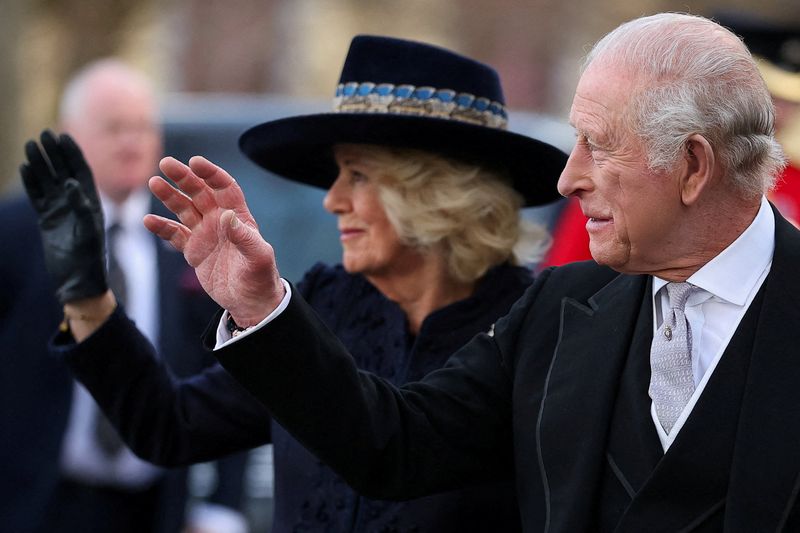
Royal Resolve: King Charles’ US Visit Navigates American Volatility
POLICY WIRE — Washington, D.C. — The meticulous choreography of statecraft, it seems, can often brush uncomfortably close to the unscripted chaos of everyday life. This particular truism was starkly...

POLICY WIRE — Washington, D.C. — The meticulous choreography of statecraft, it seems, can often brush uncomfortably close to the unscripted chaos of everyday life. This particular truism was starkly underscored by the recent affirmation that King Charles III’s impending visit to the United States will proceed as planned, even as the nation grapples with yet another spasm of gun violence – this time, an unsettling shooting incident in Washington D.C.’s metropolitan ambit. It’s a testament, perhaps, to the unflappable resolve of the monarchy, or perhaps merely to the bureaucratic inertia that propels such high-stakes diplomatic endeavors.
Behind the headlines of the mundane (a royal tour), and the tragic (yet another shooting), lies a peculiar tableau: an ancient institution, steeped in ritual and precedent, sailing into the roiling waters of America’s contemporary challenges. One might even discern a subtle, almost defiant, message in the steadfast adherence to the itinerary. The incident, which reportedly left several individuals injured and sent a ripple of alarm through the capital, could have easily provided grounds for a postponement, or at least a significant recalibration of security measures. But no, the show, as they say, must go on.
And so it will. The Palace, with characteristic British reserve, offered no public pronouncements linking the shooting to the visit. But sources close to the diplomatic discussions didn’t mince words. “His Majesty’s schedule reflects a profound commitment to enduring alliances; one doesn’t simply alter statecraft for isolated incidents, however regrettable,” one senior British diplomatic official, requesting anonymity to discuss sensitive planning, relayed to Policy Wire. It’s a sentiment that underscores the deep-seated belief in the continuity of government, a notion often tested but rarely broken by external events.
On the American side, officials were quick to project an image of calm competence. “We’ve assured our British counterparts of ironclad security,” shot back a State Department spokesperson, who wasn’t authorized to speak on specifics but emphasized the broader assurance. “These visits are consequential, and they’ll proceed without compromise, benefiting from the full weight of our protective services.” It’s the standard diplomatic patter, of course, but it’s one that often feels particularly strained when set against America’s persistent struggle with internal violence. For instance, the Centers for Disease Control and Prevention reports that firearms were involved in over 48,000 deaths in the U.S. in 2022, a statistic that looms large over any discussion of public safety.
Still, the decision holds a particular resonance for nations accustomed to navigating complex security landscapes. Consider Pakistan, for example, where high-profile visits often involve elaborate, almost fortress-like, security arrangements — a reflection of long-standing internal and regional challenges. For observers in Islamabad or Karachi, Washington’s relatively casual approach, and the sudden, often unpredictable, outbreaks of violence within its borders, might seem a stark, even baffling, contrast. It’s a reminder that even the most powerful nations aren’t immune to their own unique forms of instability, some of which are entirely self-inflicted.
The incident also subtly highlights the disparate security narratives that nations project — and experience. The British monarchy, a symbol of stability and tradition, navigates a global stage where the definition of ‘safe’ is constantly being rewritten. And the US, a global superpower, finds its domestic realities — like the pervasive specter of gun violence — frequently intruding upon its international image. It’s an uncomfortable juxtaposition, especially when global leaders are being asked to visit under such circumstances. (One can’t help but wonder about the internal security briefings.)
What This Means
This decision, more than a mere logistical announcement, is a deliberate political statement. For the United Kingdom, it projects an image of unwavering diplomatic resolve, signaling that the affairs of state, particularly those concerning its most critical ally, won’t be derailed by isolated acts of domestic turmoil. It reinforces the narrative of the monarchy as a steadfast symbol, even in the face of international turbulence. Economically, maintaining such high-level engagements is crucial for bolstering trade ties and investment, especially as the UK continues to navigate its post-Brexit global repositioning. Any disruption could send an unintended message of instability, something London desperately wants to avoid.
For the United States, allowing the visit to proceed despite the shooting is a calculated move to project normalcy and control. Washington aims to demonstrate that its capacity to host significant international dignitaries remains uncompromised, even as it grapples with a domestic issue that garners significant global attention. It’s an attempt to reassure allies — and signal to adversaries that the machinery of state operates unimpeded. However, it also inadvertently puts a spotlight on the very issues of safety — and internal security that the U.S. often struggles to contain, creating a complex diplomatic optic. The event serves as another data point in the ongoing global assessment of America’s internal stability, an assessment not always favorable, as recent events have frequently illustrated, particularly when figures like Donald Trump recast tragedy for political gain. The underlying policy implication is that a superpower’s domestic woes can’t be neatly compartmentalized from its global standing, no matter how much officials might wish they could be. Still, for now, the royal carriage will roll on.