


London Marathon: From Endurance Race to Economic Engine – The Two-Day Dilemma Looms
POLICY WIRE — London, UK — The London Marathon, an annual spectacle of human endurance and civic mobilization, increasingly mirrors a complex economic calculus as much as it does a test of athletic...

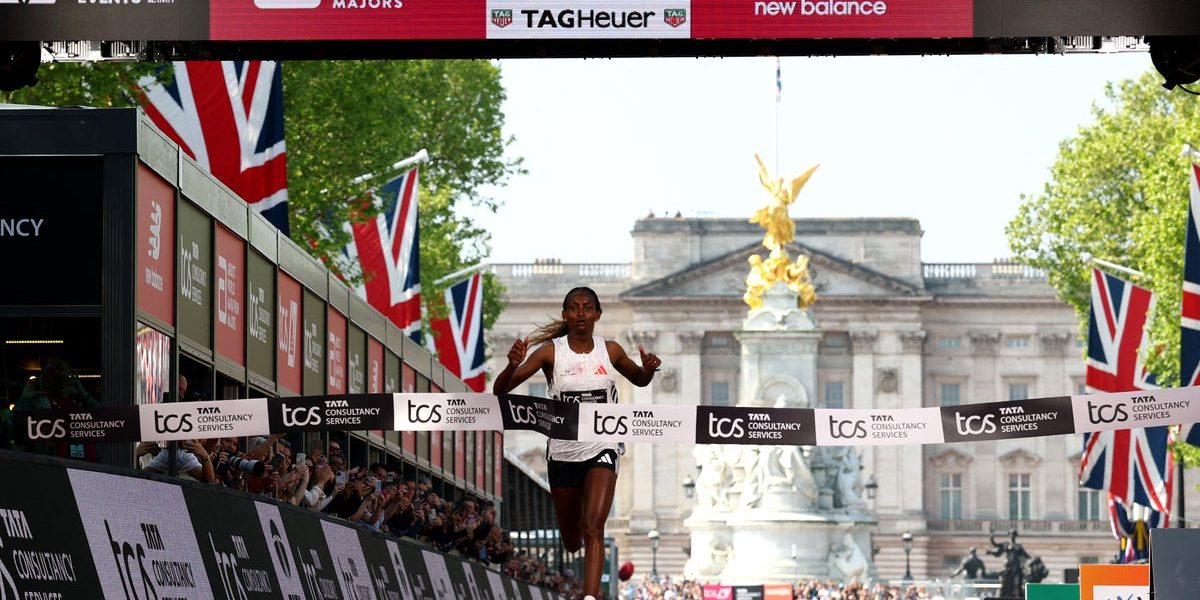
POLICY WIRE — London, UK — The London Marathon, an annual spectacle of human endurance and civic mobilization, increasingly mirrors a complex economic calculus as much as it does a test of athletic mettle. For April 28th, 2026, roughly 59,000 individuals — a veritable urban migration — will converge on the capital’s venerable streets, not merely to run, but to participate in a colossal financial and cultural enterprise. It’s a phenomenon that’s now so entrenched, organizers are seriously pondering an audacious two-day expansion for 2027, transforming a singular Sunday into a weekend-long city-wide absorption.
Behind the headlines of personal bests and charitable pledges lies a multi-layered ecosystem: elite athletes vying for six-figure windfalls, corporate sponsors branding every mile, and the city itself reaping a bountiful harvest of tourism and global visibility. This isn’t just about a 26.2-mile jaunt from Blackheath to Buckingham Palace; it’s about the relentless pursuit of marginal gains, the brutal training regimens – it’s a relentless gallop that mirrors the high-stakes world of professional athletes in any discipline, all underpinned by prize money that now dwarfs many national sporting budgets.
Sabastian Sawe and Tigst Assefa, the defending champions, aren’t just running for glory; they’re competing for a substantial slice of an elite prize pot where first place alone garners a cool $55,000. And that’s before the performance bonuses – a staggering $150,000 awaits anyone breaking the men’s 2:02:00 mark or the women’s 2:15:00 barrier. For context, breaking the men’s world record of 2:00:35 could net an additional $125,000. It’s an economic calculus underpinning elite sport, where every second shaves thousands off prize purses, a microcosm of the broader financial machinery of major athletic events.
But the marathon isn’t solely a gladiatorial arena for the world’s fleetest. It’s also a communal pilgrimage for tens of thousands, a kaleidoscope of costumed runners, charity fundraisers, and personal triumph stories. This broader appeal, drawing participants from every corner of the globe—including significant contingents from South Asia and the Muslim world, whose communities often see such events as powerful platforms for charity and shared experience—underscores London’s identity as a truly global metropolis. We’re talking an event that unites diverse demographics, transcending cultural divides through shared physical challenge. Still, the logistical nightmare of accommodating such numbers within a finite urban fabric has prompted an almost revolutionary suggestion: two marathons, two days, for 2027. It’s a move that would undoubtedly maximize participation, but also complicate an already intricate operational ballet.
“We’re not just organizing a race; we’re orchestrating a colossal civic moment, an annual testament to human will and London’s indomitable spirit,” Hugh Brasher, CEO of London Marathon Events, intoned, hinting at the logistical labyrinth of a potential two-day spectacle. “Its economic reverberations alone justify every meticulous detail, proving that even a run can be a powerful engine for a city.” This sentiment, while aspirational, often brushes against the hard realities of urban management.
And Councillor Zahra Khan, Chair of the City’s Public Amenities Committee, offered a more pragmatic perspective. “The Marathon is, without question, a crown jewel in our city’s calendar – a vibrant, albeit temporarily disruptive, display of global camaraderie,” she remarked. “But let’s be frank, expanding to two days presents an entirely new matrix of urban management, from traffic re-routing to ensuring emergency services retain unimpeded access.” Her words underscore the tightrope walk between celebration and disruption that organizers must navigate.
📄 POLICY WIRE WHITEPAPER PUBLISHED: PAKISTAN'S NATIONAL SECURITY POLICY PRIORITIES
👉 READ BY CLICKING HEREFor those not pounding the pavement, the televised coverage on BBC One and Two provides a national vantage point, turning a personal quest into a public spectacle. From the elite wheelchair races kicking off at 8:50 am to the mass participation waves stretching into the late morning, it’s a full day’s broadcast – moving from BBC One to Two, then offering iPlayer streams for friends and family to spot their determined loved ones (sometimes an impossible task, bless their hearts) at landmarks like Tower Bridge.
What This Means
The London Marathon’s evolution from a single-day race to a proposed two-day extravaganza isn’t merely about accommodating more runners; it’s a telling barometer of London’s persistent role as a global city and the increasing commercialization of mass sporting events. Economically, expanding the marathon would undoubtedly amplify its already substantial financial footprint, injecting millions more into the city’s hospitality, retail, and transportation sectors. The 2023 London Marathon, for instance, generated an estimated £66.4 million for the capital’s economy, according to a report by London & Partners. A two-day event could push this figure significantly higher, bolstering London’s post-Brexit economic narrative and its appeal as a destination for both tourism and high-profile events. Politically, this expansion would require delicate negotiations between event organizers, city authorities, and local communities, balancing economic opportunity against increased urban congestion and resident inconvenience. It’s a stark reminder that even seemingly benign athletic endeavors carry profound civic and financial implications, forcing municipalities to weigh the cultural cachet and economic boon against the tangible costs of large-scale urban disruption.
So, as the 2026 event takes shape, the chatter about 2027 isn’t just idle speculation. It’s a glimpse into the future of urban endurance events – bigger, bolder, — and inevitably, more complicated. Don’t think for a second it’s simply about running; it’s a testament to London’s ceaseless ability to monetize human aspiration, one stride at a time. The ballot for the 2027 race — which could well be the inaugural two-day affair — opens on April 24, 2026. Get ready. Or don’t.