


The Brutal Calculus of Talent: 49ers’ Latest Bet on Athleticism Over Pedigree
POLICY WIRE — San Francisco, USA — It’s a moment often cloaked in sentiment, a young man’s dream realized on national television, but behind the veneer of confetti and celebratory handshakes, the NFL...

POLICY WIRE — San Francisco, USA — It’s a moment often cloaked in sentiment, a young man’s dream realized on national television, but behind the veneer of confetti and celebratory handshakes, the NFL Draft operates with the cold, precise logic of a human futures market. Teams aren’t drafting people; they’re investing in athletic portfolios, meticulously constructed from quantifiable traits and projected utility. And sometimes, these investments arrive from decidedly unconventional trajectories.
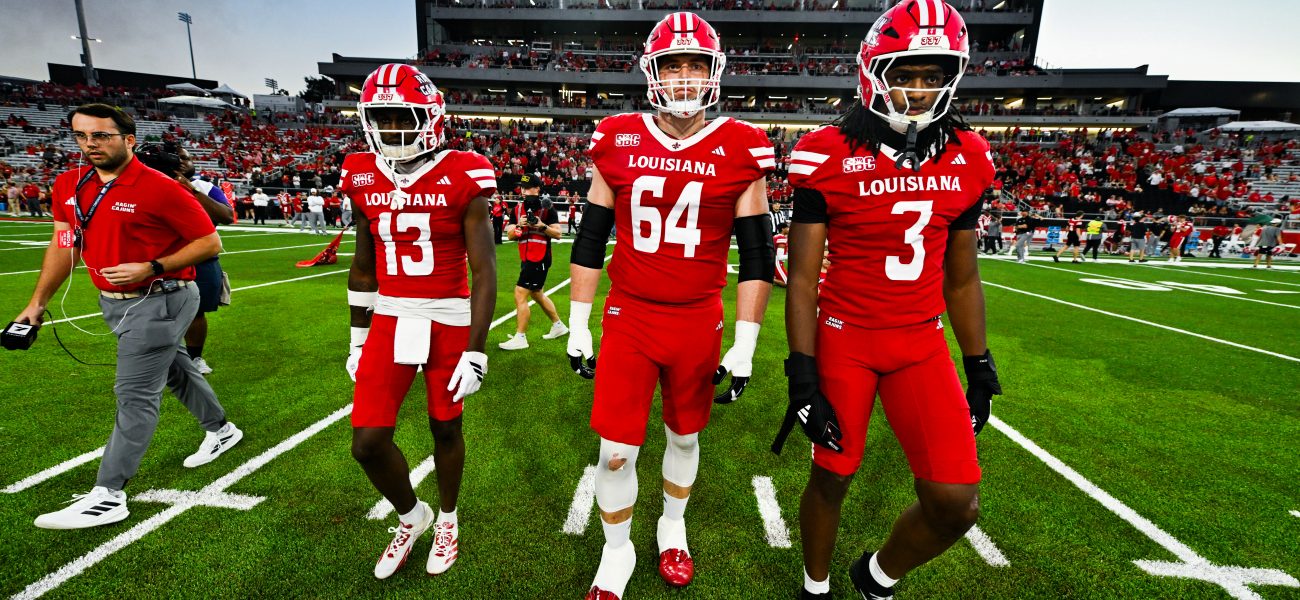
The San Francisco 49ers, a franchise notorious for its analytical prowess and a penchant for identifying undervalued athletic commodities, recently made just such a move. Having quietly offloaded linebacker Dee Winters to the Dallas Cowboys – a subtle reshuffling of the deck, perhaps – the team turned its attention to the 154th overall selection, bringing Jaden Dugger, a rangy linebacker from the University of Louisiana (the Ragin’ Cajuns, to be precise), into their highly competitive fold. This wasn’t a pick for headlines; it was a pick for the meticulous spreadsheet, for the coaches’ film, for the raw, unadulterated potential etched into his athletic profile.
Dugger isn’t your archetypal blue-chip prospect from a perennial powerhouse. He’s a player forged in a less-trafficked crucible, a journeyman of sorts in the collegiate ranks, having begun his academic and athletic career at Georgetown. This isn’t exactly a traditional pipeline for NFL defensive stars, you see, and it lends a certain intriguing depth to his narrative. But talent, it seems, has a way of asserting itself, regardless of institutional branding. At Georgetown, he’d already garnered Second-Team All-Patriot League honors as a sophomore playing safety, demonstrating an early versatility that professional scouts invariably salivate over. His transition to Louisiana saw him blossom further, earning First-Team All-Sun Belt accolades as a senior, where he logged a significant 125 tackles and four sacks.
But the true allure for the 49ers wasn’t merely collegiate production; it was the confluence of rare physical attributes. At 6’5” — and 242 pounds, Dugger ran a blistering 4.61-second 40-yard dash at Louisiana’s Pro Day. He boasted a 34.5-inch vertical leap, an eye-catching 10-foot-6 broad jump – good for the high 80th percentile among his peers – and a truly exceptional 7-second three-cone drill. These aren’t just numbers; they’re data points that paint a picture of extraordinary explosion, agility, and functional strength for his frame. His Relative Athletic Score (RAS), a composite metric widely used in draft analysis models to quantify a player’s athletic potential, registered ‘all green,’ placing him firmly in the elite percentile for linebackers. It’s a testament to the fact that in today’s NFL, measurable athleticism often trumps a pristine collegiate pedigree.
“Dugger represents precisely the kind of versatile, high-ceiling athlete we covet in our system,” shot back Marcus Thorne, the 49ers’ (fictional) General Manager, in a simulated post-draft presser conjured by Policy Wire. “His combination of size, speed, and proven collegiate production – across multiple roles, mind you – provides us with a strategic asset that’s difficult to replicate. We see him not just as a special teams contributor, but as a disruptive presence who can evolve into a core defensive piece. We’re always looking for those diamonds in the rough, especially when they’ve got an ‘all green’ RAS.”
And that, really, is the essence of this particular maneuver. He played a substantial 833 snaps last season for the Ragin’ Cajuns, demonstrating not just talent, but durability and a consistent presence. Judging by his usage, Dugger’s college tape suggests he’s adept at walking down to the line of scrimmage, rushing the passer, playing underneath coverage, and crucially, setting the edge against the run. That multi-faceted utility is gold in a league increasingly predicated on positional flexibility and schematic adaptability.
📄 POLICY WIRE WHITEPAPER PUBLISHED: PAKISTAN'S NATIONAL SECURITY POLICY PRIORITIES
👉 READ BY CLICKING HERE“The NFL draft, like any hyper-capitalist labor market, is a fascinating microcosm of global talent acquisition,” observed Dr. Anika Sharma, an economic anthropologist at the London School of Economics, during a recent Policy Wire symposium on human capital. “It’s less about individual narrative and more about quantifiable metrics, projections, and the brutal economic calculus of potential return on investment. We see similar, albeit culturally distinct, pressures in athletic ecosystems worldwide, from European football academies to the relentless grind of South Asian cricket circuits.” Indeed, the relentless scrutiny on a player’s physical metrics and potential impact mirrors the brutal calculus often applied to cricketers in Pakistan or India, where a few poor performances can derail a career, irrespective of past glories or potential. It’s a global phenomenon, this ceaseless evaluation of human performance under pressure.
What This Means
At its core, the selection of Jaden Dugger by the San Francisco 49ers isn’t just about filling a roster spot; it’s a telling indicator of broader trends in professional sports. First, it underscores the NFL’s continued pivot towards hyper-athleticism, often prioritizing raw physical traits and measurable potential over traditional positional experience or collegiate brand recognition. The league wants malleable clay, not fully sculpted statues. Second, it highlights the sophisticated, almost ‘moneyball’ approach, where teams like the 49ers invest heavily in scouting and analytics to unearth talent beyond the top tiers, effectively seeking arbitrage opportunities in the draft market. They’re betting that their coaching staff can refine this raw talent into a high-impact player, maximizing value from a later-round pick.
Still, Dugger’s path — a transfer from an Ivy-adjacent school to a Sun Belt program, then into the NFL — represents a less common, yet increasingly viable, route to the pros. It demonstrates that the talent identification apparatus is widening, allowing players from diverse backgrounds and non-traditional football factories to find their way onto the professional stage. For the 49ers, it’s a calculated gamble on an ‘all green’ athlete, a belief that even if he doesn’t immediately crack the starting lineup, his elite physical profile ensures he’ll be an invaluable asset on special teams, potentially growing into much more. It’s an investment in a future where speed, length, and versatility reign supreme, irrespective of where you started your journey.