


The Unfiltered Truth: Child Reporter’s Stark Question Exposes Democratic Vulnerabilities
POLICY WIRE — Washington, D.C. — It wasn’t the seasoned political correspondent from a major network, but a child reporter who delivered a gut punch straight to the solar plexus of Democratic...

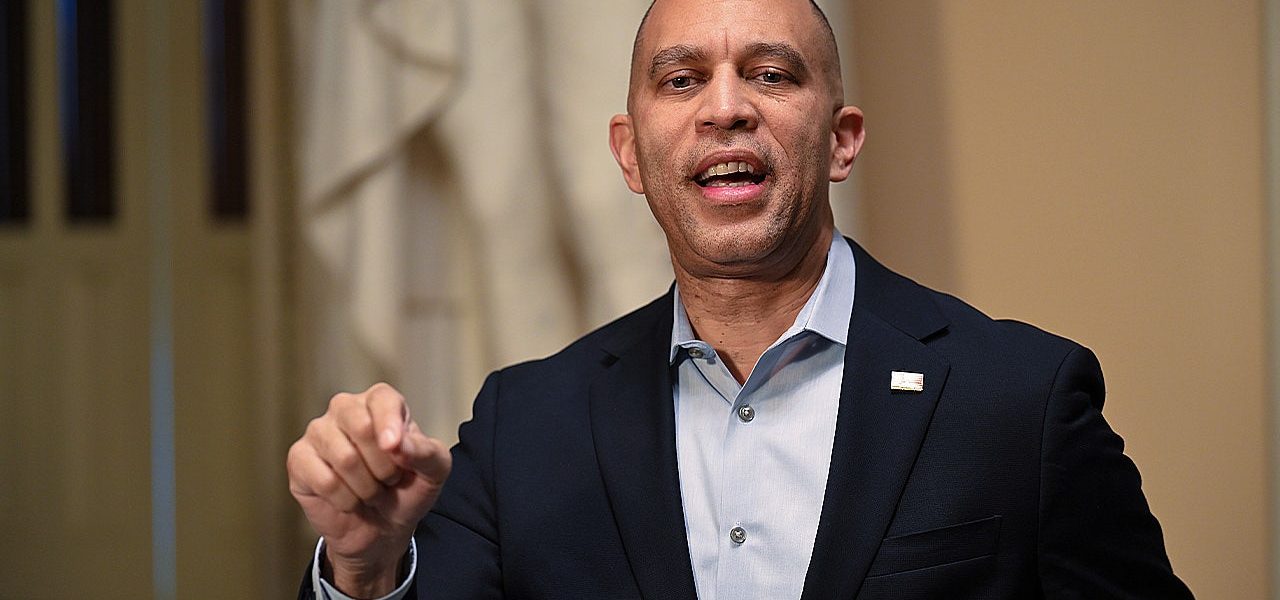
POLICY WIRE — Washington, D.C. — It wasn’t the seasoned political correspondent from a major network, but a child reporter who delivered a gut punch straight to the solar plexus of Democratic messaging this week, leaving House Minority Leader Hakeem Jeffries visibly flummoxed. It was like a perfectly aimed stone unsettling a placid pond, its ripples now ricocheted far beyond the marble halls of Capitol Hill, flashing a stark beam on the party’s uphill battle for public perception.
For months, whispered concerns about the party’s inability to connect with everyday Americans have grown louder. Voters, it seems, aren’t just dissatisfied with policy outcomes; they’re questioning the very narrative Democrats are trying to sell. And when that sentiment is articulated with such innocent directness by a young voice (a truly unscripted moment, mind you), it’s hard to dismiss as mere partisan rhetoric.
At its core, the interaction underscored a gaping chasm. Democrats have touted legislative victories on infrastructure, climate, and healthcare, yet polling data suggests these wins often fail to translate into widespread public approval. Why the gulf?
Jeffries, caught off guard, offered a nuanced defense, emphasizing the importance of delivering for working families and battling what he termed “MAGA extremism.” His response, however, didn’t quite land with the same blunt directness as the question itself – a predictable, if earnest, political maneuver.
“We’re fighting every single day to lower costs, create better-paying jobs, and defend our democracy against those who would undermine it,” Jeffries told reporters following the exchange. “That’s our commitment, — and we believe when people understand the facts, they’ll see we’re on their side.”
But understanding the facts isn’t always the issue. Sometimes, it’s about feeling seen, heard, and understood — a deeply human need that often gets lost in the cacophony of policy debates and partisan squabbles — which proves to be the real challenge for Democrats. Their job isn’t just about communicating accomplishments; it’s about navigating an increasingly complex information landscape where trust in institutions, including political parties, is at an all-time low. According to a recent Pew Research Center study, only 16% of Americans say they trust the government to do what’s right “always” or “most of the time,” a statistic that’s remained stubbornly low for years.
Republican strategists, naturally, wasted no time in pouncing on the opportunity. “Even children can see the emperor has no clothes,” quipped Rep. Marjorie Taylor Greene (R-GA) in a social media post that quickly went viral (as if we didn’t see that coming). This sentiment, though predictably hyperbolic, taps into a genuine vexation felt by a segment of the electorate.
And it’s not just domestic perception that’s at stake. America’s internal political struggles play out on a global stage. In regions like South Asia — and the wider Muslim world, where the U.S. often positions itself as a proponent of democratic values and stability, political polarization and perceived governmental dysfunction in Washington are watched closely. The narrative that American leaders are out of touch with their own populace can erode soft power and complicate diplomatic efforts. How can one advocate for democratic integrity abroad when domestic consensus seems so elusive?
Consider, for instance, the perception of U.S. engagement in Pakistan. Policy decisions from Washington, often shaped by internal political dynamics, are dissected through a lens of American self-interest and domestic wrangling. When U.S. political leaders appear unable to articulate a clear, unifying vision at home, it casts a shadow over their ability to project a coherent, reliable foreign policy abroad. This isn’t just about votes; it’s about global standing — big deal, right?
Related: Beyond Tehran’s Shadow: A New Axis Rises in the Middle East
📄 POLICY WIRE WHITEPAPER PUBLISHED: PAKISTAN'S NATIONAL SECURITY POLICY PRIORITIES
👉 READ BY CLICKING HEREFor many observers, the child’s question was less an isolated incident and more a potent microcosm of a broader crisis of confidence. Are Democrats listening? Do they understand the financial anxieties, the cultural shifts, the palpable unease many feel in a rapidly changing world?
What This Means
This episode, small as it might seem, signals a profound strategic quagmire for the Democratic Party. It’s a wake-up call that their current communication strategy isn’t breaking through. Their focus on legislative achievements, while vital, often fails to resonate emotionally or practically with voters struggling with inflation, societal divisions, or a general sense of being left behind. It’s like trying to navigate a dense fog with only a dim lantern.
Politically, the challenge intensifies heading into the 2024 election cycle. If Democrats can’t articulate a compelling vision that directly addresses these underlying negative perceptions, they risk not just losing swing voters, but demoralizing their own base. The math is stark: in a closely divided nation, every percentage point of public trust matters.
Economically, this perception gap can stymie support for critical initiatives. If the public views the governing party as out of touch, even well-intentioned policies face skepticism and resistance, potentially slowing economic recovery or reforms. From a diplomatic perspective, a perceived lack of domestic mandate weakens a nation’s position in complex global negotiations, as allies and adversaries alike factor internal political stability into their calculations.
So, what then? Action?
Seasoned political analyst Dr. Evelyn Reed, a fellow at the Center for American Progress, posits a radical re-evaluation is necessary. “The party needs to move beyond talking points — and engage in genuine, empathetic listening,” Reed asserts. “It’s not enough to be right on policy; you have to make people *feel* that you understand their struggles. That child’s question wasn’t about a bill; it was about trust.”
Ultimately, the exchange serves as a vivid reminder that political capital isn’t just built on legislative wins; it’s forged in the crucible of public trust and genuine connection — that elusive, intangible bond, often more crucial than a thousand carefully crafted talking points, a bond that, for many Democrats, feels increasingly frayed. The road ahead for Leader Jeffries and his party won’t just involve crafting better policies; it’ll demand telling a far more resonant story— and they’d better get to it, pronto.