


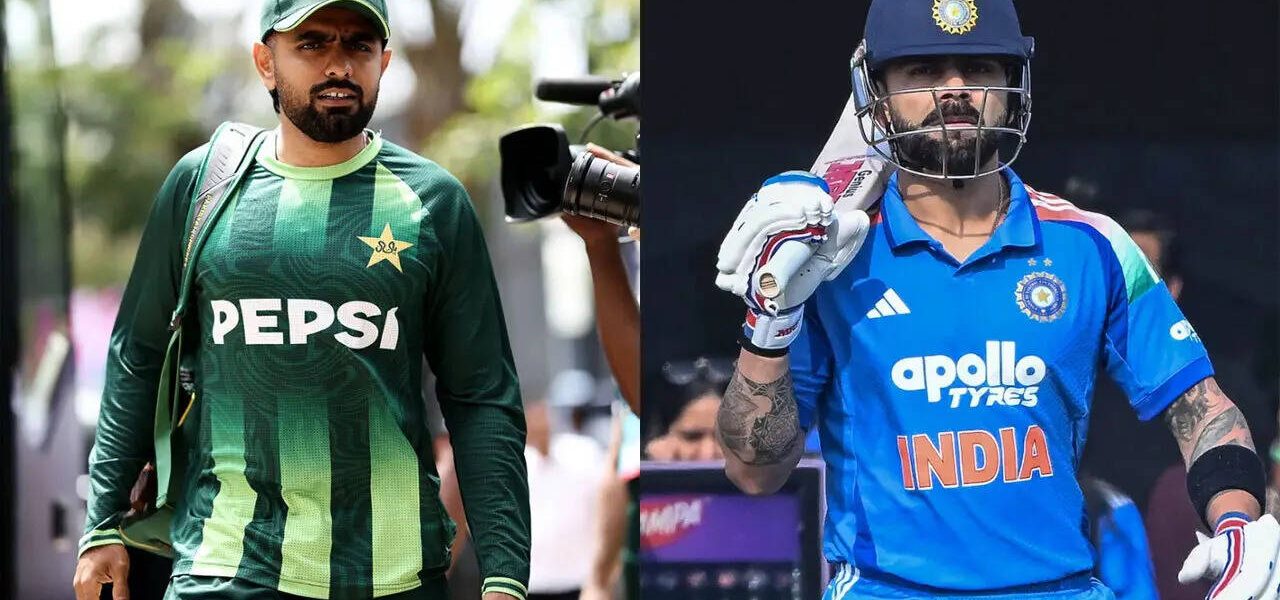
Babar Azam, Virat Kohli, and the Heavy Crown of Expectation: Jaffer’s Blunt Assessment
POLICY WIRE — New Delhi, India — Gosh, few arenas hold as much clout in South Asia as the cricket pitch, particularly when two nations, drenched in a labyrinthine history, lock horns. For athletes...

POLICY WIRE — New Delhi, India — Gosh, few arenas hold as much clout in South Asia as the cricket pitch, particularly when two nations, drenched in a labyrinthine history, lock horns. For athletes like Babar Azam and Virat Kohli, the burden isn’t just about runs or wickets; it’s about shouldering the aspirations — and, let’s be honest, sometimes the raw anxieties — of a billion souls. Quite a load.
And yet, that very adoration can become a gilded cage — a glittering prison, if you will — as former Indian opener Wasim Jaffer recently underscored with characteristic candor. He believes the insatiable comparisons between Pakistan’s batting maestro, Babar, and India’s talisman, Kohli, have done more harm than good for the younger player. Honestly, who needs that noise?
But behind the glitzy headlines, Jaffer wasn’t gainsaying Babar’s raw, unvarnished talent. “Look, he’s a good player, there’s no doubt about that. I personally like him a lot,” Jaffer declared in a viral social media post. “But I feel he’s been hyped beyond his limits. He was elevated so much that comparisons with Virat Kohli began, and he started being called ‘King’.” A sticky label, that.
“When you are constantly compared to Virat Kohli — and the media calls you ‘King’, pressure automatically builds. I feel that somewhere he tried to become like Virat – or tried to perform the way Virat has for the Indian team. But Virat is Virat – one of the greatest players of this generation. These unnecessary comparisons kept adding pressure on him.”
— Wasim Jaffer, Former Indian Cricketer
Make no mistake, Jaffer’s observations cut to the core of elite sports in the subcontinent. The fervor of fans — that almost insatiable, collective yearning for greatness, often irrespective of individual human limits — amplified by social media and a hungry media landscape, can quickly metamorphose admiration into an overwhelming burden. It’s a real pressure cooker, isn’t it?
Babar, for his part, weathered an arduous patch. He couldn’t reliably forge the kind of team momentum that distinguishes good captains from truly great ones. His tenure, despite reaching significant finals – including a World Cup and an Asia Cup – frequently flailed, falling just short of delivering the ultimate prize.
“In my view, there were two reasons – one was overhype and comparisons, and the other was captaincy,” Jaffer added, unpicking Babar’s recent slump. “As a captain, he couldn’t build the kind of team he should’ve. He had opportunities, loads of ’em, but he just couldn’t consistently take Pakistan cricket to the next level.”
The math is stark as a winter tree for players at this level: a poor run often manifests as immediate, brutal scrutiny. For instance, in the 2026 T20 World Cup, Babar scored just 91 runs in six matches, averaging a modest 22.75 with a strike rate of 112.34, according to ICC statistics. These figures definitely played a role in Pakistan’s failure to progress past the Super Eights.
📄 POLICY WIRE WHITEPAPER PUBLISHED: PAKISTAN'S NATIONAL SECURITY POLICY PRIORITIES
👉 READ BY CLICKING HEREBut can any player truly become ‘another’ Kohli? Kohli himself, having traversed years of intense global scrutiny, often speaks to the lone wolf aspect of performance under pressure. “For me, the focus has always been on contributing to the team’s success,” Virat Kohli once remarked in an interview, reflecting a philosophy often preached by top athletes. “Individual accolades come — and go, but the collective goal is what truly matters. That’s the real challenge — and the real reward.”
The cultural heft of cricket in Pakistan, as in India, magnifies every success — and failure. A player like Babar isn’t just a sportsman; he’s often seen as a potent symbol of national pride, his performance intertwined with the collective mood of millions. It’s a fascinating, if sometimes brutal, tableau.
What This Means
So, the debate surrounding Babar Azam and Virat Kohli isn’t merely about individual statistics; it’s an epitome of the intense socio-cultural and economic pressures that define professional sports in South Asia. Such comparisons stoke media narratives, propel advertising revenues, — and significantly bear upon player marketability. For cricketing bodies in both India and Pakistan, maintaining a consistent stream of high-performing, charismatic players is an economic mandate — a never-ending quest, really, to keep the money tap flowing and the public enthralled — because when a player stumbles under such a spotlight, the consequences can extend far beyond the stadium, touching national sentiment and even commercial investments. The ‘King’ tag, while flattering, sets an almost impossibly high bar, bearing down on not just on-field performance but also brand endorsements and public perception. Related: Tigers’ High-Stakes Gambles Go Bust in Cincinnati Walk-Off Loss
Still, Jaffer clung to his admiration for Babar’s core competencies. “Even today, without a doubt, he’s one of Pakistan’s best batters. He has both talent and class.” The talent is incontrovertible, as evidenced by his recent century for Peshawar Zalmi against Quetta Gladiators in the Pakistan Super League, an emphatic 100 runs off just 52 balls. Impressive, huh?
“It’s just that if he’d handled expectations and pressure a bit better, the picture could’ve been very different,” Jaffer concluded, offering a bittersweet post-mortem. It’s a sentiment many observers resonate with.
Ultimately, managing the psychological burden of public adoration and constant comparison stands as significant a challenge as conquering the bat or ball. As Dr. Anya Sharma, a leading sports psychologist specializing in South Asian athletes, observed in a recent seminar, “For athletes operating under such intense scrutiny, resilience isn’t just about physical recovery; it’s about developing an impenetrable mental fortress against external noise and unrealistic expectations. The ones who truly flourish learn to define success on their own terms, not the media’s.”