

NFL Draft Day 2: The Unseen Crucible Where Championships Are Forged
POLICY WIRE — Pittsburgh, USA — The real slog, many will confide, commences once the red carpet recedes and Day 1’s glitz becomes but a hazy recollection. While primetime television fixates on...

POLICY WIRE — Pittsburgh, USA — The real slog, many will confide, commences once the red carpet recedes and Day 1’s glitz becomes but a hazy recollection. While primetime television fixates on those handful of generational talents, it’s actually the second and third rounds of the NFL Draft where general managers genuinely earn their exorbitant salaries, painstakingly combing through a vast ocean of hopefuls for those elusive diamonds in the rough.
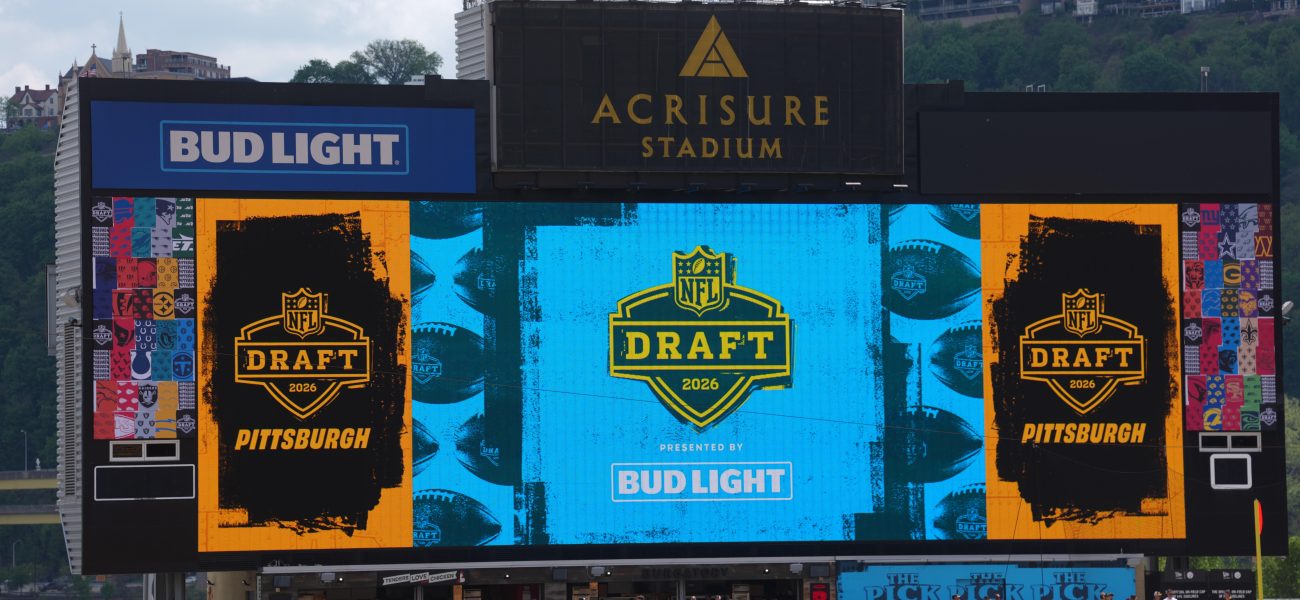
Make no mistake, these Day 2 selections don’t just fill roster spots; they often forge enduring reputations, both for players and for the executives who gamble on them. This year, staged in Pittsburgh’s historic industrial crucible, Day 2 felt less like a celebratory spectacle and more like an intensely analytical, high-stakes chess match. Quite the vibe, really.
For teams like the Denver Broncos, armed with just a solitary pick at 62nd overall in the second round, the wait must’ve felt interminable. That’s a position few covet, patiently watching other franchises snatch up talent that could transform their very future. Who wouldn’t be fidgeting?
But, the show, as they say, must go on. The San Francisco 49ers commenced Friday’s proceedings at Pick 33, snatching wide receiver De’Zhaun Stribling from Ole Miss. At 6’2” with an impressive contested-catch radius, Stribling looks like an ideal boundary X-receiver for the Shanahan/Kubiak offensive scheme. His SEC route polish, it’s fair to say, will translate well to their timing-based concepts, and crucially, he’s known for blocking in the run game — a non-negotiable for the Niners, obviously.
Then came the Arizona Cardinals, who opted for Texas A&M guard Chase Bisontis at 34. An athletic interior lineman like Bisontis slots perfectly into Mike LaFleur’s Shanahan-tree install. The Cardinals want a mobile hog who can pull, climb to the second level, and seal backside cuts for their wide-zone running attack. Bisontis’ SEC tape against formidable 3-techs showcased his anchor in pass protection, signaling a Day 1 starter for a young offense that desperately needs to set a tone.
Across the league, the stratagem is less about sheer talent acquisition and more about finding those precise puzzle pieces. “Day two is where championships are really built,” offered Cleveland Browns General Manager Andrew Berry, a man known for his meticulous approach. “Anyone can pick a first-rounder, but finding those impact players in the middle rounds, that’s the art. The real artistry.”
The Buffalo Bills followed suit at 35, fortifying their ramparts with Clemson EDGE rusher TJ Parker. He’ll drop into Jim Leonhard’s new multiple-front scheme, built around five-man pressure flexibility. Parker’s three-year starter pedigree, bend around the arc, and counters that convert speed to power make him an intriguing piece for an attacking defense under rookie Head Coach Joe Brady, a coach who’s got a big job ahead.
Meanwhile, the Houston Texans, via a trade with Las Vegas (talk about an expensive shopping trip), secured a gargantuan defensive tackle, Kayden McDonald from Ohio State, at pick 36. McDonald, tipping the scales at over 320 pounds, anchors DeMeco Ryans’ aggressive front as a two-gap nose or shaded 1-tech. His role is simple: eat double-teams, free up edge rushers, — and clog the middle. Players like McDonald embody the unglamorous but utterly vital foundation of strong defenses. Unsung heroes, most likely.
This is where franchises truly define their team-building philosophy. Modern football franchises, much like their counterparts in cricket-mad nations such as Pakistan where analytics heavily influence strategy, increasingly rely on sophisticated data analytics and sports science to excavate latent ability beyond the obvious. Scouting departments aren’t just poring over game film; they’re dissecting biomechanics and psychological profiles, a seismic shift that transcends traditional geographic boundaries and scouting biases, reshaping the very fabric of the game as we know it.
📄 POLICY WIRE WHITEPAPER PUBLISHED: PAKISTAN'S NATIONAL SECURITY POLICY PRIORITIES
👉 READ BY CLICKING HEREThe margin for error shrinks considerably as the rounds progress. “You’re projecting traits, not just production,” explains ESPN analyst Louis Riddick. “It’s about seeing what a player *can* be, not just what he *is* today.” Historically, only about 30% of players drafted outside the first round go on to become long-term starters, according to *Pro Football Focus* data. That’s a stark reminder of the immense challenge involved. It’s a tough business.
One can only imagine the war rooms across the league, thick with anticipation and tension as teams finalized their Day 2 boards. Will these gambles pay off? The football world watches, waits, and analyzes every single move, knowing full well that these middle-round picks often decide who ultimately hoists the Lombardi Trophy a few years down the line. Bet on it.
What This Means
The strategic implications of Day 2 picks stretch far beyond the gridiron, tentacles reaching into every corner of a franchise’s existence. Economically, securing a high-impact player in the second or third round represents monumental value. These players command significantly smaller rookie contracts compared to first-rounders, yet their potential on-field contribution can be nearly as vital — a veritable bang for your buck. A successful Day 2 pick frees up salary cap space for veteran acquisitions or extensions, fundamentally altering a team’s financial flexibility and long-term competitiveness. It’s simple economics, really.
Politically, within the NFL’s intricate ecosystem, hitting on Day 2 picks significantly enhances a general manager’s reputation and job security. These are the picks that define a scouting department’s prowess — and the front office’s vision. For a city, successful draft classes cultivate fan loyalty and civic pride, translating into higher ticket sales, merchandise revenue, and local economic boosts. It’s a cascading effect that underscores the deep, almost visceral connection between professional sports and local identity.
Ultimately, Day 2 of the NFL Draft is a crucible for talent identification — and strategic foresight. Teams must meticulously balance immediate needs with long-term potential, navigating a complex board where every selection carries significant weight. Finding genuine impact players after the top tier is gone truly separates the contenders from the pretenders. It’s a brutal sorting hat.
The pressure on teams to unearth these foundational pieces will only intensify as the league evolves. Expect to see an even greater emphasis on international scouting and sophisticated data models, radically transforming how franchises approach the very core of team building.