


Boston’s Desperation, Houston’s Dilemma: The Yordan Alvarez Trade Buzz
POLICY WIRE — Boston, Massachusetts — The season’s barely a month old, yet the Boston Red Sox already find themselves floundering, their once-potent offense gasping for air like a fish out of water,...

POLICY WIRE — Boston, Massachusetts — The season’s barely a month old, yet the Boston Red Sox already find themselves floundering, their once-potent offense gasping for air like a fish out of water, as predictable as a dead battery. At the bottom of the AL East, staring up at their arch-rivals, the New York Yankees, Boston’s brass faces a stark choice: mediocrity or a bold, seismic move.
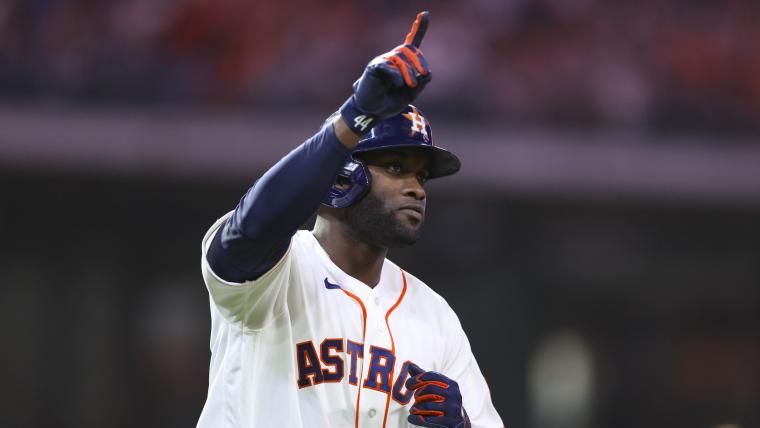
Few predicted such a gnarly predicament so early, nor the frantic whispers about potential blockbuster trades. But here we’re. And in baseball’s always-churning rumor mill, one name now engulfs the chatter around Fenway Park: Yordan Alvarez of the struggling Houston Astros.
Alvarez, the Astros’ behemoth designated hitter, represents the kind of generational power that could single-handedly jolt back to life Boston’s feeble batting order. Its current offense ranks in the bottom five for total runs — and home runs across Major League Baseball.
Make no mistake, Alvarez’s caliber rarely becomes available. He’s a linchpin. Yet, Houston’s unexpected freefall ignites conjecture: perhaps even prized sluggers aren’t untouchable? This opens a mouth-watering, if improbable, window for the Red Sox.
“We’re always evaluating paths to improve this club, and our fans deserve a team that contends,” Red Sox General Manager Craig Breslow told Policy Wire this week. “We won’t shy away from bold moves if they align with our long-term vision for sustainable success.” That’s hardly a direct confirmation, folks, but it sure sounds like a mandate for action, doesn’t it?
Boston’s offensive calamities are quantifiable: they’re tied for second-to-last in on-base percentage plus slugging (OPS), a key indicator of hitting prowess. Alvarez, conversely, has defied Houston’s team slump, posting an astounding 1.245 OPS through his initial 26 games this season, according to MLB league data. A revolution. Plain and simple.
Consider his historical performance at Fenway: a career .488 average with seven home runs — and 16 RBI in just 12 games. Some players just click with certain ballparks, — and Alvarez’s numbers against the Green Monster are truly exceptional. Who wouldn’t want those numbers? Crucial, that.
What, then, could Boston offer for such a talent? Their major league squad might flail, but their farm system holds potent potential, particularly in young pitching. Prospects like Payton Tolle and Kyson Witherspoon (and we’re talking serious prospects here) frequently feature in trade discussions. The Astros, ironically, are in dire need of consistent arms for their own faltering rotation.
Beyond pitching, an outfielder like Jarren Duran, with his speed and nascent pop, could appeal to Houston. He’d offer a different offensive dimension. On paper, this trade scenario presents a rare convergence of needs — and available assets.
📄 POLICY WIRE WHITEPAPER PUBLISHED: PAKISTAN'S NATIONAL SECURITY POLICY PRIORITIES
👉 READ BY CLICKING HEREStill, the Astros’ front office clings to a guarded posture (as if they had another choice!). “Our focus remains on putting the best team on the field, day in and day out,” Astros General Manager Dana Brown remarked at a recent press conference, adding, “While speculation is part of the game, we value our core players, and any decisions we make will be in the best interest of the Houston Astros organization for sustained success” — a careful deflection, certainly, but one that absolutely underscores the sheer difficulty of letting go of a generational slugger.
Globally, such high-profile trades reverberate far past American stadiums. In emerging baseball markets, including segments of the Muslim world where cricket often reigns, MLB’s seismic player shuffles draw a growing, if niche, audience — a testament to the sport’s quiet, global creep, much like the slow but steady spread of a particularly addictive pop song. The financial repercussions of a superstar’s contract and team valuation extend across continents, influencing sports commentary and investment. Related: Stadium Showdowns & Soaring Ticket Prices: Football’s Fan-First Dilemma
What This Means
So, a move for Yordan Alvarez wouldn’t just be a trade; it’d be a declaration. For the Red Sox, it screams an undeniable pivot from cautious rebuilding to an aggressive, win-now strategy – a high-stakes gamble on immediate contention. This could either electrify a jaded fanbase or mortgage a fragile future. What a tightrope act!
But economically, Alvarez’s six-year, $115 million contract is whopping. Yet, given his consistent elite production, it’s a relative bargain in today’s inflated market. Boston would absorb a significant financial commitment, but could see a surge in ticket sales, merchandise, and media revenue, potentially justifying the investment.
For the Astros, trading Alvarez would represent an incredibly painful admission: their current championship window is, at best, built on quicksand. It whispers a strategic reshuffle towards shoring up pitching depth, accepting a short-term hit to offensive firepower for a longer-term rebuild. Such a decision necessitates transparent dialogue from GM Dana Brown to a fanbase accustomed to sustained success. It won’t be easy.
Ultimately, this isn’t merely about exchanging players. It’s about two organizations grappling with their very souls — and futures under immense pressure. As veteran sports economist Dr. Robert Livingstone of the University of Michigan opines, “The most consequential trades in sports aren’t just transactions; they’re manifestos. This potential deal would articulate a bold new direction for whoever pulls the trigger, setting the tone for years to come.”