


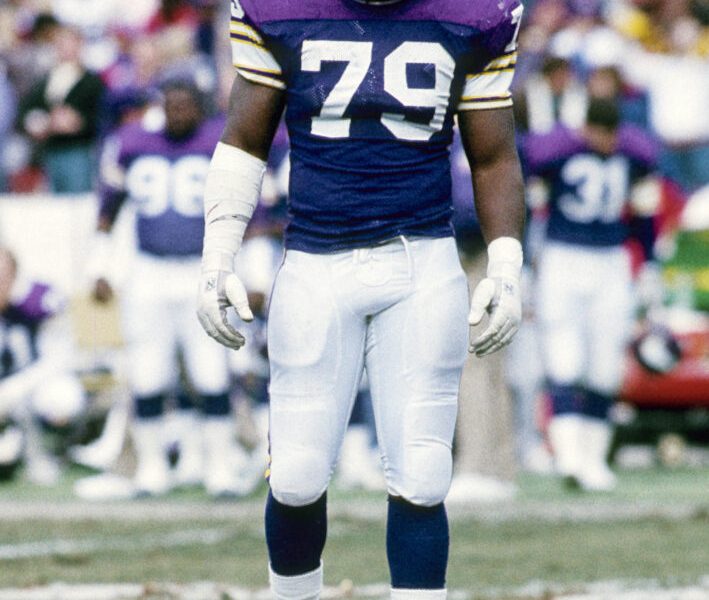
Doug Martin, Vikings Defensive Stalwart, Leaves Indelible Mark at 68
POLICY WIRE — Minneapolis, USA — Not every gridiron legend garners household name status across the globe, but some manage to carve out a legacy so indelible within their own sporting domain, it...

POLICY WIRE — Minneapolis, USA — Not every gridiron legend garners household name status across the globe, but some manage to carve out a legacy so indelible within their own sporting domain, it resonates through generations. That’s the story of Doug Martin, the bedrock defensive end for the Minnesota Vikings, whose untimely demise at 68 leaves a gaping chasm in the heart of a franchise he served with unflinching fealty.
Few players stick with one team for an entire decade in today’s mercurial NFL. Back in Martin’s era, such unflinching fealty felt more common, yet it remained a stark affirmation of a player’s inherent character and consistent performance. He wasn’t just a Viking; he was the Vikings’ defense for a significant stretch. A warrior, truly.
And yet, beyond the confines of the gridiron, Martin personified a quieter dignity that resonated deeply. His departure on Thursday, confirmed by the team—a somber announcement that nevertheless ignited a torrent of shared memories and heartfelt tributes from those who’d known him best—painted a picture of a man whose magnetic presence extended far beyond his fearsome pass rush.
Consider his seismic influence. From his arrival as a first-round pick out of the University of Washington, Martin quickly became a non-negotiable asset. His toughness and reliability weren’t just inherent characteristics; they were the very bedrock principle of a redoubtable defensive unit. No small potatoes, that.
A Career Etched in Purple and Gold
Make no mistake, Martin’s on-field acuity was irrefutable. His luminous showing in the strike-shortened 1982 season remains the gold standard. He led the entire league with 11.5 sacks in just nine games, a mind-boggling accomplishment confirmed by official NFL records, earning him All-Pro honors. (A truly remarkable feat, mind you, given the circumstances.)
That’s a level of supremacy few could match, especially when the game was ever-shifting, and pass rushers were gaining new salience. By the time his career concluded, Martin had racked up 61.5 sacks, a figure that still places him fourth all-time in Vikings history.
What does that number tell us? It speaks not just to his peak, but to a decade of unflagging, high-level contribution. In a franchise brimming with defensive greats, Martin’s unassuming brilliance unwaveringly withstood the test of time. An absolute cornerstone.
Former Vikings Hall of Famer Carl Eller mused over Martin’s unique blend of skill — and temperament.
“When you played alongside Doug, you knew you had a warrior next to you,” Eller remarked in a statement released by the team. “He wasn’t flashy, didn’t need the headlines, just put his head down — and got to work, game in and game out. That’s a rare quality today, and it’s why he was so respected in that locker room.”
Martin’s quiet leadership and fierce determination on the field offered a template of resolve, a shared lexicon understood and appreciated far beyond American football’s customary bastions. In places like Pakistan, where cricket reigns supreme, or throughout South Asia and the broader Muslim world, stories of individual perseverance against formidable odds resonate deeply—athletes like Martin, through sheer grit and consistency, vault beyond their sport to become symbols of unyielding devotion, inspiring a new generation to strive for eminence in whatever field they choose.
Related: Stadium Showdowns & Soaring Ticket Prices: Football’s Fan-First Dilemma
📄 POLICY WIRE WHITEPAPER PUBLISHED: PAKISTAN'S NATIONAL SECURITY POLICY PRIORITIES
👉 READ BY CLICKING HEREBut the numbers, however impressive, only tell part of the story. Those within the organization frequently pointed to Martin’s unwavering decorum, his calming ballast. He epitomized an era of Vikings football built on sheer tenacity, rigor, and a shared esprit de corps—qualities that defined both the player and the teams he steadied. Just part of the picture.
What This Means
Martin’s passing, much like the departures of other long-serving, less-heralded greats, kindles a stark contemplation on the ever-shifting terrain of professional sports. It illuminates a heightened recognition of the sheer bodily cost extracted by the game, even as it celebrates the unyielding resolve of those who played it.
And from a political vantage point, the saga of a dedicated, lifelong player, rooted in a single community, presents a clear foil to the increasingly borderless, commerce-first nature of modern sports. It reminds us of the communal bond between teams and their cities, a relationship often strained by escalating player salaries and frequent trades. Isn’t that something?
Economically, Martin’s career arc, defined by steadfastness over lucrative free agency leaps, belongs to a halcyon epoch. Today’s NFL sees player movement as a core tenet of its monetary intricate network. His story, therefore, isn’t just about a player; it’s a portal to the historical economics of a multi-billion dollar industry and the changing values within it. Quite the shift, isn’t it?
For current Vikings General Manager Kwesi Adofo-Mensah, contemplating Martin’s contribution means acknowledging a cornerstone of the franchise.
“Doug Martin set a standard for what it means to be a Minnesota Viking – tough, consistent, and always putting the team first,” Adofo-Mensah stated, underscoring the enduring values. “His legacy is woven into the very fabric of our history, — and that’s something we continue to build upon.”
His impact is, frankly, irrefutable within Minnesota. A true cornerstone. Name’s etched deeply in history.
So, what’s left for us to truly comprehend? Sports historian Dr. Evelyn Reed, a preeminent scholar on the evolution of team loyalties, offered a forward-looking perspective. “Players like Doug Martin represent a dwindling cohort of athletes whose entire career becomes inextricably linked to a single crest,” Reed observed. “Their narratives offer a vital ballast in an era of mercurial rosters, constantly reminding us of the deep-seated emotional stake fans and communities make in their teams. That abiding bond, more than any fleeting headline, is their crowning testament.”