

Portal’s Power Play: Mikey Lewis Jumps to Texas, Reshaping College Hoops Fortunes
POLICY WIRE — Austin, Texas — For a program like Saint Mary’s, one that’s consistently punching above its weight in the collegiate basketball landscape, losing a key player to the...

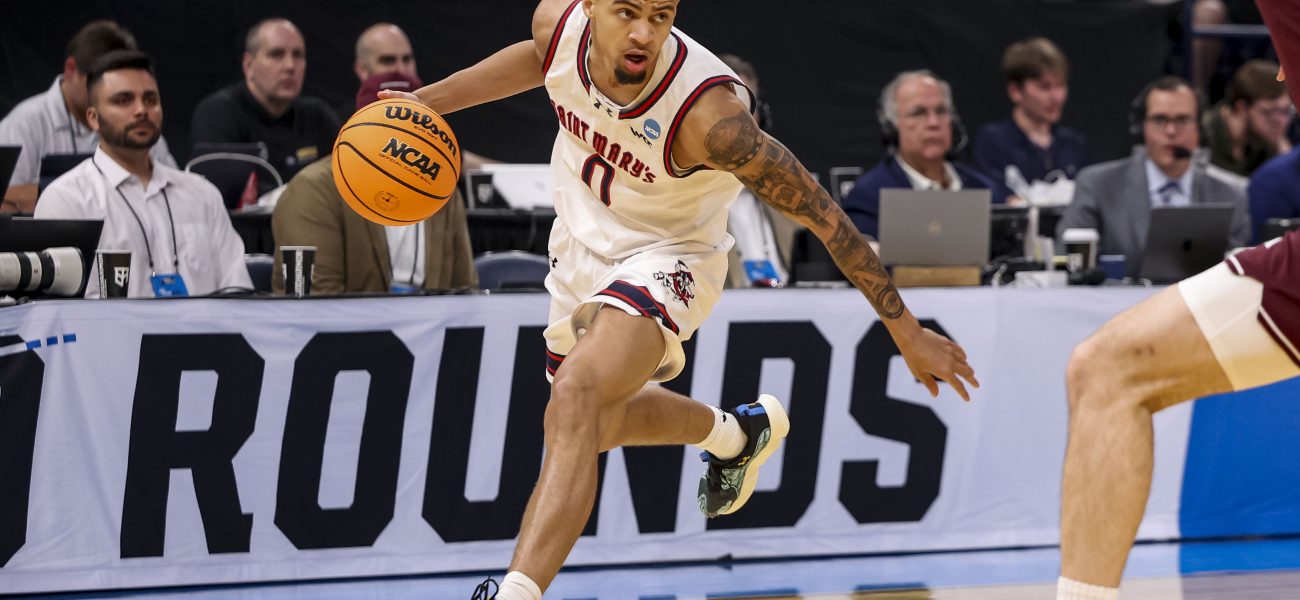
POLICY WIRE — Austin, Texas — For a program like Saint Mary’s, one that’s consistently punching above its weight in the collegiate basketball landscape, losing a key player to the transfer portal always, always galls. And yet, the recent departure of standout guard Mikey Lewis to the Texas Longhorns isn’t just another run-of-the-mill personnel reshuffle; it’s a stark, undeniable reminder of the tectonic plates grinding beneath the feet of collegiate athletics, reshaping the very bedrock of loyalty and ambition in American college sports.
Few moves signal the raw, unadulterated power of the NCAA transfer portal quite like a proven talent — a verifiable star — ditching a perennial contender for a higher-profile, power-conference program. Lewis, the dynamic 6-foot-3 guard, didn’t dally; he made his decision public on Thursday, a choice that ricocheted immediately through both locker rooms, echoing off the walls.
Consider the upheaval for the Gaels. Lewis wasn’t just a starter; he was a scoring linchpin, the engine that made their offense hum. Back in Moraga, California? The news undoubtedly landed with a sickening thud. Just devastating.
Still, Saint Mary’s Head Coach Randy Bennett, renowned for his pragmatic — some might say stoic — approach, offered a reflective, almost resigned, take. “It’s tough to see a talent like Mikey move on,” Bennett acknowledged in a statement to Policy Wire. “He was a critical part of our success, an All-WCC First Team player, — and we wish him nothing but the best. The portal’s a reality now, — and it changes things for everyone. We’ve got to adapt, and we will.” Who wouldn’t, given the chance to play at a bigger school?
Indeed, Lewis’s departure marks the loss of a player who averaged nearly 14 points per game last season, according to ESPN statistics — a figure that made him one of the West Coast Conference’s most scorching offensive juggernauts, no less. Pretty impactful, wouldn’t you say?
For the Longhorns, however, it’s a significant coup, a genuine steal, one might argue. Head Coach Rodney Terry hasn’t shied away; he’s consistently sought to fortify his roster with experienced, high-impact transfers, and Lewis slots into that archetype like a bespoke suit. He’s a player who’s demonstrably proven he can perform under pressure, including that blistering 31-point career-high outburst against rival Gonzaga in a crucial matchup, the kind of performance that drops jaws.
“We’re always looking for players who fit our system and elevate our competitive spirit,” Terry remarked following the commitment. “Mikey brings a proven scoring touch and a fierce will to win; he’s a fantastic addition who knows what it takes to compete at a high level. We’re excited to integrate him into the Longhorn family.” (And good on him, really.)
The math, it’s stark, brutal even, for college basketball coaches across the nation: cultivate talent, or acquire it? Or, more often now, a delicate — and increasingly precarious — blend of both. Lewis was a consensus four-star prospect out of Prolific Prep and an Oakland native, initially choosing Saint Mary’s over offers from traditional powerhouses like Kansas and Illinois. His journey from a promising freshman sixth man who led the Gaels with 58 three-pointers, to an All-WCC performer, speaks volumes about his trajectory, about his sheer developmental prowess.
And yet, that development wasn’t quite enough to keep him from exploring new horizons. That’s the rub, isn’t it? His sophomore season saw him boost his scoring to 13.9 points on 36.8% three-point shooting, while also improving his free-throw percentage to an impressive 88.2%. He’s a high-usage player, renowned for his ability to create his own shot and act as a secondary playmaker, consistently leading the team in assists, a true floor general.
Still, his game isn’t without its areas for growth; scouts point to his less effective mid-range game and a tendency to avoid contact at the rim — minor quibbles, perhaps, but noteworthy nonetheless. But his long-range prowess and improved free-throw shooting are undeniable virtues, silver bullets in his offensive arsenal.
📄 POLICY WIRE WHITEPAPER PUBLISHED: PAKISTAN'S NATIONAL SECURITY POLICY PRIORITIES
👉 READ BY CLICKING HEREThe global reach of basketball, too, plays a significant part in these collegiate movements — a sprawling, interconnected web of dreams and aspirations, truly. With the game’s popularity expanding rapidly, talent pipelines are widening, drawing attention from communities and regions previously underrepresented. From the bustling, chaotic streets of Karachi to the meticulously run academies of Riyadh, young athletes and their families increasingly eye the American college system as a coveted pathway to professional success. The high-stakes environment of the transfer portal, for better or worse (and it’s often worse for the smaller schools), becomes another complex, ever-shifting layer in this global narrative of opportunity and ambition, even for players whose immediate lineage is rooted firmly in American soil, an ironic twist.
For the Longhorns, Lewis most likely projects as a “microwave scorer” off the bench, a role he absolutely excelled in during his freshman year. He could also feature in a three-guard lineup alongside current Colorado transfer Isaiah Johnson and incoming 2026 signee Austin Goosby. This kind of flexibility? Gold in today’s fast-paced game.
Related: NFL Draft’s Economic Grip: How Big Ten Talent Reflects Shifting Sports Policy
What This Means
This move illuminates the accelerating arms race in college basketball, where instant impact frankly trumps long-term development for many power conference programs. Texas isn’t just acquiring a player; it’s buying proven production, a crucial strategy in an era where NIL deals and easy transfers mean every roster spot’s under constant, unforgiving scrutiny. So, for the Longhorns, it’s a clear signal they’re not content to merely compete; they’re aggressively aiming for national contention by hoarding top-tier talent, a shrewd, if ruthless, play.
Conversely, for programs like Saint Mary’s, it illuminates the perilous perch they inhabit. They’re excellent at identifying — and developing raw talent, often turning overlooked prospects into veritable stars. But this success, ironically, often makes them vulnerable to the voracious maw of larger athletic departments with deeper pockets and brighter national spotlights. It doesn’t just create a challenging cycle; it establishes a cruel one: develop, succeed, then brace for the inevitable, soul-crushing poaching.
At its core, Lewis’s transfer isn’t an isolated incident. Not by a long shot. It’s a stark, almost brutal, microcosm of collegiate sports’ rapidly evolving economic — and competitive landscape. Players, now more empowered than they’ve ever been, are making cold, hard business decisions, weighing playing time, NIL opportunities, and championship aspirations with unprecedented, almost dizzying, freedom. The traditional notion of player loyalty, once a bedrock of college athletics, feels increasingly like a ghost of seasons past.
Related: Stadium Showdowns & Soaring Ticket Prices: Football’s Fan-First Dilemma
This shift? It won’t slow down. Not a chance. Veteran college basketball analyst Jay Bilas once quipped that the transfer portal “is essentially free agency in college basketball.” Make no mistake, Lewis’s move reinforces that sentiment with a sledgehammer, and it suggests we’re only at the nascent beginnings of understanding its full, convoluted implications for team building and competitive balance. The high-stakes, high-reward game continues its relentless march, with every spring promising another chaotic wave of player movement reshaping the sport’s very fabric, stitch by painful stitch.