


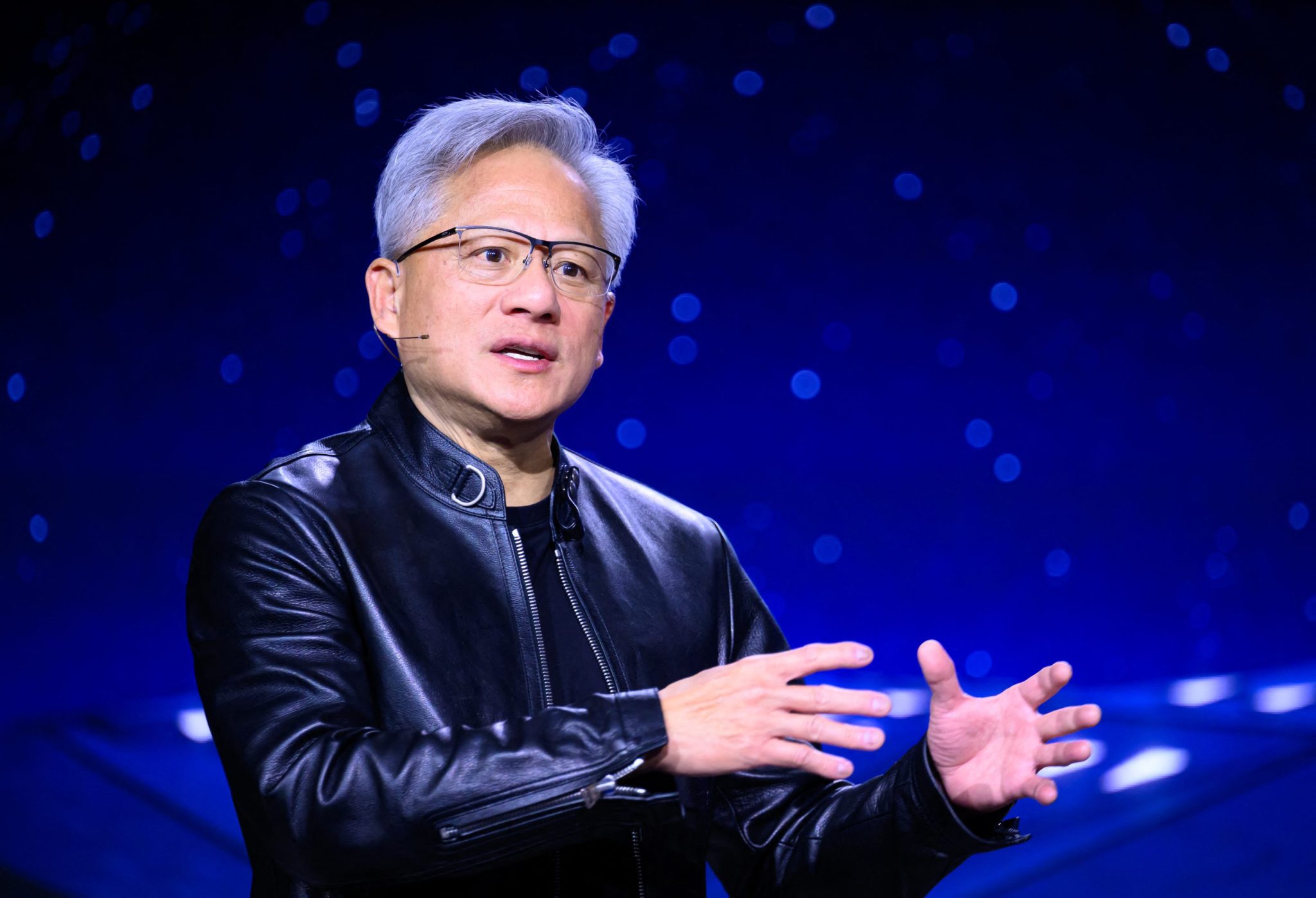
Nvidia CEO Jensen Huang: Your Job Isn’t Safe From AI, But From Your AI-Savvy Coworker
POLICY WIRE — Taipei, Taiwan — For years, the specter of artificial intelligence has cast a formidable shadow over the global workforce, a faceless Terminator poised to vaporize entire job...

POLICY WIRE — Taipei, Taiwan — For years, the specter of artificial intelligence has cast a formidable shadow over the global workforce, a faceless Terminator poised to vaporize entire job categories. But Nvidia CEO Jensen Huang offers a far more insidious — and perhaps disturbingly realistic — vision: your job isn’t going to evaporate into an algorithm; it’s going to be snatched by a colleague who masters that algorithm first. Charming, that’s what it’s.
It’s a subtle, yet profound, distinction, morphing the narrative from a war against machines to an intense, hyper-competitive race among humans. Huang, speaking at a recent technology forum, didn’t mince words.
“Make no mistake, this isn’t about AI replacing humans; it’s about humans empowered by AI eclipsing those who aren’t. The competitive landscape is morphing, and adaptability is the new core competency,” Huang asserted, his voice slicing through the usual industry platitudes like a hot knife through butter (a rare moment of candor, some might say). “We’re creating tools, incredibly powerful ones, but they need operators. And those operators, they’ll redefine productivity.”
Few leaders in the tech space wield as much influence over the future of AI infrastructure as Huang. His company’s graphics processing units (GPUs) are the very cornerstone upon which the current AI revolution is being built, making his pronouncements undeniably consequential.
His perspective isn’t merely an abstract Silicon Valley musing (though he’s certainly got plenty of those). It’s an unvarnished warning echoing across boardrooms and government ministries worldwide, especially in nations grappling with rapid digital transformation.
Consider Pakistan, for instance — a country with a vast, young, and increasingly digitally connected population. The potential for AI to leapfrog traditional economic development stages is colossal, from optimizing agricultural yields to enhancing digital service exports. And yet, the underlying challenge of education — and equitable access remains paramount.
“We’re facing a skill gap, not just a job loss scenario,” asserts Dr. Aisha Khan, a labor economist specializing in emerging markets, speaking from Islamabad. “Governments and educational institutions in places like Pakistan, they’ve got to invest heavily in AI literacy, or risk compounding existing inequalities and creating a two-tiered workforce where only the AI-fluent can thrive (a rather depressing thought, if you ask me).”
Behind the headlines of miraculous AI advancements lies a deeper, inconvenient truth — one we often conveniently overlook — technological adoption rarely proceeds evenly. The current torrent in AI capabilities, particularly generative AI, is projected to transform a momentous portion of global employment. According to a 2023 report by Goldman Sachs, generative AI alone could expose 300 million full-time jobs to automation across major economies. No big deal, right?
That’s a staggering figure, but Huang’s nuance suggests the outcome isn’t necessarily mass unemployment. Rather, it implies a brutal, unavoidable re-skilling imperative. Got it?
The math? Unvarnished. If one worker can leverage AI to achieve the productivity of two, what in the world happens to the second worker? The answer, in Huang’s view, isn’t that the AI replaces them, but that the AI-augmented colleague consigns them to obsolescence. Brutal.
What This Means
This isn’t just about robots taking jobs; it’s about a fundamental shift in human capital strategy for businesses and governments alike. Politically, leaders face prodigious pressure to prepare their workforces. Fail? Unrest. Disparities. Loss of competitiveness. Big problems, really.
Economically, early adopters of AI within industries will gain a decisive competitive edge, potentially consolidating market power like never before. Smaller businesses — and developing economies, if they don’t adapt swiftly, could easily find themselves outflanked. Diplomacy, too, enters the fray, as nations scramble for AI talent and the lucrative, high-tech industries that invariably follow.
So, we’re talking about a transformation that could reshape national GDPs and irrevocably alter geopolitical power dynamics across the globe. Countries that can rapidly integrate AI into their educational curricula and foster an entrepreneurial ecosystem around these new tools will undoubtedly catapult forward — a dizzying ascent, indeed. Those that don’t? They’ll flounder to keep pace, their human capital depreciating in value like yesterday’s stock tips.
For individuals, the message is crystal clear: continuous learning isn’t just a buzzword; it’s a survival strategy, plain and simple. And yet, who — pray tell — bears the exorbitant cost of this education? Governments? Employers? Or is it, inevitably, the individual?
Related: Beyond Mendoza: Unpacking the 2026 NFL Draft’s Global Economic Undercurrents from Pittsburgh
The coming years will likely see a deluge in demand for workers who can not only use AI tools but understand their limitations and ethical implications — heck, who can’t? This includes everyone from data scientists to graphic designers, lawyers, and even journalists, making the ability to collaborate with AI an absolutely indispensable skill. Get on it.
At the end of the day, the future workforce won’t be neatly divided into humans and machines, but rather into those who can effectively harness AI and those who simply can’t. That’s an epochal shift, and it suggests a period of intense, perhaps brutal, labor market re-calibration, one where intellectual agility becomes the supreme currency. Adapt or perish, really.