

White House Correspondents’ Dinner: A Test of Journalistic Integrity Amidst Deepening Divides
POLICY WIRE — Washington D.C., United States — The clinking of glasses and forced smiles at the annual White House Correspondents’ Dinner often mask a simmering tension, but this year, that...

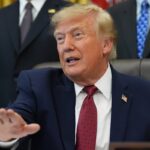
POLICY WIRE — Washington D.C., United States — The clinking of glasses and forced smiles at the annual White House Correspondents’ Dinner often mask a simmering tension, but this year, that tension erupts into a public spectacle. The impending presence of former President Donald Trump at the so-called ‘nerd prom’ has thrust the event into an unprecedented ethical crucible, questioning the very essence of journalistic engagement in an era of overt media hostility.
This is not merely a social gathering; it has become a symbolic battleground for the soul of American journalism. While previous presidents, from Calvin Coolidge to Barack Obama, have endured comedic barbs with varying degrees of grace, Trump’s history of vilifying the press casts a long, confrontational shadow over the proceedings. The dinner’s traditional role as a bridge between powerful officials and the journalists who cover them faces an existential challenge.
The debate among media professionals is fierce and deeply divided. Some argue that attendance legitimizes a figure who has consistently labeled journalists ‘enemies of the people,’ while others contend that showing up, even in protest, asserts the press’s unwavering commitment to its watchdog role. The fundamental question remains: does participation inadvertently normalize an adversarial relationship, or does absence signal a retreat from vital discourse?
For many, the idea of sharing a banquet hall with an individual who has actively sought to undermine their profession is untenable.
“The only thing more insulting for the press than Trump not coming is Trump coming,” observed Kelly McBride, NPR ombudsman and head of the Poynter Institute’s ethics and leadership center. McBride’s stark assessment reflects a widespread sentiment among journalists grappling with the optics of the event.
Former Associated Press White House reporter Ron Fournier echoed this outrage on his Substack, listing a litany of alleged actions by Trump against the press.
“This man mocks you, sues you, and targets you for prosecution,” Fournier wrote, concluding with a pointed question: “and you’re having dinner with him?” These sentiments underscore the profound ethical dilemma confronting attendees and their news organizations.
Conversely, some journalists believe that disengaging from the dinner cedes valuable ground and ignores potential opportunities. Todd Gilman, a former White House bureau chief for the Dallas Morning News and now a journalism professor at Arizona State University, suggests that the event is less about honoring a president and more about fostering connections. He maintains that personal interactions, even brief ones, can prove invaluable for reporters seeking access or context down the line.
Indeed, the dinner often serves as a unique networking platform where journalists can forge relationships with sources away from the daily grind of White House briefings. Gilman recounts bringing Mexican ambassadors as guests during his reporting career, highlighting how these informal interactions facilitated critical reporting for his Texas newspaper. This perspective frames the dinner as a professional tool rather than a mere socialite gathering.
Further complicating the narrative, the Correspondents’ Dinner will honor journalists whom Donald Trump has openly criticized. Awards are slated for reporters, including CNN’s Kaitlan Collins, whose work has often drawn the former President’s ire. The Wall Street Journal, currently battling Trump in court over a story regarding his birthday message to Jeffrey Epstein, is also receiving recognition, creating an undeniable tension between the honorees and a prominent guest.
📄 POLICY WIRE WHITEPAPER PUBLISHED: PAKISTAN'S NATIONAL SECURITY POLICY PRIORITIES
👉 READ BY CLICKING HEREThe current climate around the dinner reflects a broader decline in public trust in media, a trend that predates the Trump administration but has been significantly exacerbated by it. According to a 2023 Gallup poll, only 7% of Americans have a “great deal” and 29% have a “fair amount” of trust in the media to report the news fully, accurately, and fairly. This figure represents a near-historic low, underscoring the deep chasm between media institutions and a significant portion of the public.
This American debate resonates acutely across the globe, including in nations like Pakistan, where press freedom often hangs by a precarious thread. The spectacle of a US president, current or former, openly antagonizing the media while journalists deliberate engagement versus protest, offers a powerful, if uncomfortable, mirror. In countries where journalists face threats of censorship, harassment, or even violence, the perception of a robust, independent press in the world’s leading democracy is critical. When the relationship between government and media in the US appears fractured, it provides implicit cover for authoritarian regimes elsewhere to tighten their grip on information. The dinner’s optics, therefore, transcend American domestic politics, sending a potent message about the resilience, or fragility, of democratic institutions.
What This Means
The White House Correspondents’ Dinner, once a symbol of the convivial, if sometimes testy, relationship between power and the press, now functions as a vivid illustration of America’s fractured political landscape. Politically, Donald Trump’s attendance injects an unmistakable element of theatricality into a deeply serious conversation about accountability. It forces news organizations to re-evaluate their public image and the strategic implications of perceived camaraderie with figures who challenge their legitimacy.
Economically, the controversy impacts the media industry’s broader struggle for relevance and financial viability. Erosion of public trust, exacerbated by such polarized interactions, directly affects subscription rates, advertising revenue, and philanthropic support for independent journalism. News outlets must navigate this delicate balance, as their perceived integrity is their most valuable currency. For major media conglomerates, like Paramount — which reportedly hosted a separate event for Trump — the lines between corporate interests, political access, and journalistic independence become dangerously blurred, especially with impending regulatory decisions.
Diplomatically, the sight of a democratic leader clashing so openly with the press, even in a formal setting, transmits an ambiguous message to international observers. Nations that champion press freedom may view the event as a testament to the resilience of American democracy, while those with restrictive media environments might interpret the internal conflict as evidence of weakness or hypocrisy. The global perception of US press freedom has significant implications for how other nations approach their own media policies.
The long-term implications for the White House Correspondents’ Association Dinner are significant. As the media landscape continues its dramatic transformation, and political polarization deepens, the traditional format and purpose of this event will face increasing pressure to adapt or risk becoming an anachronism. Moving forward, the dinner must either reassert its core mission of championing press freedom and accountability or risk irrelevance in an era that demands unwavering journalistic integrity. As Lisa Stark, a former ABC News reporter, accurately stated, “This is sort of a critical moment for these dinners and it will be interesting to see what happens going forward.”
Related: DeSantis Enacts Florida DEI Funding Ban, Citing Disadvantage to White Men