

Federal Policy Shift: Trump Administration Reclassifies Medical Marijuana to Schedule III
POLICY WIRE — Washington D.C., USA — The acting attorney general under President Donald Trump has officially signed an executive order, reclassifying state-authorized medical marijuana into a less...

POLICY WIRE — Washington D.C., USA — The acting attorney general under President Donald Trump has officially signed an executive order, reclassifying state-authorized medical marijuana into a less dangerous category of controlled substances, marking a significant policy change that cannabis proponents have long advocated.
This landmark directive, executed by Acting Attorney General Todd Blanche on Thursday, represents a substantial shift from the previous federal stance, which often grouped cannabis with highly dangerous drugs like heroin. While this action does not federally legalize marijuana for either medical or recreational purposes, it fundamentally alters its regulatory framework.
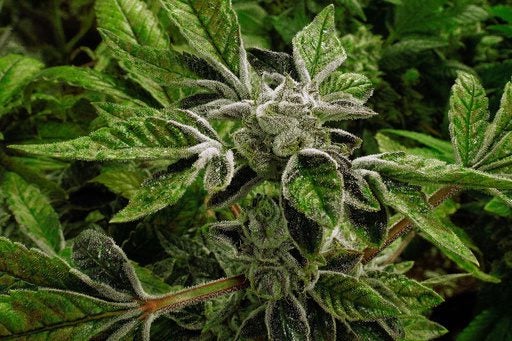
Under the new order, licensed medical marijuana transitions from Schedule I — a category reserved for substances deemed to have no accepted medical use and a high potential for abuse — to the less stringent Schedule III. This reclassification will provide substantial financial advantages to licensed medical marijuana operators through new tax deductions and reduce obstacles for crucial cannabis research.
Key Policy Implications and Benefits
President Trump had previously instructed his administration in December to accelerate the reevaluation of marijuana’s scheduling. On a recent Saturday, during the signing of an unrelated executive order concerning psychedelics, the Republican president reportedly voiced dissatisfaction with the slow pace of this process.
Blanche stated on Thursday that the Justice Department was fulfilling President Trump’s commitment to broaden access to medical treatment options for Americans. He emphasized, “This rescheduling action facilitates research into the safety and effectiveness of this substance, ultimately providing patients with enhanced care and doctors with more reliable data.”
The move provides considerable legitimacy to the medical marijuana programs currently established in 40 states across the nation. It introduces an expedited registration system with the U.S. Drug Enforcement Administration (DEA) for state-licensed medical marijuana producers and distributors. Furthermore, the order explicitly protects cannabis researchers from penalties when obtaining state-licensed marijuana or its derivatives for their studies.
For the first time, state-licensed medical marijuana companies will be permitted to deduct business expenses on their federal taxes, representing a significant financial boon. Notably, any marijuana-derived medications already approved by the Food and Drug Administration (FDA) are similarly categorized within Schedule III.
Read More: Bipartisan Senate Bill Seeks to Allow Hot Rotisserie Chicken Purchases with SNAP Benefits
Historical Context and State-Level Progress
This decision marks a pivotal moment for the U.S. government, which has maintained its long-standing federal prohibition on marijuana since the Marijuana Tax Act of 1937, despite nearly all states having approved some form of cannabis use. Currently, 24 states and Washington, D.C., have authorized adult recreational use of marijuana, while 40 states operate medical marijuana systems. An additional eight states permit low-THC cannabis or CBD oil for medical purposes, leaving only Idaho and Kansas with outright bans.
The regulatory landscape for medical marijuana has evolved significantly since California became the first state to adopt it in 1996. Blanche highlighted that the vast majority of states now implement comprehensive licensing frameworks overseeing cultivation, processing, distribution, and dispensing of marijuana for medical uses.
📄 POLICY WIRE WHITEPAPER PUBLISHED: PAKISTAN'S NATIONAL SECURITY POLICY PRIORITIES
👉 READ BY CLICKING HEREHe noted that these state systems collectively demonstrate a sustained ability to achieve critical public-interest objectives, including safeguarding public health and safety, and preventing the diversion of controlled substances into illegal channels. However, marijuana or marijuana-derived products not distributed through an official state medical program will continue to be classified as Schedule I.
Future Outlook and Political Divides
The Trump administration is initiating a new administrative hearing process, slated to commence in June, to explore the possibility of an even broader rescheduling of marijuana. Drugs categorized under Schedule III are defined by their moderate to low potential for both physical and psychological dependence.
Some industry critics have voiced concerns that state-level legalization has contributed to the proliferation of increasingly potent cannabis products, arguing that these substances require more rigorous research rather than less strict categorization. The Justice Department under President Joe Biden had also proposed marijuana reclassification, garnering nearly 43,000 public comments.
The Drug Enforcement Administration was still conducting its review when Trump assumed office in January, and he swiftly ordered the process to be expedited within legal bounds. Blanche’s action bypassed the conventional review mechanism by utilizing a specific provision of federal law that grants the attorney general authority to determine the classification of drugs regulated under international treaties.
The precise impact of this order on states where licensed recreational cannabis shops also serve medical patients remains unclear. For instance, in Washington state, one of the first to legalize adult-use marijuana in 2012, 302 out of 460 licensed stores possess endorsements allowing them to sell tax-exempt cannabis products to registered patients.
Many Republican lawmakers have historically opposed relaxing marijuana restrictions. Last year, more than 20 Republican senators, including staunch allies of Trump, sent a letter urging the president to maintain existing standards. This policy shift occurs while Trump has prominently featured a vigorous campaign against other drugs, particularly fentanyl, as a cornerstone of his second term agenda.
Read More: Israel’s Supreme Court Reviews October 7 Inquiry Petitions Amidst Family Outcry