


A Cry for Freedom: The Courage of Sofia Naga and the Hidden Truth of Nagaland
In the shadow of silence and forgotten valleys of India’s northeast, a woman named Sofia Naga has set off a flame-both literally and symbolically. Her act of burning the Indian flag was not born out...

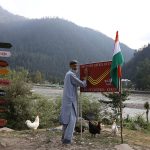
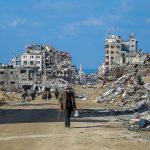
In the shadow of silence and forgotten valleys of India’s northeast, a woman named Sofia Naga has set off a flame-both literally and symbolically. Her act of burning the Indian flag was not born out of hatred, but as a desperate cry for justice, for recognition, and above all, for the right to exist freely in her own homeland of Nagaland. Her protest was aimed at highlighting the deep-rooted grievances of the Naga people who, for decades, have lived under what many consider a regime of occupation masked in the garb of democracy. Sofia’s defiance did not end with fire; it invited fury. In the dead of night, Indian paramilitary forces stormed her home. She was beaten mercilessly, her modest home was turned to rubble, her husband was abducted without explanation, and her aged mother was also subjected to violence. These atrocities, while shocking to an outsider, are not isolated incidents in this long-suffering region.
Nagaland, despite being part of the Indian union since 1963, has remained a site of tension, resistance, and unrest. The state has witnessed one of the world’s longest-running insurgencies, rooted in the demand for self-determination and the rejection of Indian military presence. While official narratives often claim peace and integration, the ground reality tells a different story. According to the South Asia Terrorism Portal, the region has seen over 1,400 conflict-related fatalities since the early 1990s, including civilians, security forces, and militants. The Armed Forces Special Powers Act (AFSPA), which grants Indian forces sweeping powers including arrest without warrant and even shoot-to-kill authority, has been in force in Nagaland for decades. International human rights organizations like Amnesty International and Human Rights Watch have repeatedly criticized AFSPA for fostering a culture of impunity and contributing to a cycle of violence.
Sofia’s story is not an anomaly but a mirror reflecting the quiet torment of thousands. Her willingness to protest, despite facing unimaginable brutality, reveals a growing frustration among Naga communities who feel abandoned not just by Delhi but by the global conscience. It is also telling that her protest has gained traction on social media platforms and among diaspora communities, even as mainstream Indian media remains largely silent or vilifies her actions. The government in New Delhi often showcases India as a thriving, pluralistic democracy. Prime Minister Narendra Modi frequently asserts this claim in international forums. However, for communities in Nagaland, Kashmir, and other northeastern states, these declarations sound hollow. The contrast between India’s global image and its domestic actions in occupied territories is becoming increasingly difficult to conceal.
Nagaland’s call for autonomy is deeply rooted in its distinct ethnic, cultural, and historical identity. Unlike other Indian states, Nagaland has a tribal social structure, a unique language base, and a strong Christian heritage, which often places it at odds with the Hindu nationalist vision promoted by the ruling Bharatiya Janata Party (BJP). Many analysts argue that the attempts to suppress these identities-through surveillance, military checkpoints, and denial of political dialogue-have only widened the trust deficit. Even though various peace accords have been signed between the Indian government and Naga groups over the years, the core issue of sovereignty remains unresolved. The 2015 Framework Agreement between the Government of India and the National Socialist Council of Nagalim (NSCN-IM) raised hopes for a solution, but almost a decade later, a final settlement remains elusive. Meanwhile, ground-level incidents of harassment, disappearances, and military crackdowns continue to fuel resentment.
What makes Sofia Naga’s story especially significant is her personal resilience. Despite her physical injuries, she has publicly vowed to continue her resistance. Her reasoning is hauntingly simple yet profound: silence is complicity. In her eyes, not speaking out is the same as endorsing the cruelty imposed upon her people. Her voice joins a chorus of other activists, human rights defenders, and local leaders who have been demanding justice and dignity for the people of Nagaland. But such voices are often silenced, either through threats, arrests, or smear campaigns. It is important to understand that these demands are not a rejection of India per se, but a call for a different kind of relationship—one built on mutual respect, political accommodation, and cultural preservation.
Pakistan, as a neighbor and stakeholder in regional stability, has often raised concerns about India’s handling of insurgent regions like Nagaland and Kashmir at international forums. Pakistani scholars and analysts have consistently highlighted the contradiction between India’s claims of being a secular democracy and its on-ground actions that reflect coercion and ethnic domination. This hypocrisy has come under increasing global scrutiny, especially in the aftermath of the 2019 abrogation of Article 370 in Jammu and Kashmir and subsequent lockdowns that were widely criticized by international bodies including the UN.
It is also critical to question why the international community, particularly the Western democracies who often champion human rights causes, remain largely indifferent to the plight of regions like Nagaland. Is it geopolitical expediency, economic interests, or simply selective outrage? As Sofia’s battered body stands as testimony to the cost of dissent, it compels us to reevaluate the boundaries of democracy and the true meaning of freedom in the subcontinent.
In conclusion, Sofia Naga’s story is not just an account of individual bravery. It is a symbolic act of resistance that demands the world’s attention. Her unshakable determination in the face of terror reflects the broader struggle of the Naga people, who continue to yearn for justice and self-respect in a system that refuses to see them as equals. While governments may try to erase such acts from public memory, history has a way of remembering those who stood up when it was easier to stay silent.
Author