


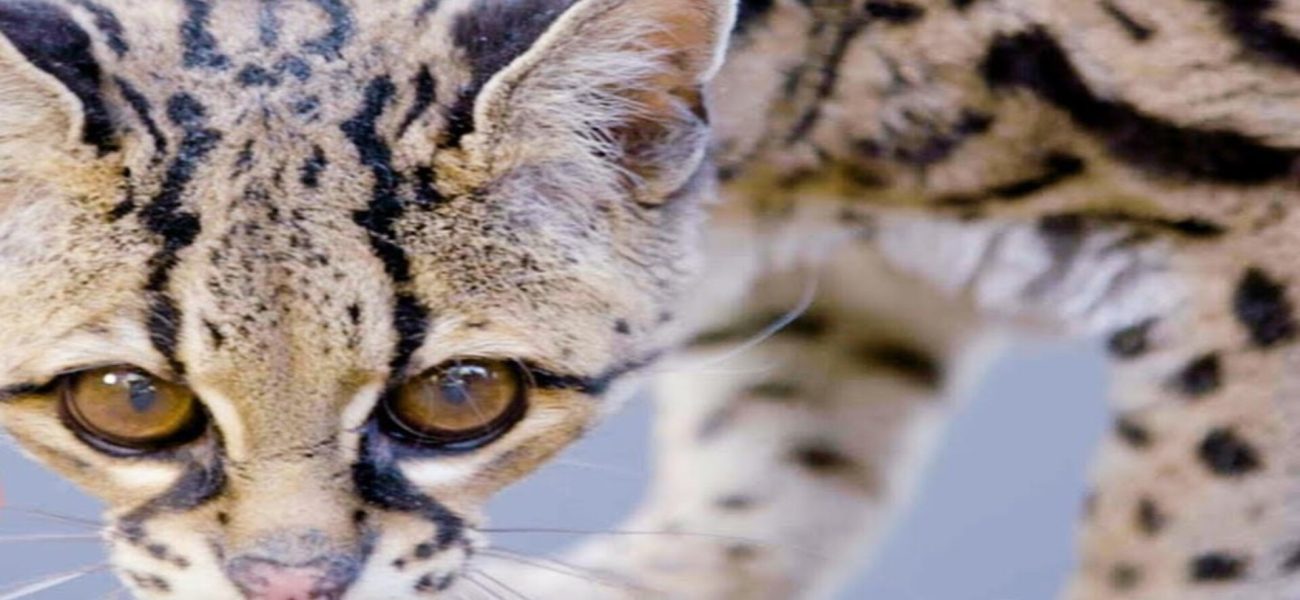
Endangered Margay ‘Button’: Urgent Call for Tree-Dwelling Wildcat Conservation in Latin America
POLICY WIRE — San José, Costa Rica — The remarkable arboreal wildcat known as the margay, exemplified by individuals like ‘Button’, is facing severe threats across its natural habitat,...

POLICY WIRE — San José, Costa Rica — The remarkable arboreal wildcat known as the margay, exemplified by individuals like ‘Button’, is facing severe threats across its natural habitat, prompting urgent calls for increased conservation efforts.
This elusive feline, native to the lush forests of Central and South America, spends almost its entire life in the tree canopy, a characteristic that makes it uniquely vulnerable to deforestation and habitat fragmentation.
The Margay: A Master of the Canopy
The margay (Leopardus wiedii) is a small, nocturnal felid, renowned for its exceptional agility and adaptations for an arboreal lifestyle. With large eyes suited for navigating in low light and incredibly flexible ankles that allow its hind feet to rotate 180 degrees, it can descend trees headfirst, much like a squirrel.
Its striking coat features dark spots and streaks against a yellowish-brown background, providing excellent camouflage within the dense foliage. These solitary hunters typically prey on small mammals, birds, insects, and reptiles, playing a vital role in maintaining ecological balance within their forest ecosystems.
“The margay’s survival is intrinsically linked to the health of our rainforests. Protecting this species means safeguarding entire ecosystems crucial for global biodiversity and climate regulation.”
Mounting Threats to Survival
Despite its remarkable adaptations, the margay is classified as Near Threatened by the IUCN Red List. The primary challenge to its continued existence is the rapid destruction and degradation of its forest habitat. Extensive deforestation for agriculture, logging, and infrastructure development directly diminishes the canopy space essential for its survival.
Beyond habitat loss, margays are also endangered by illegal poaching. They are hunted for their beautiful fur, and tragically, some are captured for the exotic pet trade, a fate from which few survive. Road accidents and retaliatory killings by farmers protecting livestock also contribute to their declining numbers.
The global discourse around environmental protection, as highlighted by events such as the Berlin Climate Dialogue, underscores the urgent need for comprehensive strategies to protect species like the margay and their critical habitats from the impacts of climate change and human expansion.
📄 POLICY WIRE WHITEPAPER PUBLISHED: PAKISTAN'S NATIONAL SECURITY POLICY PRIORITIES
👉 READ BY CLICKING HEREConservation Imperatives
Protecting the margay necessitates a multi-faceted approach. Key strategies include establishing and enforcing protected areas, combating illegal logging and wildlife trafficking, and promoting sustainable land-use practices among local communities.
Education and awareness campaigns are also crucial to inform the public about the importance of these wildcats and the threats they face. Research into margay populations, behavior, and genetics is vital to guide effective conservation interventions and ensure the long-term viability of the species.
The continuous strain on global resources and the resulting environmental pressures, as discussed in various policy contexts, have far-reaching implications for wildlife. For instance, discussions around resource scarcity and production, such as the geopolitical tensions affecting global supply chains, indirectly highlight the extensive human footprint on natural habitats and the urgent need for sustainable practices.
Ensuring the future for species like ‘Button’ and other margays requires concerted efforts from governments, conservation organizations, and local populations to preserve the unique rainforest ecosystems they call home.