


FIA Confirms Significant 2026 Formula 1 Rule Changes for Enhanced Performance and Safety
POLICY WIRE — Miami, USA — Formula 1 has confirmed significant revisions to its upcoming 2026 technical regulations, adjusting key aspects of car performance and safety well in advance of their...

POLICY WIRE — Miami, USA — Formula 1 has confirmed significant revisions to its upcoming 2026 technical regulations, adjusting key aspects of car performance and safety well in advance of their debut.
These modifications, collaboratively established by the FIA, participating teams, and engine suppliers, are slated for implementation beginning with the Miami Grand Prix from May 1-3, 2026. A primary objective behind these alterations is to elevate on-track car performance, with a specific focus on optimizing energy management systems.
The governing body views these adjustments as part of a continuous strategy to refine the 2026 rulebook, striving for an optimal balance between competitive performance, driver safety, and operational demands as the sport transitions into a new technical era.
Optimizing 2026 F1 Qualifying Sessions
Significant revisions are set to reshape qualifying rounds for the 2026 season, primarily designed to promote more aggressive driving and reduce system management for pilots. The FIA has adjusted parameters to achieve this:
- Energy harvesting capacity will be reduced from 8MJ to 7MJ.
- Conversely, the maximum peak power deployment has been increased substantially from 250 kW to 350 kW.
This strategic recalibration aims to empower drivers to push their vehicles harder for extended periods, yielding more exciting, flat-out qualifying laps.
Enhancements for Race Conditions
Modifications extending to race conditions seek to bolster both safety and consistency throughout competitive events. Specific regulations governing boost power have been implemented:
- A cap on boost power will mitigate abrupt speed differentials between cars.
- Full power, up to 350 kW, will be available exclusively within designated acceleration zones.
- Power output will be curtailed in other sections of the track to manage closing speeds effectively.
The intent is to regulate performance spikes and vary energy deployment based on a car’s track position. These measures are designed to control vehicle speeds, enhancing safety without compromising crucial overtaking opportunities, a continuous objective for the FIA amidst technological advancements.
Read More: LA Clippers 2026 NBA Draft Outlook: Securing 36th, 52nd Picks with Potential Top-6 Selections
Innovations for Race Starts
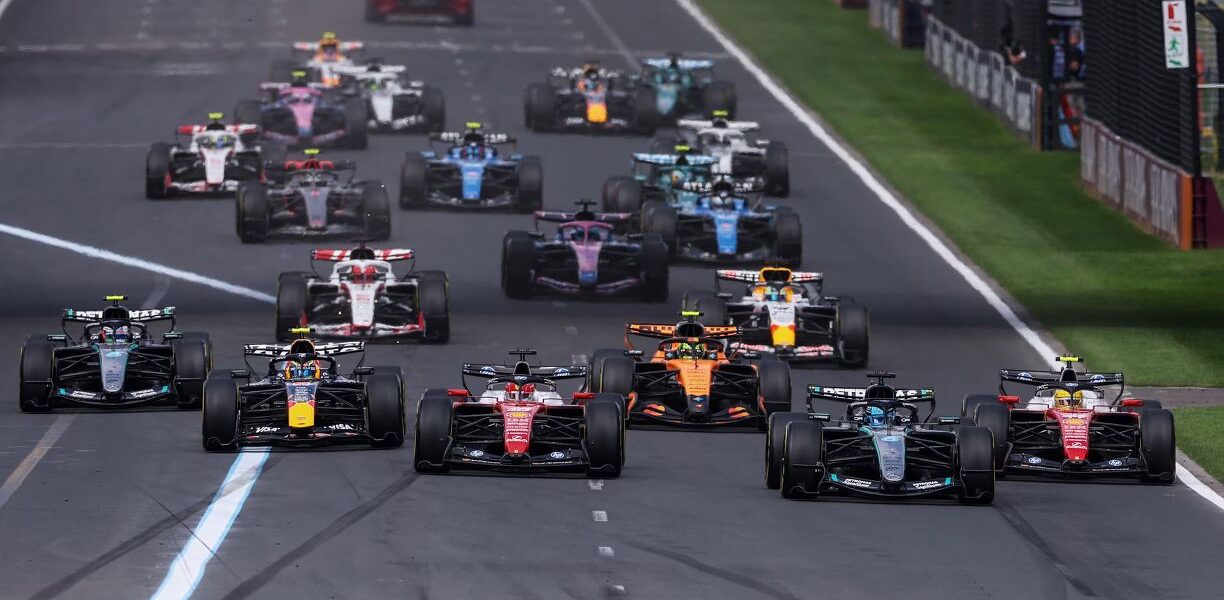
A novel system aimed at improving the safety of race starts is currently undergoing trials, with initial testing scheduled for the Miami Grand Prix rollout. This innovative technology is engineered to automatically identify instances of a slow launch from a stationary grid position.
📄 POLICY WIRE WHITEPAPER PUBLISHED: PAKISTAN'S NATIONAL SECURITY POLICY PRIORITIES
👉 READ BY CLICKING HEREUpon detection, the system will autonomously activate, providing supplementary electric power to the struggling vehicle. This intervention seeks to avert hazardous scenarios during the initial moments of a race, crucially without bestowing any unfair competitive edge. Additionally, specialized visual warning lights will be integrated to notify other drivers when a competitor is experiencing difficulties accelerating off the line.
Wet Weather Performance Enhancements
Measures are also being introduced to optimize vehicle performance and driver control in challenging wet weather conditions. Key changes include:
- Intermediate tire blanket temperatures will be elevated, promoting faster grip acquisition for drivers.
- Energy deployment will be scaled back, facilitating enhanced vehicle control in low-traction environments.
Furthermore, modifications to rear lighting systems have been implemented to simplify their design, thereby boosting visibility during adverse weather periods.
Read More: Aston Villa Rejects €60M Alejandro Balde Transfer Amid Strategic Squad Planning
These comprehensive adjustments underscore Formula 1’s commitment to continuous evolution, ensuring a dynamic, safe, and fair racing spectacle for the 2026 season and beyond.